Billboards near Bourbonnais, IL
No Minimum Spend. No Long-Term Contracts. Just Results.
Trusted by Leading Brands


Billboard advertising
near Bourbonnais has never been easier
How much is a billboard near Bourbonnais?
Why Choose Blip for Billboard Advertising near Bourbonnais
Blip’s self-serve tools let you launch in Bourbonnais fast, with no phone tags—perfect for I-57, Route 50, and Route 17 traffic.
In Bourbonnais, set a flexible daily budget and pay only when your ad blips on screen, so you can test Bradley and Kankakee without overcommitting.
Daypart your Bourbonnais campaign around commuter peaks, school drop-off, and Friday retail rushes near Olivet Nazarene and Northfield Square.
No contracts make Bourbonnais billboard buys easy to start, pause, or scale for back-to-school, Bears season, or holiday shopping.
Blip’s real-time analytics help you optimize Bourbonnais reach as traffic shifts on I-57 and local feeder roads throughout the week.
Use Blip’s creative tools to build fast-read ads for Bourbonnais drivers—clear, bold, and tuned for 40K+ daily vehicles on the interstate.
Frequently Asked Questions About Billboard Advertising near Bourbonnais
How much does a billboard cost in Bourbonnais with Blip?
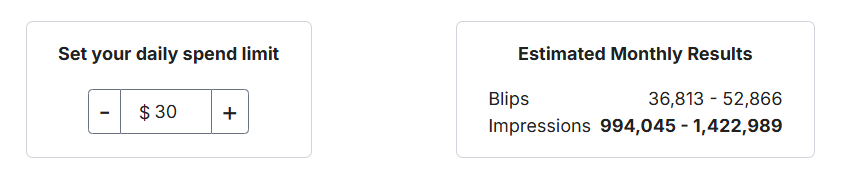
Each 7.5-to-10-second display, or “blip,” starts at just $0.01 per play, with pricing that changes based on time of day, location, and demand. That means your total cost is simply the sum of the blips you receive, with no minimums or contracts, so you can start small, adjust anytime, and grow as results come in. Blip’s pay-per-play model also helps us test intelligently.
Where can I advertise with Blip in Bourbonnais?
We serve the Bourbonnais area with 2 digital billboards, including one in Bradley just 3.3 miles away, and one in Kankakee about 7.1 miles away, with both boards within 10.0 miles of Bourbonnais. That proximity lets us reach the same residents, workers, students, and shoppers who move between the village, the retail corridor, the county seat, and the interstate every day. Our Bradley billboard is excellent for retail, restaurants, convenience services, entertainment, hotels, and short-consideration offers.
Why is Bourbonnais a strong billboard market for Blip?
The Village of Bourbonnais sits inside a tightly connected commercial cluster with Bradley, Kankakee, and the rest of Kankakee County. Together, those three communities total 58,111 residents, which equals about 54.1% of Kankakee County’s 107,502 residents. The market also benefits from location because it sits about 60 miles south of downtown Chicago along the I-57 corridor.
When is the best time to run billboard ads in Bourbonnais?
Late summer is one of our favorite campaign windows serving the Bourbonnais area, with strong potential from late July through September as university move-in, school registration, sports schedules, and fall shopping all increase road activity. A second academic pulse arrives in January when students return for spring semester, and a third comes in May around graduation and family visits. Spring, summer, and the November and December holiday period are also strong fits depending on the business.
What kinds of roads and traffic can Blip reach around Bourbonnais?
Interstate 57 is the signature corridor, with key access points at Exit 312 for Illinois 17 in Kankakee, Exit 315 for Illinois 50 in Bradley, and Exit 318 for Larry Power Road near Bourbonnais. IDOT traffic count maps generally show I-57 near the Bradley and Bourbonnais interchanges carrying roughly 40,000 to 50,000 vehicles per day. Illinois Route 50, Illinois Route 17, and nearby local routes also contribute steady visibility for shoppers, commuters, and civic traffic.
Do I need a contract to advertise with Blip near Bourbonnais?
No, Blip has no long-term contracts or minimum commitments. You can start, pause, or stop your campaign at any time.
How fast can I launch a billboard campaign with Blip near Bourbonnais?
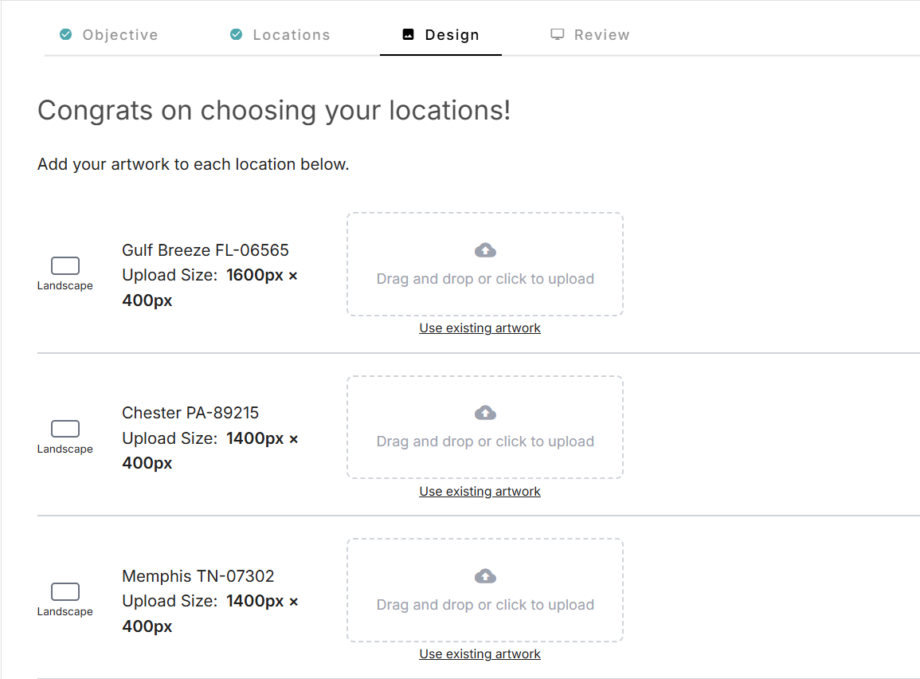
You can have your campaign live in minutes. Create a free account, select your locations, set your budget, upload your design, and start running once approved.
Where can I advertise with Blip near Bourbonnais?
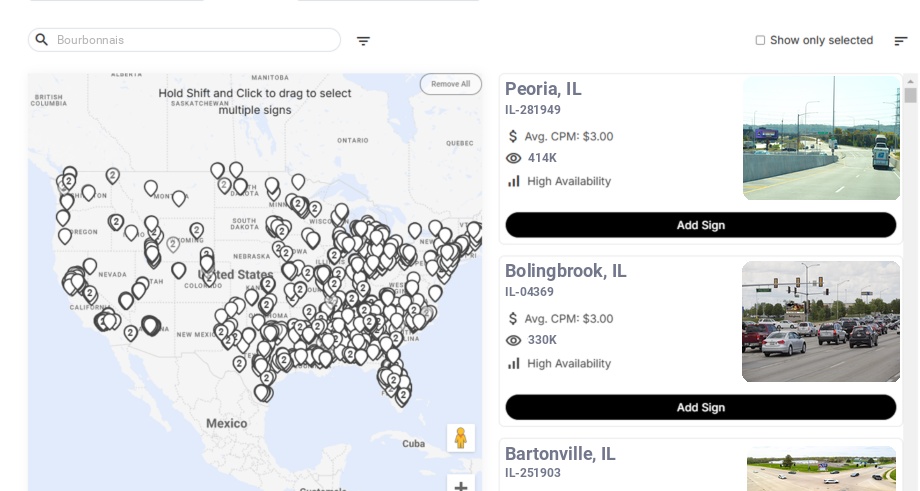
Blip has digital billboards near Bourbonnais. You can browse available locations on a map, choose the ones that fit your audience, and start advertising right away.
Still have questions? Launch a campaign in minutes — no contracts, no commitments.
Start Your CampaignBourbonnais Billboard Advertising Guide
The Village of Bourbonnais is a strong billboard market because it sits inside a tightly connected commercial cluster with Bradley, Kankakee, and the rest of Kankakee County 2 digital billboards, including one in Bradley just 3.3 miles away, and one in Kankakee about 7.1 miles away, with both boards within 10.0 miles of Bourbonnais. That proximity lets us reach the same residents, workers, students, and shoppers who move between the village, the retail corridor, the county seat, and the interstate every day. When we combine that local circulation with flexible digital scheduling, we can build efficient reach near Bourbonnais without needing a massive market-size budget.
Bourbonnais area market overview
Population scale and trade area near Bourbonnais
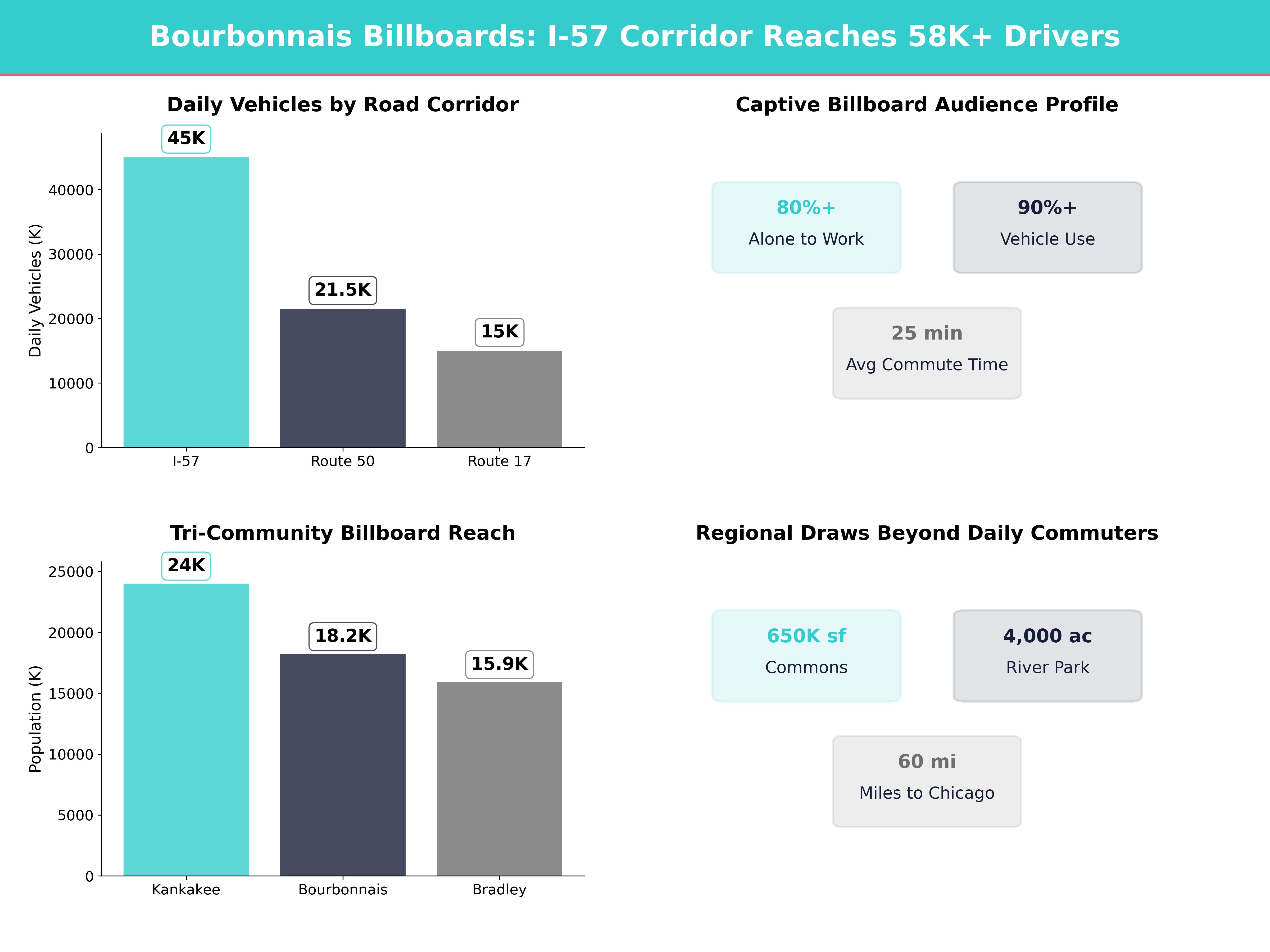
The Bourbonnais area has more scale than many advertisers expect. The Village of Bourbonnais had 18,164 residents in the 2020 count, nearby Bradley had 15,895, and Kankakee had 24,052. Together, those three communities total 58,111 residents, which equals about 54.1% of Kankakee County 107,502 residents.
That concentration matters for billboard planning. If we want to influence consumers in the Bourbonnais area, we are not targeting a single village in isolation. We are targeting a three-community corridor that contains more than half of the county’s population, while another 49,391 county residents live outside those three municipalities and still travel into the same retail, healthcare, education, and government nodes.
The market also benefits from location. The Bourbonnais area sits about 60 miles south of downtown Chicago along the Illinois Department of Transportation I-57 corridor, so local businesses can reach both hometown customers and regional pass-through traffic. That is one reason the area supports a broad mix of restaurants, hotels, healthcare providers, schools, service businesses, and entertainment venues.
Economy, institutions, and commuting in the Bourbonnais area
The Bourbonnais area economy is diversified enough to support billboard campaigns across many categories. Major demand generators include Olivet Nazarene University, Kankakee Community College, Riverside Healthcare, county government in Kankakee, retail around Northfield Square Adventure Commons
Commuting patterns also favor outdoor advertising. Recent ACS estimates show that more than 80% of workers in the Village of Bourbonnais drive alone to work, and more than 90% commute by personal vehicle when we combine solo driving and carpooling. Average travel times are generally in the 24-26-minute range across the village and surrounding county, which is long enough to create repeated exposure, but short enough that messaging tied to nearby exits, shopping, healthcare, and dining stays relevant.
For advertisers, the takeaway is straightforward. The Bourbonnais area is car-oriented, regionally connected, and driven by recurring local trips. That is exactly the kind of environment where digital billboards can compound awareness through repetition.
Key traffic corridors serving the Bourbonnais area
Interstate 57 near Bourbonnais
For campaigns serving the Bourbonnais area, Interstate 57 is the signature corridor. The market is anchored by key access points at Exit 312 for Illinois 17 in Kankakee, Exit 315 for Illinois 50 in Bradley, and Exit 318 for Larry Power Road near Bourbonnais. Those exits channel commuters, shoppers, students, hotel guests, delivery traffic, and regional travelers into the same local network.
IDOT traffic count maps generally show I-57 near the Bradley and Bourbonnais interchanges carrying roughly 40,000 to 50,000 vehicles per day, depending on the segment and count year. That is substantial visibility for a smaller-market buy. It also means our nearby boards can serve both local frequency and broader regional awareness at the same time.
We especially like I-57 for categories that benefit from strong recall, including healthcare, auto dealers, legal services, event promotion, colleges, restaurants, hotels, and home services. Drivers on this route are often planning their next stop, their next errand, or their next weekend activity while they travel.
Illinois Route 50, Illinois Route 17, and local feeder routes
After I-57, the most important local corridor serving the Bourbonnais area is Illinois Route 50, also known as North Kinzie Avenue through parts of the Bradley retail district. IDOT counts on this corridor commonly land in the 18,000 to 25,000 vehicles per day range, depending on the section. That is why so much retail, dining, fuel, and lodging activity clusters there.
Illinois Route 17, including Court Street through Kankakee, is another critical feeder. Count levels often fall around 10,000 to 20,000 vehicles per day, depending on the segment. This route ties the county seat, downtown destinations, medical traffic, and east-west commuters back into the broader Bourbonnais area economy.
We also pay attention to Illinois Route 102 and nearby collectors in the Bourbonnais area. These routes generally carry about 5,000 to 10,000 vehicles per day, and they matter because they connect neighborhoods, schools, park districts, and local service destinations to the interstate and retail corridors.
Together, these roads form a layered visibility system. I-57 captures scale, Route 50 captures shoppers, Route 17 captures civic and medical traffic, and local roads reinforce neighborhood frequency. Our billboards in Bradley and Kankakee sit close enough to these movements to keep Bourbonnais-area messaging highly relevant.
Audience segments we can reach near Bourbonnais
Commuters and everyday local decision-makers
The first major audience near Bourbonnais is the commuter base. Because more than 80% of workers drive alone, and more than 90% use personal vehicles overall, the same households are exposed to roadside media repeatedly during ordinary weekly routines. That makes billboard advertising effective for businesses that need familiarity, not just one-time discovery.
We can use that repeated exposure to reach people making practical decisions throughout the week. Categories such as healthcare, financial services, insurance, car repair, urgent care, legal services, grocery, dining, and home improvement all benefit from that routine visibility. In the Bourbonnais area, the route to work is often also the route to errands, school pickups, restaurants, and weekend shopping.
The commuter audience also extends beyond the three core communities. Residents from Manteno, unincorporated county areas, and smaller surrounding towns regularly travel through the same corridor to reach jobs and services in Bradley, Kankakee, and the Bourbonnais area.
Students, parents, and school-year traffic in the Bourbonnais area
Education is a meaningful audience layer near Bourbonnais. The Olivet Nazarene University campus in the Bourbonnais area covers about 275 acres, which gives the market a visible student and family presence that affects housing, dining, retail, churches, healthcare, and events. We typically see especially useful campaign windows around August move-in, January semester return, and May graduation.
The higher-education audience broadens with Kankakee Community College in nearby Kankakee. Even when we are not buying directly against “students,” the education ecosystem creates steady traffic from faculty, staff, visiting parents, and event attendees.
K-12 schools add another dependable audience layer. Families connected to Bourbonnais Elementary School District 53, Bradley School District 61 Bradley-Bourbonnais Community High School drive recurring routes tied to drop-off, pickup, athletics, and after-school activities. That is valuable for businesses targeting parents, youth services, tutoring, orthodontics, clinics, restaurants, and family entertainment.
Families, shoppers, and recreation seekers serving the Bourbonnais area
The Bourbonnais area also has a strong family and leisure audience. Adventure Commons 650,000 square feet of sports and entertainment space, which helps generate traffic from youth teams, tournament families, and regional visitors. That is excellent for restaurants, hotels, attractions, and family-oriented brands.
Outdoor recreation reinforces that pattern. Perry Farm Park includes about 170 acres of local park space, and Kankakee River State Park 4,000 acres stretching about 11 miles along the river corridor. Those destinations create spring, summer, and fall demand for casual dining, convenience retail, outdoor gear, healthcare, and event promotion.
Retail traffic remains important too. The Bradley commercial corridor around Northfield Square
Visitors and regional travelers near Bourbonnais
We should not think of the Bourbonnais area as a purely local market. Its interstate location means outside visitors are part of the audience mix. The market sits about 60 miles south of Chicago, which keeps weekend and short-stay regional traffic meaningful.
The area has longstanding recognition among sports fans as well. The Chicago Bears held training camp at Olivet Nazarene University for 18 summers, from 2002 through 2019. That history helped make the Bourbonnais area familiar to many Chicagoland households, even beyond the core county trade area.
We can also reach visitors tied to the Kankakee County Fair
Seasonal and timing opportunities in the Bourbonnais area
Back-to-school and academic-calendar timing near Bourbonnais
Late summer is one of our favorite campaign windows serving the Bourbonnais area. We usually see strong potential from late July through September as university move-in, school registration, sports schedules, and fall shopping all increase road activity. Businesses promoting apartments, storage, furniture, internet, banking, restaurants, and retail can benefit from that timing.
A second academic pulse arrives in January when students return for spring semester. A third comes in May around graduation, family visits, and gift-related spending. Even brands that are not education-focused can benefit because those periods bring extra household planning and local travel.
Spring and summer activity serving the Bourbonnais area
Spring is ideal for home services, lawn and garden, outdoor recreation, clinics, and event promotion. After a Midwestern winter, consumers shift quickly toward roofing, HVAC, landscaping, pest control, and spring retail. If we want to catch that demand, we usually recommend building visibility before the warm-weather rush is fully underway.
From Memorial Day through Labor Day, the Bourbonnais area benefits from weekend movement tied to parks, river recreation, local festivals, dining, and sports. Friday afternoon through Sunday evening can be especially useful for entertainment, restaurants, convenience retail, and family attractions.
Fall sports, harvest, and holiday retail near Bourbonnais
The fall season is another strong fit for billboard campaigns serving the Bourbonnais area. Football, school activities, county fair timing, and harvest-season routines keep families on the road. The combination of school traffic and retail traffic is particularly valuable for restaurants, auto service, healthcare, and local events.
As we move into November and December, the Bradley retail corridor becomes more important for holiday shopping. That is the time to emphasize gift offers, seasonal menus, toy and electronics categories, holiday entertainment, and time-sensitive promotions.
Winter urgency and service demand in the Bourbonnais area
Winter is often underrated in smaller Illinois markets. Shorter daylight hours can make digital boards feel even more prominent during commute windows, and winter conditions increase urgency for healthcare, tire shops, HVAC companies, tax preparation, legal services, and insurance messaging.
If we are promoting an offer tied to weather or urgent need, we can use tighter scheduling in December, January, and February rather than committing to a broad, fixed run. That flexibility is especially useful near Bourbonnais because consumer needs can change quickly with snow, cold snaps, and holiday traffic patterns.
Billboard design tips for the Bourbonnais market
Fast-read creative for roads near Bourbonnais
The roads serving the Bourbonnais area reward simple creative. On I-57 and other faster corridors, we recommend keeping the ad to about 6 words or fewer, using 1 dominant image, and focusing on 1 clear action. Drivers do not have time to decode a crowded layout.
We also recommend high-contrast color combinations that hold up against gray winter skies, bright summer sun, and evening driving. Deep blue, red, black, and white often work well because they stay legible across changing Midwestern light conditions. Thin type, low-contrast gradients, and text-heavy layouts usually underperform.
If a business has a genuine location advantage, we should say it plainly. Phrases tied to “Exit 315,” “near Route 50,” or “minutes from Court Street” can work very well when they are accurate. Local drivers respond to practical wayfinding.
Creative themes that feel authentic serving the Bourbonnais area
The Bourbonnais area is not a flashy downtown market, so practical and grounded messaging usually wins. We see stronger creative when brands lean into useful benefits such as convenience, price, family fun, health, reliability, or local pride. Messages that feel too abstract or too “big city” can lose relevance.
Local references can add credibility. Mentions of the interstate, the river, school season, family weekends, or countywide service areas help the ad feel native to the market. If we use imagery, we prefer real products, real storefronts, or recognizable regional cues over generic stock skylines.
Seasonal visuals also play especially well near Bourbonnais. Snow tires, fall sports, spring cleanup, summer tournaments, and back-to-school themes match how households actually experience the year in this part of Illinois.
Regional billboard strategies near Bourbonnais
Bradley interchange strategy serving the Bourbonnais area
Our Bradley billboard is just 3.3 miles from Bourbonnais, which makes it excellent for advertisers that want immediate commercial relevance. We typically use this board for retail, restaurants, convenience services, entertainment, hotels, and short-consideration offers. Its value comes from the fact that Bradley is one of the primary shopping and interstate-access gateways serving the Bourbonnais area.
This is where directional messaging matters most. If a business can turn visibility into a same-day or same-week visit, the Bradley position is often our first choice. We especially like it for lunch, dinner, weekend, and event-oriented campaigns.
Kankakee gateway strategy near Bourbonnais
Our Kankakee billboard is about 7.1 miles from Bourbonnais, and it plays a different strategic role. We often prefer it for healthcare, legal services, education, countywide branding, recruiting, financial services, and civic messaging. Kankakee draws residents from across the county for government, professional, and medical needs, so the audience is broad and recurring.
This board is also useful when we want to emphasize trust and familiarity rather than instant action. Many Bourbonnais-area consumers are already used to traveling into Kankakee for appointments and services, so repeated presence there can reinforce category leadership.
Using both nearby billboards to build reach and repetition
In many cases, the best strategy is to use both boards together. The Bradley location helps us intercept retail and interstate traffic, while the Kankakee location helps us reinforce countywide awareness and professional-service relevance. That combination can create better frequency than relying on a single face.
We can also sequence the message. For example, we might use a broad awareness headline on one board, and a stronger offer or location cue on the other. If we want tighter control, we can place more budget into weekday commute periods, or shift emphasis to Thursday through Sunday for family entertainment and dining.
Blip tools for campaigns serving the Bourbonnais area
Flexible scheduling for Bourbonnais-area traffic patterns
Blip’s platform fits the Bourbonnais area well because local demand changes by season, by day of week, and by time of day. We can choose the boards on a map, set a daily budget, and focus spend around the windows that matter most, such as weekday commutes, university move-in, Friday night dining, or holiday shopping weekends.
That flexibility is especially helpful in a market where school calendars, sports schedules, weather, and retail peaks all influence traffic. We do not have to treat every week the same way.
Efficient budget control near Bourbonnais
Blip’s pay-per-play model also helps us test intelligently. Pricing starts at $0.01 per display, so we can launch a campaign without committing to a large traditional buy. If we want to put more pressure behind back-to-school season, or pull back after an event ends, we can do that without changing our overall strategy.
Because pricing is dynamic, the platform can also help us maximize budget around lower-cost times while still maintaining presence in important periods. For local advertisers serving the Bourbonnais area, that usually means better control over cost versus reach.
Fast optimization for the Bourbonnais market
Each ad display runs for 7.5 to 10 seconds, which means creative clarity matters. If we learn that one message is stronger than another, we can swap artwork, update an offer, or adjust timing without waiting on a printed production cycle.
Real-time analytics make that easier. We can review spend, plays, pacing, and performance patterns, then refine the campaign as local conditions change. That is valuable in a market where a college calendar, a sports tournament, or a weather event can change demand quickly.
Getting started with billboard rental near Bourbonnais
How we evaluate billboard locations serving the Bourbonnais area
When we start a billboard plan near Bourbonnais, we usually begin with a simple set of questions. We ask whether the goal is broad awareness, immediate foot traffic, event attendance, recruiting, or long-term brand familiarity. We identify which roads current customers already use, especially I-57, Route 50, Route 17, and the main neighborhood feeders.
We decide whether the message should reach shoppers near Bradley, professional and civic traffic near Kankakee, or both. We match the campaign schedule to real behavior, such as weekday commuting, weekend recreation, or back-to-school surges.
That process helps us avoid buying a board simply because it is nearby. The right board is the one that overlaps with the audience’s routine.
What to expect from the rental process near Bourbonnais
Traditional billboard buying often involves phone negotiations, fixed terms, and less flexibility once the campaign is live. Blip simplifies that process. We can upload artwork, choose boards, set a budget, select timing, and launch without a long contract or minimum spend.
That matters for smaller businesses and regional brands serving the Bourbonnais area. A local restaurant, clinic, retailer, contractor, or university program can start with a controlled test instead of overcommitting. If results are promising, we can scale up. If timing changes, we can pause or revise.
Digital boards also remove the printing and posting delays associated with static boards. That makes it much easier to support seasonal promotions, event announcements, hiring pushes, and weather-sensitive service campaigns.
A practical first campaign plan for the Bourbonnais area
For many advertisers, we recommend a first campaign that is disciplined rather than overly broad. We start with a 2- to 4-week test. We use 2 creative versions, so we can compare a brand-focused message with an offer-focused message.
We emphasize weekday commute periods for healthcare, legal, education, and service brands. We shift more budget to Thursday through Sunday for restaurants, retail, and family entertainment. We review analytics alongside real business outcomes, such as website traffic, calls, promo-code use, foot traffic, or branded search lift.
If the goal is marketwide familiarity, we usually add both nearby boards for wider frequency. If the goal is immediate visits, we often begin with the Bradley location. If the goal is countywide trust, healthcare visibility, or professional-service reach, the Kankakee location often deserves early priority.
The main advantage of renting a billboard near Bourbonnais through Blip is that we can act like a performance marketer, not just a media buyer. We can start small, watch the data, refine the message, and grow into the Bourbonnais area with much less friction than a traditional outdoor buying process.