Billboards in Northlake, IL
No Minimum Spend. No Long-Term Contracts. Just Results.
Trusted by Leading Brands


Billboard advertising
in Northlake has never been easier
How much is a billboard in Northlake?
Why Choose Blip for Billboard Advertising in Northlake
Blip lets Northlake advertisers launch self-serve ads fast on I-294 and I-290 commuter corridors—no lengthy setup, just control.
Set flexible daily budgets in Northlake and focus spend on Mannheim Road and North Avenue traffic without long-term contracts.
Daypart with Blip in Northlake to hit 6–9 a.m. commuters, airport travelers, and 3–7 p.m. return traffic near O'Hare.
Track real-time results for Northlake billboards and shift blips toward Rosemont events, Des Plaines casino traffic, or retail peaks.
Use Blip's creative tools to make quick bilingual ads for Northlake's Hispanic audiences and busy logistics workers.
Frequently Asked Questions About Billboard Advertising in Northlake
How much does a billboard cost near Northlake, Illinois with Blip?
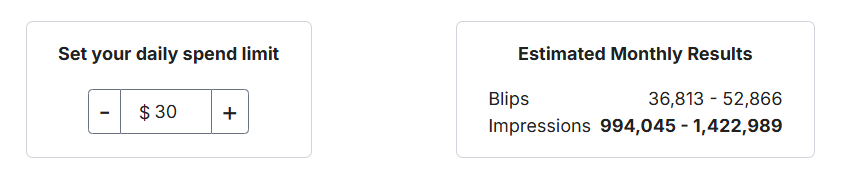
With Blip’s self-serve, pay-per-blip platform, you control exactly how much you spend on Northlake billboards by setting a daily budget that can be adjusted anytime, and you only pay for each 7.5–10 second “blip” your ad receives. Pricing for billboards near Northlake, Illinois depends on when and where your ad appears and on advertiser demand, so your total cost over days or weeks is simply the sum of the individual blips you choose to run. It can work with virtually any budget, making it easy to start reaching drivers in the Northlake area without long-term commitments or expensive upfront costs.
Where can I place Blip billboard ads near Northlake, Illinois?
Our 41 digital billboards serving the Northlake area are placed in nearby suburbs that capture both local and through traffic. Key nearby locations include Melrose Park and Stone Park, Schiller Park, Rosemont, North Riverside, Des Plaines, Harwood Heights, and Summit. These boards carry traffic that overlaps heavily with drivers living, working, or shopping in the Northlake area.
What kind of traffic reaches Northlake billboards in the Northlake area?
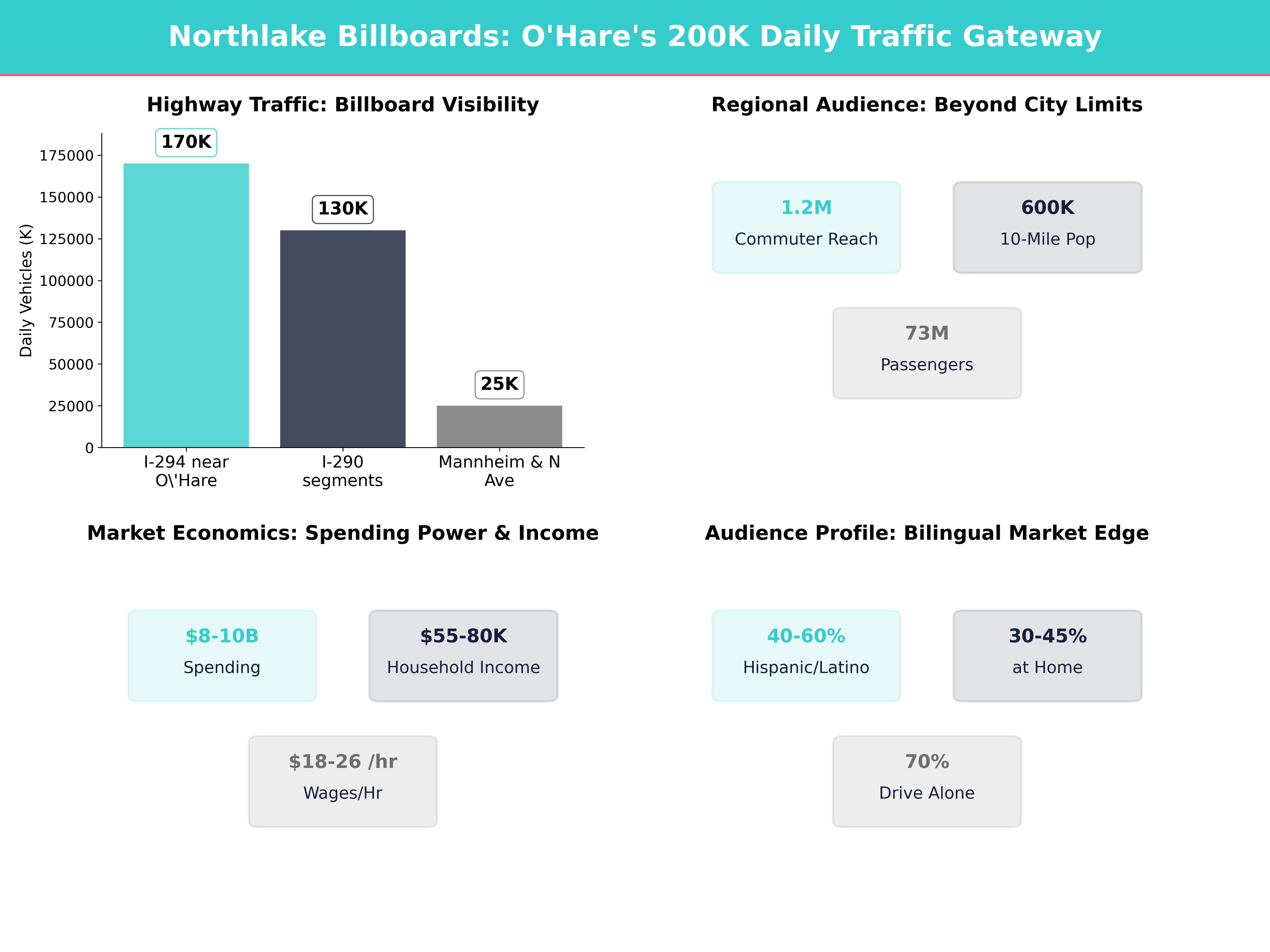
The Northlake area sits at the heart of Chicago’s near-west suburbs, surrounded by major highways, logistics hubs, and retail corridors. I-294 near O’Hare and Rosemont can carry 170,000–200,000 vehicles per day, while I-290 often reaches 130,000–150,000 vehicles per day. US-12/45 and IL-64 through the area typically range from 25,000–40,000 vehicles per day depending on the segment.
When should I run Blip ads in Northlake, Illinois for the best results?
Weekday AM (6–9 a.m.) & PM (3–7 p.m.) peaks along I-290, I-294, and Mannheim/North Ave are ideal for commuter-focused messages. Midday (10 a.m.–3 p.m.) reaches shoppers, retirees, and shift-based workers, while evenings and weekends near Rosemont, Des Plaines, and North Riverside are prime for entertainment, dining, nightlife, and tourism offerings. With Blip, we can day-part your campaign to load more blips into these high-intent windows instead of paying the same rate 24/7.
What makes the Northlake area a good market for Blip billboard advertising?
Within a 10-mile radius of Northlake, the combined population of surrounding suburbs easily exceeds 600,000 people, and the broader near-west and northwest suburban band around O’Hare pushes the reachable audience to well over 1.2 million residents when regular commuters and workers are included. The area also combines local, repeat exposure to residents and workers commuting daily on the same corridors with regional reach to travelers heading to and from O’Hare, Rosemont’s entertainment district, and Chicago. Employment centers around O’Hare and the I-294 corridor support hundreds of thousands of jobs in transportation, warehousing, manufacturing, hospitality, and professional services.
Do I need a contract to advertise with Blip in Northlake?
No, Blip has no long-term contracts or minimum commitments. You can start, pause, or stop your campaign at any time.
How fast can I launch a billboard campaign with Blip in Northlake?
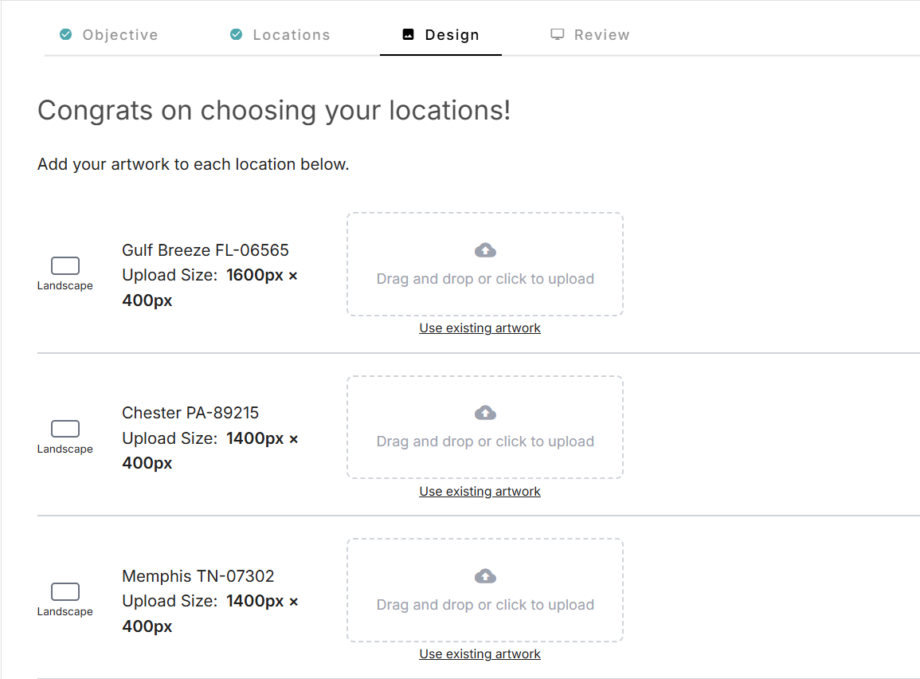
You can have your campaign live in minutes. Create a free account, select your locations, set your budget, upload your design, and start running once approved.
Where can I advertise with Blip in Northlake?
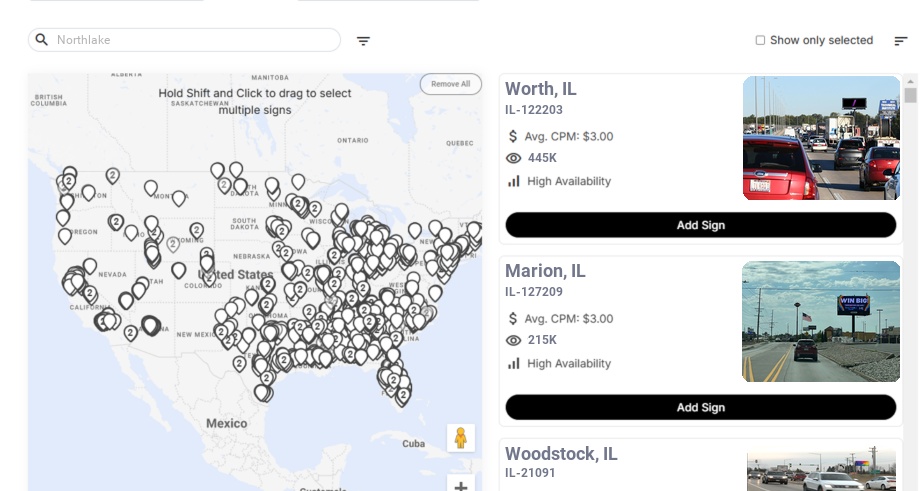
Blip has digital billboards in Northlake. You can browse available locations on a map, choose the ones that fit your audience, and start advertising right away.
Still have questions? Launch a campaign in minutes — no contracts, no commitments.
Start Your CampaignNorthlake Billboard Advertising Guide
The Northlake area sits at the heart of Chicago’s near-west suburbs, surrounded by major highways, logistics hubs, and retail corridors that make it a powerful place to reach everyday consumers and B2B decision-makers alike. With 41 digital billboards serving the Northlake area from nearby cities like Melrose Park, Stone Park, Schiller Park, Rosemont, and Des Plaines
Understanding the Northlake Area Market
The Northlake area is strategically positioned just west of Chicago and northeast of the I-290/I-294 junction, with fast access to O’Hare International Airport
Key population and market indicators (latest available data, primarily from 2020–2023 public records and regional planning/airport reports):
- The City of Northlake 12,000 residents, with a strong working‑class and middle‑income base. Northlake covers just 3.2 square miles, giving it a population density of around 3,700–3,800 residents per square mile, ideal for repeat impressions on nearby corridors and Northlake billboards.
- Within a 10‑mile radius of Northlake, the combined population of surrounding suburbs (including Melrose Park, Stone Park, Schiller Park, Rosemont, North Riverside, Des Plaines, Harwood Heights Summit, and adjacent communities) easily exceeds 600,000 people, and the broader near‑west and northwest suburban band around O’Hare pushes the reachable audience to well over 1.2 million residents when regular commuters and workers are included.
- Northlake and nearby Melrose Park have long been logistics and industrial hubs. In the broader O’Hare industrial submarket, modern warehouse and distribution space has posted vacancy rates commonly between 3–5% in 2022–2023, while annual asking rents have grown by roughly 6–8% year‑over‑year, according to major brokerage reports. This tight market reflects sustained demand from e‑commerce, food distribution, and air freight users.
- O’Hare International Airport over 73 million passengers in 2023 and more than 890,000 aircraft operations, according to FlyChicago O’Hare statistics 2 million metric tons of air cargo annually, keeping freight traffic heavy on nearby expressways.
- Median household incomes in nearby suburbs span a wide band, from about $55,000–$80,000, with some nearby communities such as Rosemont and Des Plaines posting medians closer to the $70,000–80,000 range. Within a 10‑mile radius, total household consumer spending power easily exceeds $8–10 billion per year across categories like groceries, dining, auto, healthcare, and entertainment.
- Employment centers around O’Hare and the I‑294 corridor support hundreds of thousands of jobs in transportation/warehousing, manufacturing, hospitality, and professional services, drawing workers from across Cook and DuPage Counties.
For advertisers, this means the Northlake area combines:
- Local, repeat exposure to residents and workers commuting daily on the same corridors.
- Regional reach to travelers heading to and from O’Hare, Rosemont’s entertainment district, and Chicago.
- B2B access to logistics, industrial, and professional audiences spread across the O’Hare and I‑294 corridors, where average weekday worker inflows number in the tens of thousands in each adjacent suburb.
Where Our 41 Digital Billboards Reach the Northlake Area
Our 41 digital billboards serving the Northlake area are placed in nearby suburbs that capture both local and through traffic, giving you convenient billboard rental near Northlake without needing to manage multiple separate vendors:
- Melrose Park & Stone Park (≈1.3 miles) – Key commercial strips along North Avenue, Lake Street, and Mannheim Road, with heavy retail and auto‑oriented traffic. Illinois Department of Transportation counts on some segments of these roads show 25,000–35,000+ vehicles per day, making them prime for high‑frequency impressions.
- Schiller Park (≈2.5 miles) – On routes feeding O’Hare and intersecting with I‑294 and I‑90. Schiller Park’s proximity to the airport and adjacent industrial parks brings a steady flow of both passenger and freight‑related traffic.
- Rosemont (≈5.3 miles) – A major entertainment and convention hub near the Donald E. Stephens Convention Center Allstate Arena, and Impact Field. Rosemont attracts over 75,000 convention attendees on some large event weeks and draws millions of visitors annually for events, concerts, sports, and shopping at Fashion Outlets of Chicago and the nearby entertainment district (Village of Rosemont).
- North Riverside (≈5.8 miles) – Serving traffic near North Riverside Park Mall, Cermak Road, and Harlem Avenue. The mall alone draws an estimated 8–10 million shopper visits per year, concentrating retail‑minded audiences.
- Des Plaines (≈5.9 miles) – Reaching commuters headed to downtown Des Plaines Rivers Casino, which reports more than 3 million visits annually and ranks among Illinois’ highest‑grossing casinos ( City of Des Plaines
- Harwood Heights (≈6.6 miles) – Dense residential and retail corridors adjacent to Chicago’s Northwest Side, with neighborhood arterial roads often carrying 15,000–25,000 vehicles per day.
- Summit (≈9.8 miles) – Connecting traffic from the Southwest Side, Cicero, and I‑55, including freight and commuter flows linked to nearby industrial and rail yards (Village of Summit).
These boards carry traffic that overlaps heavily with drivers living, working, or shopping in the Northlake area. For businesses actively searching for billboards near Northlake, this cluster of locations functions like a single, cohesive Northlake billboard network. Because Blip lets you buy individual “blips” (impressions) on specific signs and time blocks, you can concentrate budget on:
- Boards closest to your physical location.
- Corridors drivers use to enter and exit the Northlake area.
- Entertainment and travel hubs (Rosemont, Des Plaines, Schiller Park) where visitors may not know local brands yet.
Commuting, Traffic, and Why They Matter for Your Schedule
Daily movement patterns in and near the Northlake area shape when and where your ads should appear:
-
Commuter flows: Many Northlake area residents work in nearby industrial parks, O’Hare‑adjacent facilities, or downtown Chicago. Typical commute times are in the 25–35 minute range, with more than 70% of workers driving alone and another 8–10% carpooling. Heavy flows concentrate along:
- I‑294 (Tri‑State Tollway) – North–south regional backbone, with segments near O’Hare and Rosemont carrying 170,000–200,000 vehicles per day on average, according to Illinois Tollway data.
- I‑290 (Eisenhower Expressway) – Connecting to Chicago’s Loop and the western suburbs, with volumes on many stretches in the 130,000–150,000 vehicles per day range.
- US‑12/45 (Mannheim Road) and IL‑64 (North Avenue) – Major arterial roads through Melrose Park, Stone Park, and the Northlake area, typically ranging from 25,000–40,000 vehicles per day depending on the segment (IDOT traffic counts).
- Transit connections: The area is served by several Pace Bus routes, which collectively move more than 18 million riders annually systemwide, and nearby Metra 250,000 average weekday riders pre‑pandemic and continues to recover, funneling riders to park‑and‑ride lots and arterial streets with high vehicular traffic.
- Airport & convention traffic: O’Hare‑bound and O’Hare‑originating traffic flows through Schiller Park, Rosemont, and Des Plaines at all hours, with noticeable peaks aligned with early‑morning and late‑afternoon flights and conferences. Major conventions at the Stephens Convention Center can bring 5,000–20,000 attendees per event day, amplifying exposure near Rosemont (Village of Rosemont).
What this means for your Blip campaign:
- Weekday AM (6–9 a.m.) & PM (3–7 p.m.) peaks along I‑290, I‑294, and Mannheim/North Ave are ideal for commuter‑focused messages—insurance, auto dealers, quick‑service restaurants, HVAC, local retail, and service businesses.
- Midday (10 a.m.–3 p.m.) reaches shoppers, retirees, and shift‑based workers; great for grocery stores, medical practices, and professional services.
- Evenings and weekends near Rosemont, Des Plaines, and North Riverside are prime for entertainment, dining, nightlife, and tourism offerings. Weekend events at venues like Allstate Arena and Impact Field regularly draw 5,000–15,000 attendees per event, multiplying exposure for well‑placed boards.
With Blip, we can day‑part your campaign to load more blips into these high‑intent windows instead of paying the same rate 24/7, making your billboard advertising near Northlake more efficient and results‑driven.
Demographics and Audience Segments in the Northlake Area
The Northlake area and its neighboring communities are richly diverse, which should shape your creative and targeting strategy:
- Age: The surrounding near‑west suburbs skew relatively young to middle‑aged, with many communities where roughly 55–60% of residents are between 25 and 64 years old. These 25–44 and 45–64 brackets are key decision‑making ages for households and businesses.
- Households: Household sizes commonly average around 2.8–3.3 people, indicating a strong presence of families with children. In several nearby suburbs, over 30% of households include children under 18.
- Ethnic diversity: Communities like Northlake, Melrose Park, and Stone Park have significant Hispanic/Latino populations—often 40–60% or more depending on the specific neighborhood—alongside White, Black, and Asian communities. In some school districts serving the area, more than 60–70% of students identify as Hispanic, underscoring the importance of bilingual outreach.
- Language: In many near‑west suburbs, 30–45% of residents speak a language other than English at home, with Spanish as the dominant second language.
-
Employment: Many residents work in:
- Manufacturing, logistics, and warehousing (often 15–20% or more of local jobs in suburbs closest to O’Hare).
- Retail and food service.
- Healthcare and education.
- Airport and hospitality sectors tied to O’Hare and Rosemont’s hotels, casino, and convention venues.
Practical implications for your ads:
- Family‑oriented messaging (schools, healthcare, family dining, local events) resonates strongly in neighborhoods where over one‑third of households are families with children.
- Bilingual English/Spanish creatives can significantly broaden reach near Northlake, Melrose Park, and Stone Park, where Spanish is commonly spoken at home by one‑third or more of residents.
- Work‑related services (staffing agencies, trade schools, CDL training, industrial suppliers, B2B services) perform well along the industrial corridors serving the O’Hare submarket, where thousands of blue‑collar and technical workers clock in on multiple shifts each day.
Key Local Corridors and How to Use Our Nearby Boards
To make the most of the 41 digital billboards serving the Northlake area, align your board selection with specific corridors and intents. This helps you turn generic Northlake billboards into tailored touchpoints that mirror how customers actually move through the market:
1. North Avenue (IL‑64) & Mannheim Road (US‑12/45)
Serving the Northlake area primarily via Melrose Park and Stone Park:
- High ADT (average daily traffic) on these arterials often exceeds 25,000–35,000 vehicles per day on busy segments, with some junctions near major retail areas pushing closer to 40,000 vehicles per day (IDOT).
-
Ideal for:
- Auto dealers and repair shops.
- Quick‑service restaurants and coffee shops.
- Local retailers and shopping centers.
- Healthcare clinics, dentists, and urgent care facilities.
2. I‑294 & I‑290 Expressways
- I‑294 average daily traffic can surpass 150,000–200,000 vehicles on some segments near O’Hare, capturing commuters from all over the region and substantial truck volumes traveling between intermodal yards and distribution centers.
- I‑290 funnels suburban drivers into Chicago and vice versa, with key segments carrying 130,000+ vehicles per day.
-
Ideal for:
- Regional brands seeking broad Chicagoland exposure.
- B2B advertisers (logistics, industrial, technology, professional services) tapping into tens of thousands of daily freight and service vehicles.
- Recruitment campaigns targeting a wide labor pool spanning multiple suburbs.
3. Rosemont & O’Hare Vicinity (Schiller Park, Rosemont, Des Plaines)
- Rosemont events at the Convention Center Allstate Arena can draw 10,000–20,000 visitors in a single day for major concerts, sports, or expos.
- O’Hare’s 73+ million annual passengers and multi‑million‑ton cargo throughput generate substantial hotel, dining, and transportation demand and keep nearby roads active nearly 24/7 ( FlyChicago
-
Ideal for:
- Hotels, short‑term rentals, and airport parking.
- Restaurants and bars in the Northlake area looking to capture event‑goers before or after events in Rosemont or Des Plaines.
- Attractions, casinos, theaters, and event marketers reaching both locals and out‑of‑town visitors.
- Corporate branding during large conventions that bring regional and national decision‑makers into the area.
4. Retail Clusters (North Riverside, Harwood Heights, Des Plaines)
- North Riverside’s retail corridor (including North Riverside Park Mall) anchors a catchment area of 100,000+ nearby residents within a short drive and serves shoppers from multiple west‑side and near‑west suburbs (Village of North Riverside).
- Harwood Heights and adjacent Chicago neighborhoods have densely packed housing and neighborhood retail, with some arterial segments seeing 15,000–25,000 vehicles per day and strong weekend shopping peaks.
- Des Plaines combines downtown foot traffic, Metra riders, and regional draw from Rivers Casino, which posts hundreds of millions of dollars in annual gaming revenue, attracting thousands of guests per day.
-
Ideal for:
- Retailers with locations in or near Northlake wanting to draw shoppers from surrounding suburbs.
- Healthcare networks and clinics seeking to reach family decision‑makers.
- Financial institutions and insurance providers targeting stable, long‑term residents.
Creative Best Practices for the Northlake Area
Billboards in the Northlake area have limited dwell time—drivers typically view them for just 3–7 seconds. Designing for speed and impact is crucial, especially when you’re investing in premium digital billboard advertising near Northlake’s busiest corridors:
-
Design for 3‑Second Readability
- Use 7 words or fewer in your main message where possible; campaigns that keep text under this threshold consistently test higher for recall in out‑of‑home studies.
- Prioritize one clear call‑to‑action: “Exit at North Ave,” “Call Now,” “Hiring CDL Drivers,” etc.
- Choose large, high‑contrast fonts (e.g., white or yellow text on dark backgrounds). Aim for a minimum letter height of 18–24 inches on full‑size digital boards so copy remains legible at highway speeds.
-
Localize Your Message
-
Reference familiar landmarks or directions:
- “Just off North Ave in the Northlake area”
- “5 minutes south of O’Hare”
- “Near the Mannheim & North intersection”
- Mention nearby cities your audience associates with the area, like Melrose Park, Rosemont, or Des Plaines, when it helps with orientation.
- Local cues (“across from North Riverside Mall,” “near Rivers Casino,” etc.) can lift response because more than 70% of drivers use visual landmarks, not just street names, to navigate.
-
Reference familiar landmarks or directions:
-
Use Bilingual Messaging Thoughtfully
-
If your target includes Hispanic families and workers, test:
- One creative in English.
- One in Spanish or Spanglish.
- In markets where 30–40% of residents speak Spanish at home, bilingual campaigns often see higher engagement for service categories like healthcare, financial services, and education.
- Emphasize offers and benefits visually so both language speakers quickly understand.
-
If your target includes Hispanic families and workers, test:
-
Align Creative with Time and Audience
- Morning drive: efficiency, convenience, and problem‑solving offers (“Get to work faster – leave it to us,” “Mobile check‑in,” “Coffee specials”).
- Evening and weekend: entertainment, family activities, and discretionary spend (“Kids eat free tonight,” “Tonight’s game on the big screen,” “Weekend sale”).
- For industrial workers and shift employees, highlight pay and benefits clearly in recruitment ads (e.g., “$24/hr + benefits – Apply Today”). In labor‑tight logistics submarkets like O’Hare, even $1–2/hour wage differences can materially impact applicant volume.
-
Use Strong Visuals Relevant to the Area
- Show imagery that matches the audience’s day‑to‑day reality: families, workers in uniforms or safety gear, airport travel, local sports fandom, or city skylines.
- Avoid overly intricate graphics that become muddy at distance or high speed; limit to one primary image and one logo where possible.
- Consistency across variations (same colors, logo position, and core message) helps build brand recognition, especially on high‑frequency corridors like I‑294 and North Avenue.
Using Blip’s Flexibility to Test and Optimize
Because Blip sells impressions one “blip” at a time across our 41 digital billboards serving the Northlake area, you can test and refine without committing to a large, fixed traditional buy. This makes it easy to ease into billboard rental near Northlake, then scale once you see what works.
Here’s how to make the most of this flexibility:
-
Start with a Clear Hypothesis
- Example: “Family‑focused bilingual creative will drive more walk‑ins to our Northlake area restaurant than a generic brand ad.”
- Run two or more creatives simultaneously on the same boards and compare outcomes (store traffic, calls, website visits). Aim for at least 20,000–30,000 impressions per creative in the test so you have enough data to judge performance.
-
Segment by Corridor & Time of Day
- Allocate a portion of your budget to each major corridor (Mannheim/North Ave, I‑290/I‑294 feeders, Rosemont/O’Hare approaches).
-
Day‑part your spend:
- 50–60% during rush hours if you’re commuter‑oriented.
- More evening and weekend weighting if you’re in entertainment or dining.
- For retail or dining, consider concentrating 60–70% of impressions within a 5–7 mile radius of your location, where most brick‑and‑mortar visits originate.
-
Tie Campaigns to Local Events
-
Use calendars from:
- City of Northlake
- Village of Melrose Park
- Village of Schiller Park
- Village of Rosemont
- City of Des Plaines
-
Ramp up impressions during:
- Festivals, parades, or community fairs that can bring thousands of attendees in a single weekend.
- Major concerts, sports events, or conventions in Rosemont.
- Holiday shopping peaks (Black Friday, back‑to‑school season) when retail spending can jump 20–30% above typical weeks.
- Coordinate with tourism and event calendars from Choose Chicago to catch visitors staying in Rosemont, Des Plaines, and other hotel clusters.
-
Use calendars from:
-
Adjust Budget in Real Time
- Increase spend when your conversions spike (for example, on paydays, which for many hourly workers hit twice monthly, or during specific promotions).
- Pull back on slow days or times where you see less response, and reallocate to more productive slots.
- Revisit your board mix monthly; shifting even 20–30% of impressions from under‑performing corridors to top performers can materially improve ROI.
Industry‑Specific Strategies for the Northlake Area
Different sectors can leverage the unique mix of local workers, families, and travelers in tailored ways. No matter your industry, the surrounding network of billboards near Northlake can be configured to match your customer journey from awareness to action.
Local Retail & Restaurants
- Focus on boards near Melrose Park, Stone Park, North Riverside, and Harwood Heights, where combined nearby populations top 150,000 residents within a short drive.
- Use “distance + direction” CTAs: “2 miles west on North Ave,” “Next right after Mannheim.” Studies of roadside advertising show that proximity cues can increase store visit intent by 15–30%.
- Promote time‑limited deals (lunch specials, happy hours, weekend discounts) with day‑parted creatives matching your busiest hours.
Automotive Sales & Service
- Target commuter routes along I‑290/I‑294 feeders and Mannheim/North Ave near the Northlake area, where a large share of drivers travel 15,000+ miles per year and need recurring maintenance.
- Emphasize price, financing, and quick service (“Oil change in 30 minutes,” “Zero down, drive today”).
- Rotate creatives by season (winter tires, AC service, clearance sales) to match Midwest weather swings, which can include 80–100+ inches of snowfall per decade and temperature ranges from below zero to above 90°F.
Healthcare & Professional Services
- Highlight convenience and trust: “Same‑day appointments,” “Walk‑ins welcome,” “Open evenings.” In many nearby suburbs, 15–20% of residents are under 15 or over 65, two groups that heavily use healthcare services.
- Consider bilingual creatives to serve diverse neighborhoods.
- Focus boards near busy residential corridors and shopping areas where families run errands together, increasing the odds that decision‑makers see your message multiple times per week.
B2B and Industrial Services
- Use boards close to warehouse and logistics zones in Schiller Park, Rosemont, Des Plaines, and near the I‑294 corridor. The O’Hare industrial area alone totals tens of millions of square feet of industrial space, with thousands of dock doors and cross‑dock facilities.
- Recruit workers with clear pay and job benefits; logistics and warehouse roles in the region frequently advertise starting wages in the $18–$26/hour range, plus benefits.
- Promote logistics, equipment, or technology solutions that support O’Hare‑area businesses, emphasizing metrics like on‑time delivery rates, cost savings, or capacity.
Education & Training
-
Target recent high‑school grads and working adults:
- “Earn your CDL in 6 weeks”
- “Evening and weekend classes near the Northlake area”
- The Chicago region graduates tens of thousands of high school seniors each year, and local community colleges and trade schools regularly enroll thousands of new students per term—a large audience for skill‑building programs.
- During late spring and summer, emphasize enrollment deadlines and financial aid, as enrollment campaigns often see a 20–40% increase in inquiries during these months.
Measuring Success and Iterating
To get the best return from your digital billboard campaign serving the Northlake area, establish metrics from the beginning:
- Unique promo codes or URLs: Use short, memorable links or codes only used on billboards (“NORTHLAKE20”) to track redemptions. Even a 1–3% redemption rate on a well‑targeted offer can translate into strong ROI for local businesses.
- Call tracking numbers: Assign a dedicated phone number to billboard campaigns and monitor call volume and call length. Look for call increases of 10–20% in the first 4–8 weeks.
- Landing pages: Create localized pages referencing the Northlake area and nearby cities (Melrose Park, Schiller Park, etc.) so you can track corresponding traffic. Monitor direct and branded search traffic, which often rises 10–30% when out‑of‑home campaigns launch.
- Time‑based analysis: Compare your sales or leads during active Blip periods vs. prior weeks, controlling for seasonality and major holidays.
Monitor your performance for at least 4–8 weeks to account for repetition and word‑of‑mouth, then adjust:
- Shift budget to corridors that drive more conversions or store visits.
- Retire underperforming creatives and double down on winners; even small message tweaks can yield 10–15% performance lifts.
- Test seasonal messages tied to weather, holidays, or local events, as sensitivity to timing is especially strong in categories like retail, dining, and home services.
Tapping Local Media and Community Context
Finally, staying informed about local developments helps you time campaigns and tune messages to what residents are already thinking and talking about. This context is especially valuable when planning or adjusting billboard advertising near Northlake in response to changing traffic patterns or new developments.
-
Follow local news for Northlake and nearby suburbs at outlets like:
- Village Free Press (covering Proviso Township communities like Melrose Park and surrounding areas)
- Daily Herald (with editions for the Northwest and West suburbs, including Des Plaines and Rosemont)
- Local community updates from municipalities such as the City of Northlake Village of Melrose Park, and Village of Stone Park
-
Check local government and tourism sites for event calendars and announcements:
- City of Northlake
- Village of Melrose Park
- Village of Stone Park
- Village of Schiller Park
- Village of Rosemont
- City of Des Plaines
- Village of North Riverside
- Village of Summit
- Regional visitor information from Choose Chicago, which highlights major events drawing visitors into the near‑west and O’Hare‑area hotel markets.
By aligning your Blip campaigns with what’s happening locally—festivals, road construction, new developments, or big events—you keep your message timely and relevant and can ride natural spikes in local attention and traffic.
By understanding how people move through and interact with the Northlake area, selecting the right corridors among our 41 digital billboards, and taking advantage of Blip’s flexibility to test and refine, we can build campaigns that speak directly to the workers, families, and travelers who drive this vibrant near‑west suburban market. Whether you need just a few Northlake billboards to support a single location or a broader mix of billboards near Northlake to cover multiple storefronts, this approach helps you maximize every impression.