Billboards near Winnetka, IL
No Minimum Spend. No Long-Term Contracts. Just Results.
Trusted by Leading Brands


Billboard advertising
near Winnetka has never been easier
How much is a billboard near Winnetka?
Why Choose Blip for Billboard Advertising near Winnetka
Blip lets you self-serve Winnetka billboard ads in minutes, reaching North Shore drivers on I-94, I-294, and I-90 without traditional buy-in.
Use a Blip-optimized campaign in Winnetka to auto-fit your goals and budget across commuter rush, Friday airport traffic, and weekend shopping runs.
No contracts mean Winnetka brands can start small, pause fast, and flex spend around New Trier school cycles, summer beach traffic, or holiday demand.
Track Winnetka billboard results in real time and shift timing toward high-flow corridors like Dempster, Touhy, and Mannheim as performance changes.
Blip creative tools make it easy to tailor Winnetka ads for affluent North Shore families, O'Hare travelers, and summer Ravinia or Botanic Garden crowds.
Frequently Asked Questions About Billboard Advertising near Winnetka
How much does a billboard cost in Winnetka with Blip?
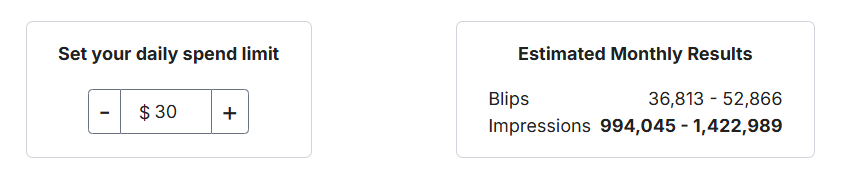
Blip makes billboard advertising in the Winnetka area flexible and accessible. Instead of paying a fixed upfront rate, you set a daily budget and only pay when your ad actually appears as a 7.5-to-10-second “blip” on a rotating digital billboard serving the Winnetka area. With pay-per-play pricing starting at $0.01 per display, you can test that without the friction of a traditional long-term board commitment.
Where can I advertise with Blip near Winnetka, Illinois?
We serve the Winnetka area with 10 digital billboards in nearby Des Plaines, just 9.5 miles away. That placement gives us access to the westbound routes many local households use every week and to the 150,000+ to 200,000+ vehicle-per-day expressway cluster serving Des Plaines and O'Hare. That helps us reach residents of Winnetka alongside neighboring communities such as Wilmette, Glencoe, Northfield, Glenview, and Northbrook.
Why does billboard advertising work in Winnetka, Illinois?
Advertising near Winnetka works especially well because the market combines a compact, affluent North Shore population with 12,744 residents in Winnetka and roughly 182,122 across nearby Winnetka, Wilmette, Glenview, Northbrook, and Des Plaines. The village's median household income is above $250,000, which reinforces why local advertisers often focus on premium services, home improvement, finance, education, healthcare, and luxury retail. The surrounding ring expands quickly, creating a substantial suburban audience for a targeted outdoor campaign.
What roads around Winnetka should I target for billboard ads with Blip?
The most important westbound funnel for the Winnetka area is the route from local North Shore roads to the expressway network. Residents commonly move west via Willow Road, Tower Road, or Lake Avenue to reach I-94, and then continue toward I-294, I-90, the airport district, and Des Plaines. Those volumes make the I-94, I-294, and I-90 cluster one of the strongest repeated-exposure zones serving the Winnetka area.
When is the best time to run billboard ads in Winnetka?
Summer is one of the strongest periods for outdoor advertising near Winnetka, and we usually see strong relevance from May through September. Back-to-school season is another natural fit, with campaigns launched from late July through September, and the holiday period also performs well from early November through late December. From a daypart perspective, 6:00 a.m. to 9:00 a.m., 3:00 p.m. to 7:00 p.m., Friday afternoons, and Saturday late morning through early evening often matter most.
Do I need a contract to advertise with Blip near Winnetka?
No, Blip has no long-term contracts or minimum commitments. You can start, pause, or stop your campaign at any time.
How fast can I launch a billboard campaign with Blip near Winnetka?
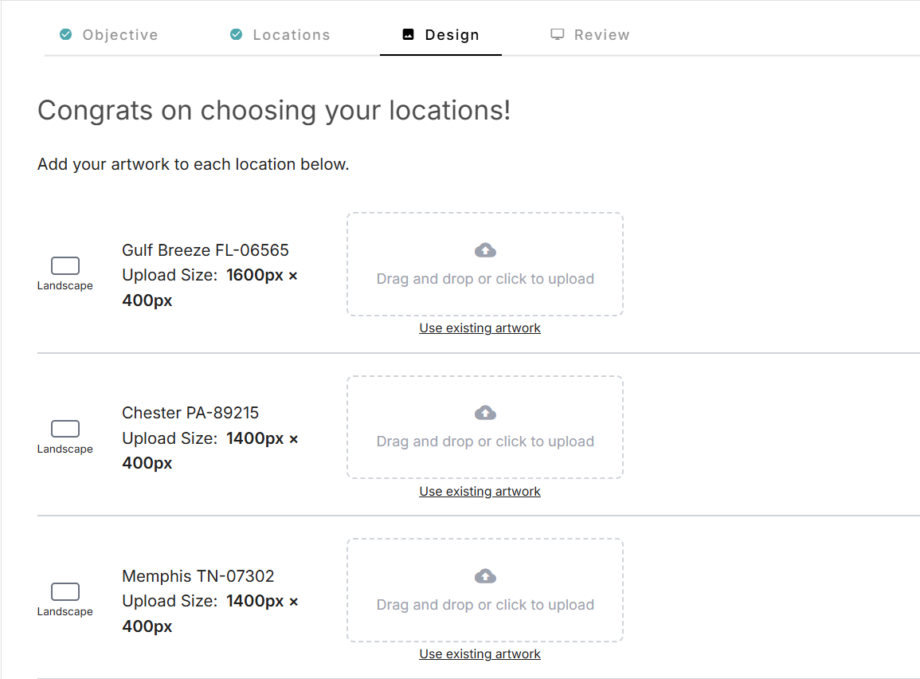
You can have your campaign live in minutes. Create a free account, select your locations, set your budget, upload your design, and start running once approved.
Where can I advertise with Blip near Winnetka?
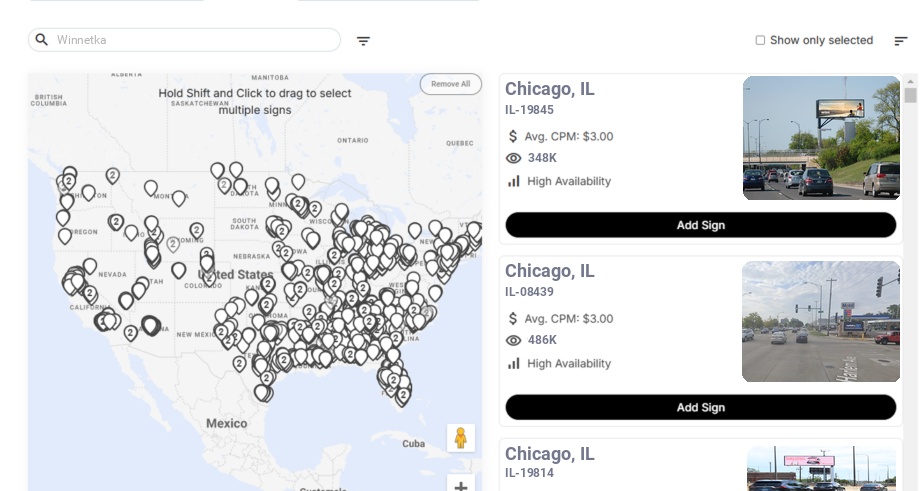
Blip has digital billboards near Winnetka. You can browse available locations on a map, choose the ones that fit your audience, and start advertising right away.
Still have questions? Launch a campaign in minutes — no contracts, no commitments.
Start Your CampaignWinnetka Billboard Advertising Guide
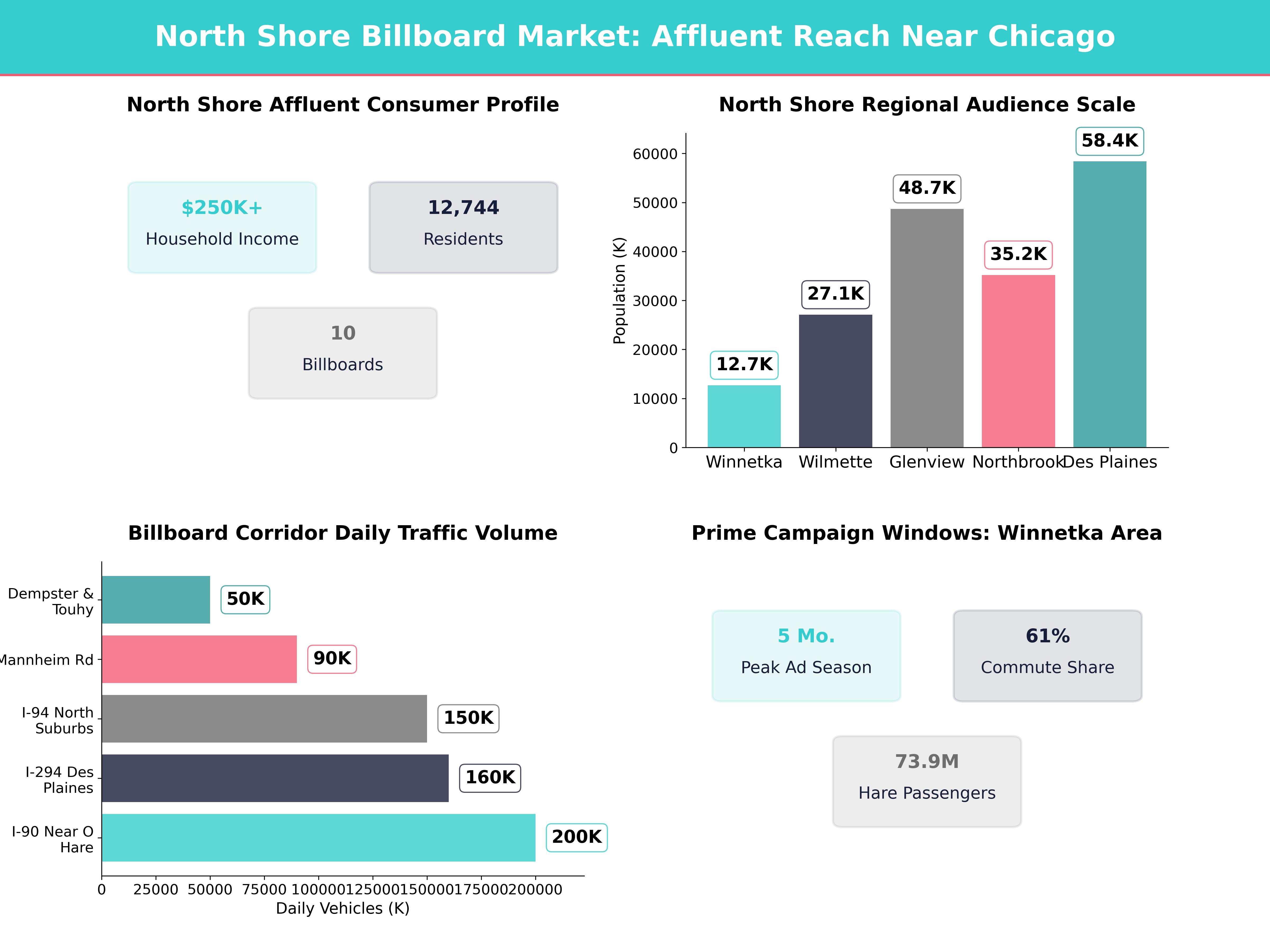
Advertising near Winnetka 12,744 residents in Winnetka and roughly 182,122 across nearby Winnetka, Wilmette Glenview, Northbrook Des Plaines, plus frequent regional travel toward shopping, healthcare, employment, and O'Hare International Airport, which handled 73.9 million passengers in 2023. We serve the Winnetka area with 10 digital billboards in nearby Des Plaines, just 9.5 miles away, which gives us access to the westbound routes many local households use every week and to the 150,000+ to 200,000+ vehicle-per-day expressway cluster serving Des Plaines and O'Hare. That placement helps us reach residents of Winnetka alongside neighboring communities such as Wilmette, Glencoe, Northfield
Winnetka area market overview
Demographics and household profile around Winnetka
The Village of Winnetka 2020 population of 12,744. On its own, that is a modest village population, but the surrounding ring expands quickly. Nearby Wilmette 27,087 residents, Glenview has about 48,705, Northbrook 35,222, and Des Plaines has about 58,364. Taken together, Winnetka, Wilmette, Glenview, Northbrook, and Des Plaines total roughly 182,122 residents, which is a substantial suburban audience for a targeted outdoor campaign.
Winnetka is also a high-value consumer market. Recent ACS releases place the village's median household income above $250,000, which reinforces why local advertisers often focus on premium services, home improvement, finance, education, healthcare, and luxury retail. We also see strong household stability in the village, which supports repeat-exposure campaigns for businesses that depend on trust and familiarity rather than one-time impulse buys.
Local commercial life is concentrated in 3 business districts: Elm Street, Hubbard Woods, and Indian Hill. Those districts matter because they show how Winnetka households split their time between neighborhood errands and broader regional trips. The Winnetka-Northfield-Glencoe Chamber of Commerce Cook County gives brands access to a labor market of more than 5.3 million residents overall.
Transportation habits and economic reach serving the Winnetka area
Winnetka is more transit-oriented than many suburbs because Metra 3 Union Pacific North stations: Hubbard Woods, Winnetka, and Indian Hill. That rail access is important for downtown Chicago commuters, but regional consumer behavior is still highly car-dependent. Recent community survey data generally put Winnetka's drive-alone commute share at about 56%, with roughly 5% more carpooling. In the broader Cook County market, private vehicles account for about 63% of commute trips when solo driving and carpooling are combined.
That mix tells us something useful. Even though rail is part of daily life, many high-value trips serving the Winnetka area still happen by car, especially for westbound shopping, airport runs, medical visits, extracurricular activities, and suburban work travel. That is why billboard placements near Des Plaines can be so effective. They meet the Winnetka audience where regional movement actually happens.
Education is another major economic and household driver. New Trier Township High School District 203 enrolls about 4,000 students across 2 campuses, including the Winnetka campus and the Northfield campus. That creates steady parent travel patterns, school-season purchase cycles, and strong demand for tutoring, healthcare, youth programs, restaurants, retail, and home services.
Key traffic corridors serving the Winnetka area
Expressways that connect the Winnetka area to Des Plaines and O'Hare
The most important westbound funnel for the Winnetka area is the route from local North Shore roads to the Illinois Department of Transportation expressway network. Residents commonly move west via Willow Road, Tower Road, or Lake Avenue to reach I-94, and then continue toward I-294, I-90, the airport district, and Des Plaines.
For billboard strategy, several corridor facts stand out:
- IDOT traffic counts show segments of I-94 in the north suburban corridor often exceeding 150,000 vehicles per day.
- Segments of I-294 near Des Plaines frequently exceed 160,000 vehicles per day.
- Near the airport, portions of I-90 can surpass 200,000 vehicles per day.
- Those volumes make the I-94, I-294, and I-90 cluster one of the strongest repeated-exposure zones serving the Winnetka area.
We use those expressways differently depending on campaign goals. For broad awareness, the value is scale and repetition. For destination campaigns, the value is intent, because drivers on those routes are often headed to work, retail, Rosemont
Arterials and commercial routes that reach Winnetka-area consumers
The arterial streets near Des Plaines are just as important as the expressways because they catch drivers at lower speeds and near decision points. IDOT counts on roads such as Dempster Street, Touhy Avenue, and Mannheim Road are consistently strong in commercial sections:
- Dempster Street and Touhy Avenue commonly fall in the 30,000 to 50,000 vehicles per day range, depending on segment.
- Mannheim Road near the airport and Rosemont zone often runs between 60,000 and 90,000 vehicles per day.
These routes matter for the Winnetka market because they sit where North Shore households intersect with shopping, dining, service, and travel decisions. A resident may leave the lakefront on a local feeder road, transition to I-94, and then continue through Des Plaines for airport parking, dining, meetings, or regional shopping. That kind of trip creates exactly the repeat-viewing environment we want.
A few corridor relationships are especially useful when we plan campaigns serving the Winnetka area:
- Willow Road to I-94 is a common westbound path for North Shore drivers.
- Lake Avenue and nearby connectors link Winnetka-area households to Glenview, Northfield, and the Edens corridor.
- Dempster Street and Touhy Avenue serve the Des Plaines, Rosemont, and airport trade area.
- Mannheim Road captures airport, hotel, convention, and entertainment traffic near Rosemont.
Winnetka-area audience segments we can reach
Affluent households, parents, and home-focused consumers near Winnetka
Winnetka is an excellent market for businesses that need affluent family decision-makers. We can reach parents, homeowners, and household planners who make recurring spending decisions on:
- Healthcare.
- Home services.
- Education and enrichment.
- Financial and legal services.
- Automotive and mobility services.
- Premium retail and dining.
The local family profile is reinforced by New Trier Township High School District 203, the village's strong residential base, and the North Shore's reputation for high discretionary spending. Messaging that emphasizes quality, reputation, convenience, and trust tends to resonate more strongly here than messaging built purely around deep discounts.
Seasonal family destinations also expand the audience. The Winnetka Park District 5 public beaches, which helps intensify summer movement. The Chicago Botanic Garden in nearby Glencoe draws about 1 million visitors annually, and Ravinia Festival presents more than 100 events in a typical summer season. Those attractions pull both locals and visitors through the broader North Shore and suburban corridor, which gives us good reasons to increase share of voice during late spring and summer.
Commuters, students, shoppers, and travelers serving the Winnetka area
We can also reach several highly active cross-suburban segments.
First, there are professionals and commuters. Even with Metra access, Winnetka-area consumers make frequent car trips to offices, client meetings, healthcare systems, and the airport corridor. The O'Hare zone is especially valuable because O'Hare International Airport handled 73.9 million passengers in 2023, and the surrounding business district includes hotels, parking, logistics, and meeting traffic throughout the year.
Second, there are regional shoppers. Westfield Old Orchard in Skokie 140+ shops and restaurants, and the wider westbound trade area adds destinations such as Fashion Outlets of Chicago, The Glen Town Center, and Rosemont entertainment venues. That matters because Winnetka households do not confine spending to one village. They move across the North Shore and airport corridor for comparison shopping, dining, events, and errands.
Third, there are students and education-driven audiences. Northwestern University enrolls more than 23,000 students, and Loyola University Chicago 17,000. Those institutions sit outside Winnetka, but they strengthen the broader North Shore consumer mix for apartments, food, retail, technology, banking, and entertainment. We can use billboard creative to speak either to the parent who pays or to the student who chooses.
Fourth, there are event and convention travelers. Rosemont adds year-round draw through Allstate Arena, the Donald E. Stephens Convention Center, and Parkway Bank Park
Seasonal and timing opportunities near Winnetka
Summer opportunities serving the Winnetka area
Summer is one of the strongest periods for outdoor advertising near Winnetka. Lakefront recreation, summer camps, weddings, home projects, and festival traffic all increase movement. We usually see strong relevance for these categories from May through September:
- Restaurants and premium dining.
- Outdoor, landscape, and home services.
- Family entertainment.
- Orthodontics, elective healthcare, and wellness.
- Real estate and home staging.
- Auto dealers and mobility services.
The Winnetka Park District Chicago Botanic Garden, and Ravinia Festival all support this pattern. Messaging can lean into weekends, evening outings, and same-day decisions. If a brand wants to catch people on the move, Friday afternoon through Sunday evening is often worth extra weight during summer.
Back-to-school, holiday, and winter timing near Winnetka
Back-to-school season is another natural fit. Campaigns launched from late July through September can align with family scheduling, student services, apparel, tutoring, enrichment, youth sports, and healthcare. Because New Trier Township High School District 203 operates 2 campuses and serves roughly 4,000 students, school calendars influence a large pool of parent decision-makers across the Winnetka area.
The holiday period also performs well. Retail and experiential spending rises as shoppers move between the North Shore, Skokie, Glenview, Des Plaines, and Rosemont. We often recommend increased presence from early November through late December for:
- Retail and gift campaigns.
- Restaurants and catering.
- Entertainment and ticketing.
- Travel and airport-related services.
- Healthcare benefits messaging before year-end deadlines.
Winter can be especially effective for categories that benefit from urgency. Snow, cold, and early darkness sharpen demand for healthcare, HVAC, fitness, tax preparation, and convenience-oriented offers. Because O'Hare travel remains active all year, airport-serving routes in Des Plaines can still provide dependable impressions even when lakefront leisure traffic slows.
From a daypart perspective, several windows often matter most:
- 6:00 a.m. to 9:00 a.m. for commuter awareness.
- 3:00 p.m. to 7:00 p.m. for return trips, retail stops, and family errands.
- Friday afternoons for airport and weekend traffic.
- Saturday late morning through early evening for shopping and dining.
Billboard design tips for the Winnetka market
Creative styles that fit the Winnetka area
The Winnetka audience generally responds best to polished, credible, low-clutter creative. We usually recommend a visual tone that feels more North Shore than bargain-bin. Clean typography, restrained color palettes, and strong photography tend to outperform loud layouts that look overly promotional.
For this geography, several design choices work especially well:
- Deep navy, charcoal, forest green, and crisp white often fit the lakefront and North Shore aesthetic.
- High-contrast layouts are important in winter weather and low-light commuting periods.
- Lifestyle imagery should feel authentic, local, and aspirational rather than generic.
- Service messages should emphasize quality, expertise, and convenience.
If the brand serves multiple North Shore communities, we should say so plainly. Lines such as “Serving Winnetka, Wilmette, Glencoe, and Northfield” can make the ad feel immediately relevant. For premium services, “Trusted by North Shore families” or “Minutes from Winnetka” often lands better than a hard-sell discount headline.
Message construction for Des Plaines billboards serving Winnetka
Because our boards serving the Winnetka area are in Des Plaines, message clarity matters. Drivers may be moving fast, switching lanes, or heading toward a decision point. We usually recommend:
- A core message of about 6 to 8 words.
- One primary benefit, not three.
- One clear brand cue.
- One response path, such as a short URL, memorable name, or simple offer.
We can also tune copy to corridor intent. A healthcare provider may lead with trust and proximity. A retail brand may highlight a product or weekend event. An airport-related service may emphasize speed, parking, or reservation ease. The best creative is not just attractive. It matches the reason people are on that road.
Regional strategies near Winnetka
A Des Plaines gateway strategy for the Winnetka area
Our first regional approach is the gateway strategy. We use Des Plaines inventory to intercept westbound movement from the North Shore before consumers reach the airport, Rosemont, or larger retail zones. This works well for brands that want broad awareness among affluent households from Winnetka, Wilmette, Glencoe, and Northfield.
This strategy is particularly effective for:
- Hospitals and specialty care groups.
- Auto dealers and vehicle services.
- Financial, legal, and professional services.
- Home remodeling and premium contractors.
- Restaurants, hotels, and event venues.
The reason is simple. These categories benefit from repeated exposure on routes people use again and again, not just one-time impulse traffic.
A suburban corridor strategy for shopping and services near Winnetka
Our second approach is a corridor strategy that follows how residents actually spend time. Winnetka-area consumers frequently travel to Glenview, Northbrook, Skokie, Des Plaines, and Rosemont for shopping, appointments, and dining. That means a billboard does not need to sit on the village border to be relevant. It needs to appear on the route to the destination.
For retailers, restaurants, and entertainment brands, we often pair location cues with immediacy. “Tonight,” “This weekend,” and “Reserve now” can work well on these regional trips. For service businesses, we usually prioritize authority and trust because decisions are less impulsive.
A North Shore service-area strategy near Winnetka
Our third approach is the service-area strategy. This is ideal for businesses whose customer base is defined by ZIP codes rather than storefront walk-ins. We can speak directly to North Shore households by naming community clusters, school-driven life stages, or common needs.
Examples include:
- Pediatric, orthodontic, and family healthcare.
- Tutors, test prep, and enrichment programs.
- Real estate teams and luxury home services.
- Estate planning, wealth management, and insurance.
- Boutique fitness and wellness brands.
This strategy works because it turns a Des Plaines billboard into a message for the broader Winnetka area. We are not trying to imitate hyperlocal village signage. We are using regional travel behavior to reach the same households at scale.
Blip tools for campaigns serving the Winnetka area
How we use Blip tools to match Winnetka-area travel patterns
Blip is especially useful for this market because the Winnetka audience is affluent, mobile, and not confined to one corridor all day. When we want broad reach across the 10 digital billboards serving the Winnetka area, a Blip-optimized campaign usually makes the most sense. We can set goals, audience focus, and budget, and let the platform distribute spend where timing and availability are strongest.
When we want more route control, we can use a manual campaign. That is helpful if we care about a specific Des Plaines corridor, a commuter-heavy time window, or a retail push tied to weekends or holidays. In either case, we can adapt quickly as conditions change.
We also like Blip here because local timing matters. A campaign can lean into morning commute windows, Friday airport traffic, summer weekends, or back-to-school bursts without locking us into a rigid buying structure. Real-time analytics help us see which timing choices are building reach most efficiently.
Budget flexibility and testing for the Winnetka market
The Winnetka market is a strong place to test and refine creative because small shifts in tone can materially change response. A premium medical practice, for example, may perform better with authority-led messaging, while a restaurant may do better with occasion-led messaging. With pay-per-play pricing starting at $0.01 per display, we can test that without the friction of a traditional long-term board commitment.
Each digital display is a short 7.5-to-10-second blip, so we can rotate creative by audience need. We can show one message in the commuter rush, another on weekends, and another during seasonal peaks. That flexibility is useful in a market where one audience may be airport-bound at 7:30 a.m. and Old Orchard-bound at 2:00 p.m.
Getting started with billboard rental near Winnetka
How to evaluate billboard locations serving the Winnetka area
When we start a billboard rental campaign near Winnetka, we first define what success looks like. Some advertisers need broad brand awareness. Others want store visits, appointment bookings, event attendance, or service calls. That goal should shape how we evaluate each location.
We usually recommend scoring boards on five questions:
- Does the location align with the audience's real travel path?
- Is the road carrying commuter, retail, airport, or event traffic?
- Do we need fast-reach expressway exposure or slower arterial visibility?
- Is frequency more important than total reach?
- Does the creative match the reason people are on that route?
For the Winnetka area, the answer is often not “find the closest board.” The better answer is “find the board on the most valuable trip.” A Des Plaines board near a major corridor may outperform a theoretically closer placement if it catches repeated westbound behavior tied to work, shopping, and travel.
What to expect from the rental process near Winnetka
Traditional billboard buying can involve packaged inventory, long negotiations, and commitments that are hard to change mid-campaign. We simplify that process. We can launch online, choose manual or optimized buying, control daily budgets, adjust timing, swap artwork, and stop or scale when performance or seasonality changes.
A practical starting plan for many advertisers serving the Winnetka area looks like this:
- Begin with a clear geographic target, such as Winnetka plus nearby North Shore communities.
- Start with one strong creative concept and one alternate version.
- Prioritize commute windows and one weekend block.
- Watch performance for at least 1 to 2 weeks.
- Shift budget toward the boards and times generating the best traction.
That approach keeps the campaign disciplined while giving us room to learn. For premium services, we usually optimize for consistency and repetition. For retail, dining, entertainment, and event campaigns, we may increase weight around weekends, school breaks, and holiday periods. Either way, the goal is the same: use the Des Plaines inventory to create meaningful, measurable visibility serving the Winnetka area.