Billboards near Tinley Park, IL
No Minimum Spend. No Long-Term Contracts. Just Results.
Trusted by Leading Brands


Billboard advertising
near Tinley Park has never been easier

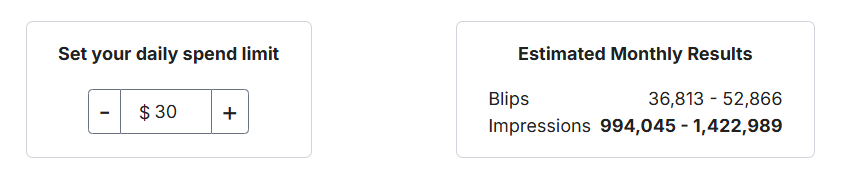
How much is a billboard near Tinley Park?
Why Choose Blip for Billboard Advertising near Tinley Park
Blip lets you launch Tinley Park billboards fast, reaching I-80, I-57, and Harlem Avenue commuters without a long-term contract.
Set a Tinley Park budget that fits your goals, then scale up for concert nights at Hollywood Casino Amphitheatre or convention days.
Use dayparting on Blip to hit Tinley Park drivers during 6-9 a.m. and 4-7 p.m., when commuter traffic is heaviest.
Track Tinley Park performance in real time, so you can shift spend toward boards near 159th Street, Metra stations, or event traffic.
Tinley Park's family and retail audience responds to clear creative—Blip's tools make it easy to swap messages for weekends, seasons, and sales.
Frequently Asked Questions About Billboard Advertising near Tinley Park
How much does a billboard cost near Tinley Park, Illinois with Blip?
With Blip, you can advertise on Tinley Park billboards on any budget, because you set your own daily spend and Blip automatically keeps your campaign within that limit. Each “blip” is a brief 7.5 to 10-second display on digital billboards near Tinley Park, Illinois, and you only pay for the blips you receive. Pricing varies based on when and where you choose to appear in the Tinley Park area, plus real-time advertiser demand, so you’re always in control.
Where can I advertise with Blip near Tinley Park, Illinois?
We have 19 digital billboards serving the Tinley Park area from nearby communities within about 10 miles, including Country Club Hills, Alsip, Worth, Thornton, and Blue Island. These suburbs sit along some of the most important travel corridors for Tinley Park residents, including I-80 and I-57, Harlem Avenue, Cicero Avenue, Pulaski Road, 159th Street, and 147th Street. If you are looking for billboards near Tinley Park for regional coverage, these locations create a powerful ring of visibility around the village that captures both local residents and through-traffic.
What kind of people does the Tinley Park, Illinois billboard audience reach?
Tinley Park is a large, established village in Cook County, roughly 25 miles southwest of downtown Chicago, with a population around 56,000 residents. The broader nearby communities add well over 170,000 more people within a short drive, putting more than 225,000 residents in the immediate trade area before even counting daytime workers and visitors. The area also has strong household income, a family-oriented base, and many residents age 45 or older.
When is the best time to run billboards near Tinley Park, Illinois with Blip?
Peak commuter windows are 6:00–9:00 a.m. in the morning and 3:30–7:00 p.m. in the evening, with the heaviest flows typically 4:30–6:30 p.m. during the return commute. Weekend traffic is also strong, especially from 11:00 a.m.–6:00 p.m. on Saturdays and Sundays. Using Blip, you can emphasize commuter dayparts, shift spend to midday, or boost weekends depending on your goals.
What events near Tinley Park, Illinois can Blip billboard ads reach?
The Tinley Park area is a regional destination for entertainment, sports, and conventions, creating powerful spikes in traffic and spending. Hollywood Casino Amphitheatre can draw 15,000–25,000 attendees per show, and the Tinley Park Convention Center hosts hundreds of events each year with an estimated 70,000–80,000 attendees annually. Community, sports, and seasonal events can also bring 5,000–20,000+ attendees over a weekend.
Do I need a contract to advertise with Blip near Tinley Park?
No, Blip has no long-term contracts or minimum commitments. You can start, pause, or stop your campaign at any time.
How fast can I launch a billboard campaign with Blip near Tinley Park?
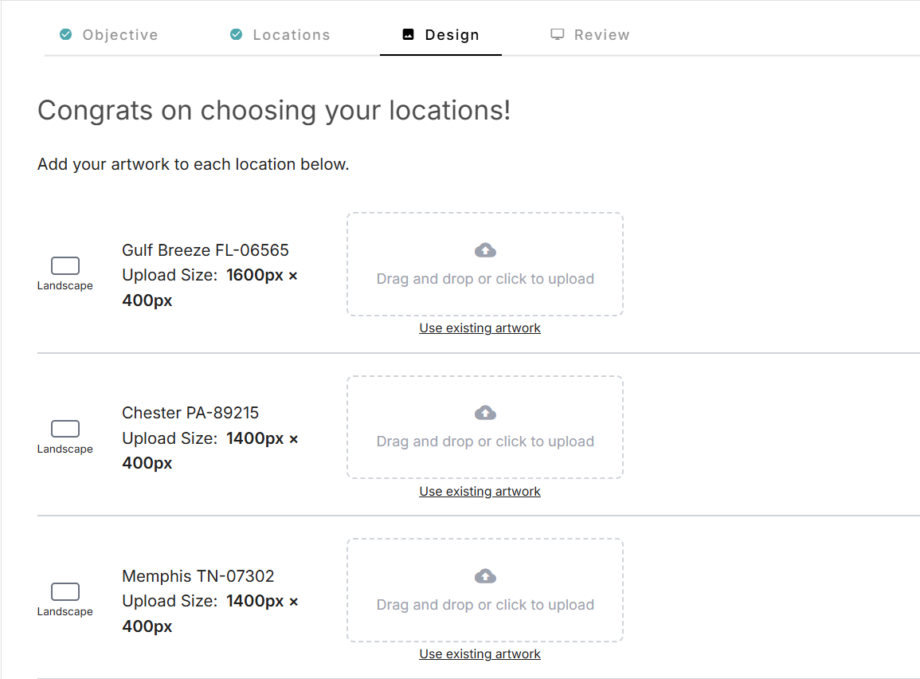
You can have your campaign live in minutes. Create a free account, select your locations, set your budget, upload your design, and start running once approved.
Where can I advertise with Blip near Tinley Park?
Blip has digital billboards near Tinley Park. You can browse available locations on a map, choose the ones that fit your audience, and start advertising right away.
Still have questions? Launch a campaign in minutes — no contracts, no commitments.
Start Your CampaignTinley Park Billboard Advertising Guide
We view the Tinley Park area as one of the strongest consumer markets in Chicago’s south suburbs, with a mix of commuters, families, and event-driven visitors that makes it ideal for digital billboards. With 19 digital billboards serving the Tinley Park area from nearby communities like Country Club Hills, Alsip, Worth, Thornton Blue Island, we can help advertisers use Blip to reach shoppers and commuters precisely when and where it matters most. These Tinley Park billboards function as a flexible, always-on presence for brands that want ongoing visibility on key routes. Below, we break down how to turn that local knowledge into a high-performing digital billboard strategy.

Understanding the Tinley Park Area Market
Tinley Park is a large, established village in Cook County, roughly 25 miles southwest of downtown Chicago. According to recent estimates, Tinley Park’s population is around 56,000 residents, and the broader nearby communities—such as Orland Park 58,000 residents), Oak Forest (about 26,000), Country Club Hills (about 16,000), and Hazel Crest (about 14,000)—add well over 170,000 more people within a short drive. That puts more than 225,000 residents in the immediate trade area before even counting daytime workers and visitors, all of whom can be reached efficiently with billboard advertising near Tinley Park.
A few key characteristics make the Tinley Park area especially attractive for billboard advertisers:
- Strong household income:
Median household income in Tinley Park is in the mid‑$90,000s (roughly $95,000–$97,000), well above Illinois’ statewide median in the low–$70,000s. Nearby Orland Park is even higher, with median household income around $100,000+. This supports robust discretionary spending on categories like home improvement, dining, travel, fitness, and automotive. In many south suburban ZIP codes around Tinley Park, consumer retail spending per household exceeds $40,000/year. - Family-oriented:
Around 32–35% of Tinley Park households include children under 18, and roughly 55–60% of households are married‑couple families. Nearby Orland Park, Oak Forest, and Country Club Hills show similar family rates, creating a large audience for schools, pediatric and family healthcare, after‑school activities, and family entertainment. - Homeownership & stability:
Approximately 75–80% of Tinley Park housing units are owner‑occupied, and more than 60% of residents have lived in the same home for 5+ years. Stable, long‑term residents are ideal for repeated local branding campaigns (medical practices, financial advisors, real estate, and home services) that rely on name recognition and trust. - Aging but active residents:
About 45–50% of Tinley Park residents are 45 or older, and roughly 18–20% are 65+. Many are in their peak earning or early retirement years—prime audiences for healthcare, retirement planning, travel, and high‑value home upgrades. At the same time, the strong base of families with children creates a dual‑demographic market that can support both senior‑focused and youth‑focused messaging.
For more background on the community, we recommend exploring the Village of Tinley Park website as well as the Tinley Park Chamber of Commerce, which highlights local businesses and economic activity. Regional context and visitor data are also available through the Chicago Southland Convention & Visitors Bureau Cook County government.
Where Our Billboards Reach the Tinley Park Area
We have 19 digital billboards serving the Tinley Park area from nearby communities within about 10 miles:
- Country Club Hills (~4.2 miles from Tinley Park)
- Alsip (~8.0 miles)
- Worth (~8.0 miles)
- Thornton
- Blue Island (~9.7 miles)
If you are looking for billboards near Tinley Park for regional coverage, these locations create a powerful ring of visibility around the village that captures both local residents and through‑traffic.
These suburbs sit along some of the most important travel corridors for Tinley Park residents:
- I‑80 and I‑57 – major commuter and freight routes. Segments near Tinley Park routinely see 120,000–160,000 vehicles per day, according to regional traffic counts.
- Harlem Avenue (IL‑43) – a key north–south retail and commuter corridor, often carrying 30,000–40,000 vehicles per day through nearby south suburban segments.
- Cicero Avenue (IL‑50) and Pulaski Road – important north–south routes connecting deeper into the south side of Chicago, with many stretches exceeding 20,000 vehicles per day.
- 159th Street and 147th Street – major east–west arterials that serve retail and service clusters; typical traffic volumes are 25,000–35,000+ vehicles per day.
By placing digital messages near these corridors, you can reach:
- Daily commuters traveling between the Tinley Park area and Chicago or other suburbs. In Cook County, more than 70% of workers commute by car, and average one‑way commute times are around 30–33 minutes, ensuring repeated exposure to roadside media.
- Retail shoppers heading to and from shopping hubs in Orland Park Oak Lawn. The Orland/Tinley corridor is one of the largest retail clusters in the south suburbs, generating hundreds of millions of dollars in annual retail sales.
- Event traffic driving to venues like the Hollywood Casino Amphitheatre and Tinley Park Convention Center, where individual events can add 10,000–25,000+ additional trips to local roadways on a single day.
Because Blip allows you to select specific boards and times, you can align your presence with the exact flows of people you want to reach near Tinley Park, matching high‑traffic segments and peak periods to your best customer profiles. This makes on‑demand billboard rental near Tinley Park practical even for smaller businesses.
Commuter & Traffic Patterns to Tap Into
The Tinley Park area is deeply commuter‑oriented. Many residents travel to jobs elsewhere in the region, and roadways near Tinley Park support both local and regional traffic.
Key patterns to build your schedule around:
-
Peak commuter windows:
Local traffic counts and regional commuting data show that:- Morning: 6:00–9:00 a.m., peaking roughly 7:00–8:30 a.m. on I‑80, I‑57, and Harlem Avenue
- Evening: 3:30–7:00 p.m., with the heaviest flows typically 4:30–6:30 p.m. as workers return from downtown Chicago and other employment centers in the south suburbs
During these peaks, volumes on major interstates can be 30–50% higher than mid‑day baselines.
-
Metra influence:
Tinley Park is served by two Metra Rock Island District Tinley Park and Tinley Park 80th Avenue. Pre‑pandemic, Rock Island stations in Tinley Park saw a combined average of roughly 1,500–2,000 weekday boardings. Recent ridership trends indicate recovery to around 60–75% of those levels, or 1,000+ riders per weekday, many of whom drive and park near stations. This generates additional roadway traffic during rush hours around station areas. -
Logistics & industrial traffic:
I‑80 is one of the busiest trucking corridors in the Midwest, carrying an estimated 20,000–30,000 heavy trucks per day through sections of the south suburbs. That means strong weekday exposure for B2B advertisers—logistics, industrial supplies, fleet services, staffing, and training—during standard business hours (8:00 a.m.–5:00 p.m.). -
Weekend retail traffic:
Shopping areas around Tinley Park, Orland Park, and the 159th Street corridor see heavier traffic on Saturdays and Sundays, with late morning to early evening (11:00 a.m.–6:00 p.m.) especially strong. Regional shopping research shows that weekend days often account for 35–45% of weekly in‑store visits, a pattern that matches local mall and big‑box usage.
Using Blip, you can:
- Emphasize commuter dayparts (e.g., 6–9 a.m. and 4–7 p.m.) for service businesses, schools, or entertainment venues that rely on visibility with working adults.
- Shift spend to midday (10 a.m.–3 p.m.) for B2B or senior‑focused campaigns, when retired or flexible‑schedule residents are out running errands or heading to appointments.
- Boost weekends for restaurants, family entertainment, churches, auto dealerships, and big‑box retail promotions, when many local businesses see 20–40% of their weekly revenue.
Event-Driven Opportunities Near Tinley Park
The Tinley Park area is a regional destination for entertainment, sports, and conventions—creating powerful spikes in traffic and spending that can materially outperform “average” days.
Key venues and events:
-
Hollywood Casino Amphitheatre (Tinley Park)
The Hollywood Casino Amphitheatre is one of the largest outdoor music venues in the Chicago region, with a capacity of roughly 28,000 (around 11,000 pavilion seats plus 17,000 in the lawn). A typical season can include 25–35 major concerts, often drawing 15,000–25,000 attendees per show. On concert days, traffic volumes surge on I‑80, Harlem Avenue, and intersecting routes several hours before and after shows, with local restaurants and bars often reporting double or triple their usual evening sales on big‑act nights.- Ideal advertisers: restaurants, bars, rideshare services, hotels, parking operations, event merchandise, rides and attractions, and tourism brands.
- Strategy: Use Blip to concentrate impressions on concert days, starting late afternoon (3–7 p.m.) and after shows (9–11 p.m.) on nearby boards serving the Tinley Park area. Consider customized messages tied to specific artists or themed concert nights.
-
Tinley Park Convention Center
The Tinley Park Convention Center offers more than 70,000 square feet of exhibit space and 30,000 square feet of flexible pre‑function and breakout areas. It hosts hundreds of events each year, from trade shows and conferences to consumer expos and banquets, drawing an estimated 70,000–80,000 attendees annually. The convention center sits adjacent to a hotel cluster with 1,000+ hotel rooms within a short walk or drive.- Ideal advertisers: B2B services, local attractions, restaurants, hotels, transportation services, and event suppliers (AV, printing, catering).
- Strategy: Target boards near Country Club Hills, Alsip, and Worth during large conventions and trade shows, with day‑specific messaging (“Welcome Convention Attendees – Show Your Badge for 10% Off”). For multi‑day events, schedule higher frequency on arrival and departure days, when travel‑related decisions spike.
-
Community, sports, and seasonal events
The Tinley Park Park District Village of Tinley Park events calendar Chicago Southland Convention & Visitors Bureau 5,000–20,000+ attendees over a weekend, while sports tournaments bring in hundreds of families from surrounding communities.- Ideal advertisers: local retailers, family attractions, photographers, healthcare providers, financial institutions, and nonprofits.
- Strategy: Run short, high‑frequency bursts of Blips around event weekends for pre‑promotion and day‑of directions or offers. Even a 3–5 day concentrated campaign can make a noticeable difference in turnout and same‑day sales.
Seasonal Advertising Strategies for the Tinley Park Area
Because Tinley Park experiences all four seasons, consumer behavior—and daylight conditions—shifts dramatically throughout the year. Average high temperatures range from the low 30s°F in January to the mid‑80s°F in July, and the area sees roughly 36–40 inches of snow and 35–40 inches of rain annually. Align your creative and scheduling accordingly:
-
Winter (Dec–Feb):
- Focus on: holiday shopping, auto repair, home heating, healthcare, tax prep, and fitness memberships. Retailers often see 25–30% of annual sales in November–December alone.
- Strategy: Use bright, high‑contrast designs that cut through early‑night darkness; sunset can be as early as 4:20 p.m. in December. Increase frequency during the evening commute (3:30–7:00 p.m.), when visibility is lower and roads are more congested.
- Example: “Heater acting up? Same‑day service near Tinley Park – Call Today.”
-
Spring (Mar–May):
- Focus on: home improvement, landscaping, roofing, spring sports, and summer camp sign‑ups. Home services demand typically rises 20–40% from winter levels as weather improves.
- Strategy: Increase spend on weekends and midday when families run errands and visit home centers. Highlight offers that match tax‑refund season, as many households receive refunds between late February and April.
- Example: “New Roof by Summer – 0% Financing – Serving Tinley Park Area Homes.”
-
Summer (Jun–Aug):
- Focus on: concerts, travel, festivals, outdoor dining, youth activities, and back‑to‑school prep. Tourism‑related and entertainment spending can climb 20–30% over spring levels in many suburban markets.
- Strategy: Tie into Hollywood Casino Amphitheatre and local festival schedules; emphasize late afternoon and evening (3–10 p.m.) as people head out. With longer daylight (sunset after 8:30 p.m. in June), bold color and event‑driven messaging perform especially well.
- Example: “Heading to Tonight’s Show? Park & Dine Just 5 Minutes Away.”
-
Fall (Sep–Nov):
- Focus on: back‑to‑school, healthcare check‑ups, insurance enrollment, auto sales, and early holiday promotions. Many schools start in mid‑August to early September, and open enrollment for healthcare typically runs October–December.
- Strategy: Heavier weekday campaigns targeting parents during commute times and school start/end; emphasize 7–9 a.m. and 2:30–6 p.m.. Fall is also prime time for automotive incentives, with many dealers pushing new‑model‑year launches and year‑end clearance.
- Example: “Urgent Care Near Tinley Park – Open Late for After‑School Injuries.”
Crafting Effective Creative for Drivers Near Tinley Park
Drivers near Tinley Park are often moving at highway or arterial speeds, so clarity and speed of comprehension are critical. Research on outdoor advertising consistently shows that legible, simple designs significantly outperform cluttered ones.
A few data‑driven creative best practices:
-
Limit copy to 7 words or fewer.
At 55–65 mph, drivers typically have 6–8 seconds of view time. Billboards with 7 words or fewer tend to deliver higher recall rates (often 20–30% better than wordy ads) because they can be processed in a single glance.- Good: “New Patients Welcome – Dentist 5 Min Ahead”
- Bad: “Now Accepting New Dental Patients for Comprehensive Preventive and Cosmetic Care”
-
Use large, bold typography and high contrast.
Aim for lettering that’s at least 18–24 inches tall on standard highway boards, equivalent to big, bold type on your digital artwork. High‑contrast color combinations—white or yellow on black, black on light yellow, or bright colors on dark backgrounds—improve legibility at distance and in low‑light or rainy conditions. -
Feature one main call‑to‑action.
Studies of OOH response show that a single, clear CTA can lift response rates by 10–25% vs. multiple competing asks. Common CTAs that work well near Tinley Park:- “Exit at Harlem for [Business Name]”
- “Schedule Today – [Short URL]”
- “Text TINLEY to 55555”
-
Leverage recognizable local cues.
Local references increase relevance and trust.- Mention major roads: “Just off 159th & Harlem,” “Near I‑80 & LaGrange.”
- Reference known anchors: “Across from Tinley Park Convention Center,” “Next to [Local Grocery/Big-Box Store].”
Local familiarity helps drivers quickly understand where you are, which is crucial at highway speeds.
-
Use creative variations for different audiences.
With Blip, you can upload multiple creatives and show different messages by time of day:- Morning: coffee, breakfast, commuting services (“Beat Chicago Traffic – Try Metra from Tinley Park”)
- Midday: errands, healthcare, home services
- Evening: dinner, entertainment, urgent care
Time‑of‑day targeting can significantly improve relevance; campaigns that use tailored daypart creative often see 10–30% higher engagement than one‑size‑fits‑all messaging.
Check local style and community tone from outlets like Tinley Park Patch and the Daily Southtown to match how locals talk and what they care about. Additional regional news context can be found via WGN-TV ABC7 Chicago – South Suburbs.
Using Blip’s Tools Strategically in the Tinley Park Area
Blip’s flexibility is especially valuable in a market like the Tinley Park area, where traffic patterns and audiences change by time and location. Whether you need long‑term exposure or a short burst of billboard rental near Tinley Park for a specific event or sale, you can adjust your approach quickly.
Key tactics:
-
Board-level targeting:
- Emphasize Country Club Hills and Alsip boards to catch I‑57 and I‑80 commuters, including tens of thousands of daily drivers heading toward Chicago and other suburbs.
- Use Worth and Blue Island boards to reach northbound traffic heading toward Oak Lawn, Evergreen Park, and Chicago’s south side, tapping into dense residential and retail zones.
- Use Thornton-area boards to capture I‑294 and I‑80 travelers east/west of Tinley Park, including regional freight and long‑distance travelers who may be looking for food, fuel, and lodging.
-
Dayparting & day-of-week control:
- Weekday rush‑hour focus for professional services, schools, and recurring appointments—when 60–70% of daily work trips occur.
- Weekend focus for churches, attractions, auto dealers, furniture or appliance retailers, and events; many dealers and big‑box stores report 30–40% of weekly showroom traffic on Saturdays and Sundays.
- Special event windows for concerts and conventions, as discussed earlier, when localized traffic can spike 20–50% above typical volumes on surrounding roads.
-
Budget pacing:
- Start with a modest daily budget (for example, $10–$30/day) spread across multiple boards to test reach and creative performance.
- Increase bids on boards or times where you see an impact in key metrics (website traffic, calls, foot traffic, or inquiries). Even a 20–30% budget shift toward top‑performing times/locations can yield outsized returns.
- Shift budget seasonally—more in late summer for back‑to‑school or mid‑November for holiday pushes—matching periods when your category typically sees 15–40% higher demand.
-
Rotating creative:
- Run 2–4 creative variations at the same time to learn what resonates (discount vs. no discount, different images, directional vs. branding). Split‑testing like this can quickly reveal which offers or headlines produce better response.
- Use Blip’s flexibility to switch artwork quickly for weekend sales, concert days, or weather‑triggered promotions (e.g., heating and snow‑removal after a storm, A/C tune‑ups during heat waves).
Matching Your Industry to Local Audience Behavior
Different businesses should lean into different aspects of the Tinley Park area’s behavior and layout. The goal is to align your billboard exposure with when and where your best customers are most active.
Local retail & restaurants
-
Use offers like “Tonight Only” or “This Weekend” to drive urgency; short‑window promotions often see higher redemption rates than evergreen offers.
- Target boards serving the Tinley Park area during evening commute (4–7 p.m.) and weekends, when dining and shopping decisions spike.
- Mention nearby intersections or landmarks and keep the message big and simple to convert drive‑by impressions into visits.
Healthcare, dental, and wellness
- Emphasize proximity and convenience: “Same‑Day Appointments – 5 Minutes from Tinley Park.” Surveys show that location and convenience are top decision factors for primary and urgent care in suburban areas.
- Target school-year mornings and evenings, when parents are driving children—around 7–9 a.m. and 2:30–6 p.m.
- Add seasonal spins: sports physicals in late summer, flu shots in fall, allergy care in spring. Many clinics see flu‑shot volume peak in October–November, while sports physicals surge in July–August.
Home services (HVAC, roofing, landscaping, remodeling)
-
Use weather and season to your advantage:
- Heavy spring messaging for roofing and gutters, when freeze–thaw cycles reveal leaks and damage.
- Summer for landscaping and exterior work, when daylight hours are long and projects ramp up.
- Winter for heating or emergency plumbing; cold snaps can trigger a spike in service calls of 20–50% over normal days.
- Focus on credibility: years in business, local ownership, warranty, “Serving the Tinley Park Area.” Trust indicators can significantly improve response in high‑ticket categories.
Automotive sales and service
- Target high-traffic corridors like I‑80 and Harlem Avenue via nearby boards to reach both local residents and regional shoppers.
- Run bursts during manufacturer incentive periods and end-of-month pushes, when dealerships often close 30–40% of their monthly volume.
-
Consider separate creatives for:
- Sales (“0% APR on 2025 Models – Exit Harlem”)
- Service (“Oil Change Special – No Appointment Needed”)
Distinct messages allow you to track which side of the business is getting more response.
Education & training (K‑12, colleges, trades, tutoring)
- Align with registration windows (spring/summer for fall enrollment, late fall for January starts). Campaigns that start 60–90 days before key deadlines tend to see the best lift.
- Target boards serving the Tinley Park area during peak school commute times, when parents and older students are on the road.
- Use simple CTAs: “Enroll Now – [Short URL],” “Visit Our Open House June 10.” For awareness campaigns, consider adding outcomes (“94% Job Placement” or “Top‑Rated Test Scores”) if you have strong stats.
Measuring and Optimizing Campaign Performance
To get the most value from your Blip campaigns serving the Tinley Park area, treat billboard advertising like a test‑and‑learn channel and track performance just as you would with digital campaigns. This applies whether you’re running long‑term Tinley Park billboards for branding or short runs of billboard advertising near Tinley Park around a specific promotion.
Ways to measure impact:
-
Track web and search behavior:
- Monitor for spikes in direct traffic and “near me” searches tied to the times and areas you’re running Blips—especially during your heaviest dayparts. It’s common for well‑executed billboard campaigns to lift branded search volume by 10–30% during active flight periods.
- Use a short, memorable URL or QR code unique to your billboard creative, and check how many visits or scans you get during the campaign.
-
Use dedicated phone numbers or promo codes:
- Example: “Mention ‘TINLEY20’ for 20% Off.” Track how often customers use it versus other offers. Even if only 5–15% of new customers mention the billboard, it gives you a measurable baseline.
-
Ask new customers how they heard about you.
- Add “Saw Our Billboard” as an option on forms or at point of sale. Over time, you can compare the share of customers reporting billboard exposure to your spend levels and impressions.
-
Monitor local sentiment and awareness:
- Keep an eye on local news sites like ABC7 Chicago – South Suburbs, Tinley Park Patch, and the Daily Southtown, along with community Facebook groups and neighborhood apps, to gauge visibility and word-of-mouth. Mentions or photos of your billboard are strong signs that your creative is resonating.
Optimization strategies:
- If awareness is rising but response is low, simplify your message and strengthen the offer—aim for a single, high‑value benefit and a clear CTA.
- If response is strong during certain times or on specific boards, shift more budget to those dayparts and locations. Even a 20–30% reallocation toward top performers can improve overall campaign ROI.
- Refresh creative every 4–8 weeks to avoid “ad fatigue,” especially for locals who pass the same boards daily. Simple changes—new headline, color scheme, or image—can help maintain attention.
Putting It All Together
The Tinley Park area combines strong household income, family‑oriented neighborhoods, heavy commuter traffic, and major event venues—an ideal environment for strategic digital billboard advertising. By:
- Targeting the 19 boards serving the Tinley Park area from nearby communities like Country Club Hills, Alsip, Worth, Thornton, and Blue Island, giving you comprehensive coverage with billboards near Tinley Park,
- Aligning your schedule with local commute patterns, seasonal shifts, and event calendars from sources like the Village of Tinley Park and Chicago Southland Convention & Visitors Bureau
- Crafting clear, locally relevant creative that matches how residents talk and travel,
- And using Blip’s flexible budget, dayparting, and creative rotation tools for billboard advertising near Tinley Park,
you can turn high‑traffic roads near Tinley Park into a consistent, measurable growth channel for your brand.