Billboards near North Chicago, IL
No Minimum Spend. No Long-Term Contracts. Just Results.
Trusted by Leading Brands


Billboard advertising
near North Chicago has never been easier
How much is a billboard near North Chicago?
Why Choose Blip for Billboard Advertising near North Chicago
North Chicago self-serve on Blip lets you launch fast near U.S. 41 and Buckley Road, reaching commuters, military traffic, and shoppers without a long buying process.
With Blip-optimized campaigns in North Chicago, your budget targets the best times on Lake Bluff boards serving Great Lakes, Waukegan, and Gurnee traffic.
No contracts in North Chicago mean you can start small, adjust anytime, and stay flexible for seasonal spikes from Six Flags, Gurnee Mills, and summer lakefront trips.
Track real-time results in North Chicago and shift spend as I-94, Green Bay Road, and Route 176 patterns change across weekday commutes and weekend errands.
Use Blip's creative tools to build bold North Chicago ads that stand out on fast roads like U.S. 41 and Buckley Road with clean, high-contrast messaging.
Frequently Asked Questions About Billboard Advertising near North Chicago
How much does a billboard cost in North Chicago with Blip?
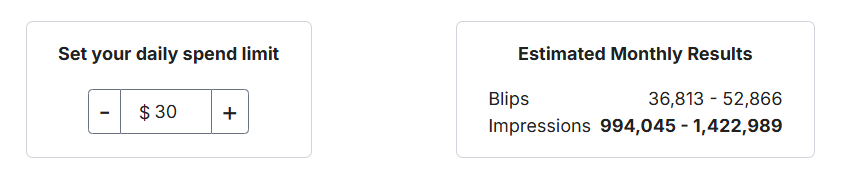
Blip makes billboard advertising in the North Chicago area flexible and budget-friendly. You choose a daily budget, and Blip’s algorithm uses it to bid for available ad slots on digital billboards serving the North Chicago area. You only pay when your ad actually runs, with each 7.5-to-10-second display, or “blip,” starting at just $0.01.
Where can I advertise near North Chicago with Blip?
Our 2 digital billboards in nearby Lake Bluff are just 1.3 miles from North Chicago and within 10.0 miles of the market. That gives advertisers a practical way to reach people moving through the North Chicago area every day. Because the local audience regularly travels between Waukegan, Gurnee, Lake Forest, and the Great Lakes campus area, billboard advertising near North Chicago can generate visibility well beyond a single neighborhood.
What kind of traffic and audience does North Chicago have for billboard ads?
North Chicago sits in one of Lake County's most active travel corridors, where military traffic, healthcare, higher education, suburban commuting, and destination shopping all overlap across a county of 714,342 residents and routes that routinely move roughly 15,000 to 100,000+ vehicles per day. The local economy is anchored by a mix of military activity, life sciences, healthcare, education, retail, and manufacturing. This market works especially well for brands that want flexible, road-focused reach tied to real commuting and errand patterns.
When is the best time to run a North Chicago Blip campaign?
Spring and summer are prime seasons for billboard advertising serving North Chicago because the market picks up from several directions at once. We typically see good opportunities for restaurants, attractions, medical services, moving companies, home improvement brands, auto service businesses, and summer promotions from May through August. Late summer and fall are also excellent for back-to-school and routine-reset campaigns, and holiday retail is another strong period from October through December.
Do I need a contract to advertise with Blip near North Chicago?
No, Blip has no long-term contracts or minimum commitments. You can start, pause, or stop your campaign at any time.
How fast can I launch a billboard campaign with Blip near North Chicago?
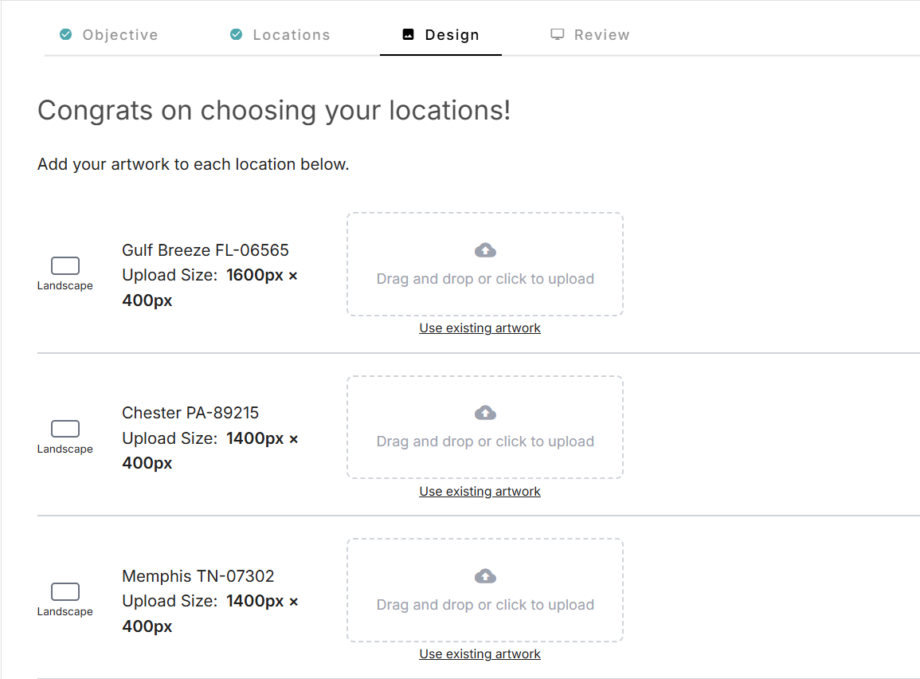
You can have your campaign live in minutes. Create a free account, select your locations, set your budget, upload your design, and start running once approved.
Where can I advertise with Blip near North Chicago?
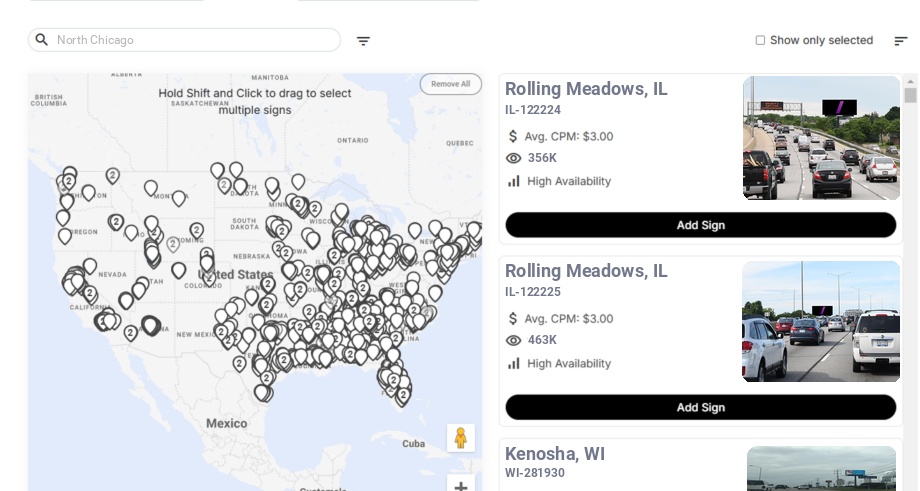
Blip has digital billboards near North Chicago. You can browse available locations on a map, choose the ones that fit your audience, and start advertising right away.
Still have questions? Launch a campaign in minutes — no contracts, no commitments.
Start Your CampaignNorth Chicago Billboard Advertising Guide
North Chicago sits in one of Lake County 714,342 residents and routes that routinely move roughly 15,000 to 100,000+ vehicles per day. Our 2 digital billboards in nearby Lake Bluff are just 1.3 miles from North Chicago and within 10.0 miles of the market, which gives advertisers a practical way to reach people moving through the North Chicago area every day. Because the local audience regularly travels between Waukegan, Gurnee, Lake Forest, and the Great Lakes campus area, billboard advertising near North Chicago can generate visibility well beyond a single neighborhood. We find that this market works especially well for brands that want flexible, road-focused reach tied to real commuting and errand patterns.
North Chicago area market overview
The population base around North Chicago
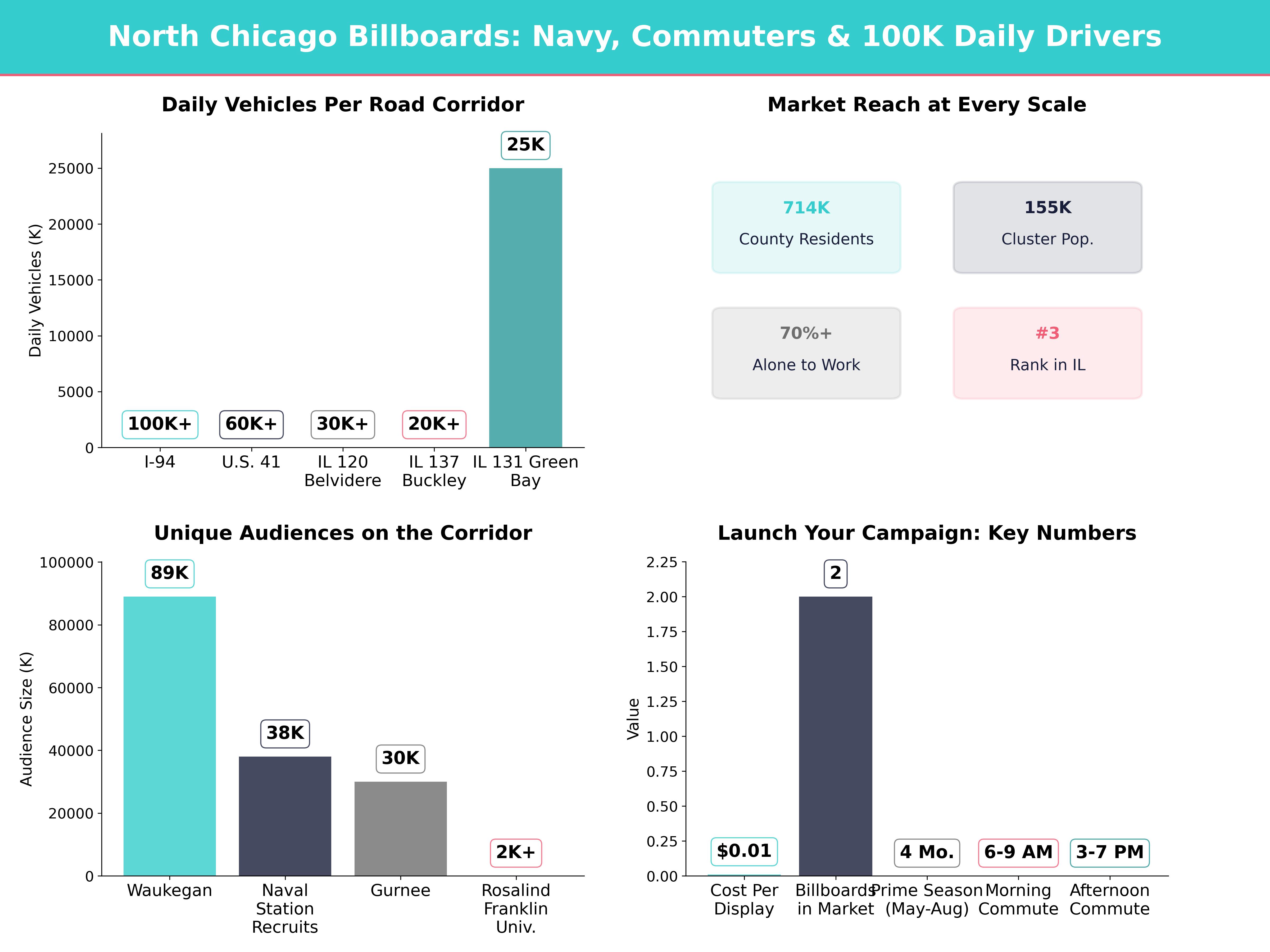
Using 2020 Census counts, North Chicago has 30,759 residents. The surrounding market is much larger, with Waukegan at 89,321 residents, Gurnee at 30,067, and Lake Bluff at 5,616. Lake County 714,342 residents, which makes it the 3rd most populous county in Illinois.
Those nearby municipal counts matter because the North Chicago area functions as a shared travel shed rather than an isolated destination. Across North Chicago, Waukegan, Gurnee, and Lake Bluff alone, advertisers can speak to a combined local cluster of 155,763 residents before we even add neighboring communities such as Lake Forest, Libertyville, and Vernon Hills
We also like the North Chicago area because it is diverse in age, household type, and daily purpose, within a market that includes 30,759 North Chicago residents and 714,342 county residents. Some drivers are headed to base-related activity, some are commuting to healthcare or office jobs, some are students, and many are families running errands between school, shopping, and recreation. That mix gives billboard campaigns room to work for both broad-reach branding and highly practical local offers.
Economic anchors and commuting behavior in the North Chicago area
The local economy is anchored by a mix of military activity, life sciences, healthcare, education, retail, and manufacturing. Major organizations in and around the market include AbbVie Rosalind Franklin University of Medicine and Science, College of Lake County, and business development groups such as Lake County Partners. Rosalind Franklin University reports enrollment of more than 2,000 students, which supports a steady audience of students, faculty, staff, and visitors near North Chicago.
The Great Lakes military presence is another major factor. Naval Station Great Lakes is the Navy's only boot camp, and official materials commonly cite about 38,000 recruits trained each year. That creates a year-round flow of service members, civilian workers, and visiting family members serving the North Chicago area.
From an advertising standpoint, the biggest takeaway is that this is still a road-dominant market. Recent American Community Survey estimates show drive-alone commuting above 70% in Lake County, and the car share rises higher when carpools are included. Metra Pace Suburban Bus absolutely matter for some trips, but most daily exposure still comes from drivers using arterials and expressways. That is exactly the environment where digital billboards near North Chicago can do their best work.
Key traffic corridors serving the North Chicago area
U.S. 41, Green Bay Road, and Route 176 near North Chicago
Our Lake Bluff inventory is valuable because it sits close to the routes that carry traffic between Lake Bluff, Lake Forest, and the North Chicago area. According to the Illinois Department of Transportation U.S. 41 near Lake Bluff and North Chicago commonly run at 60,000+ vehicles per day. That makes U.S. 41 one of the strongest billboard corridors for reaching commuters, shoppers, and service-oriented consumers serving North Chicago.
IL 131/Green Bay Road is another important local spine. Depending on the segment, Green Bay Road commonly carries roughly 15,000 to 25,000 vehicles per day, and it connects residential areas, schools, retail nodes, and commuter traffic throughout the North Shore and the North Chicago area. It is especially useful for advertisers that want visibility on repeat local trips rather than only long-distance regional traffic.
IL 176/Rockland Road helps connect Lake Bluff and Lake Forest drivers to interior Lake County and to I-94. Even when advertisers are primarily interested in North Chicago households, Route 176 matters because it feeds the nearby billboard locations from the west and south. We often think of this route as a handoff corridor, where suburban drivers transition from neighborhood travel to larger regional roads.
Buckley Road, Sheridan Road, and I-94 regional flows near North Chicago
IL 137/Buckley Road is critical for the Great Lakes, medical, industrial, and residential audience serving the North Chicago area. IDOT counts on busy Buckley Road segments are commonly in the 20,000+ vehicles per day range. That level of volume is meaningful because Buckley Road is not just a pass-through route. It carries people with clear intent, including workers reporting for shifts, students, patients, service members, and local residents making routine trips.
Farther west, I-94 acts as the main regional feeder into the North Chicago area from the rest of Lake County and the northern suburbs. On nearby segments around Lake Forest, Libertyville, and Gurnee, traffic regularly reaches well above 100,000 vehicles per day. For advertisers that need broader regional awareness, I-94 traffic is what turns a local North Chicago-area campaign into a countywide conversation.
We also pay attention to IL 120/Belvidere Road in Gurnee, where IDOT counts often exceed 30,000 vehicles per day on busy segments. That road matters because it feeds major shopping and entertainment destinations that North Chicago-area residents use regularly. Even though the billboards serving North Chicago are in Lake Bluff, the behavior of consumers on Route 120 helps define when people are in an active spending mindset.
Audience segments we can reach near North Chicago
Commuters, military households, and healthcare professionals in the North Chicago area
The first major audience is the commuter base. Because Lake County commuting is heavily car-dependent, billboards near North Chicago can reach people multiple times each week on routine drives to work, school, and errands. This is especially useful for banks, urgent care providers, legal services, home services, auto dealers, insurance agencies, apartment communities, and local retailers.
The second major audience is the military ecosystem around Great Lakes. About 38,000 recruits train there annually, and that number does not include the broader civilian and family traffic connected to the base. For businesses that serve young adults, families, uniforms, telecom, transportation, food, finance, or housing, that military audience creates repeat need and frequent turnover.
The third major audience is healthcare and education. Rosalind Franklin University of Medicine and Science brings more than 2,000 students into the market, while nearby medical providers and life-science employers create a professional audience with regular weekday routines. AbbVie
Students, shoppers, families, and weekend visitors near North Chicago
The North Chicago area also benefits from strong retail and recreation pull. Gurnee Mills 1.8 million square feet of retail, which makes it one of the largest shopping draws in the region. Six Flags Great America covers roughly 300 acres, adding a major seasonal leisure audience that spills into nearby roads used by North Chicago-area residents and visitors.
Outdoor recreation matters too. Illinois Beach State Park 4,160 acres, and the Lake County Forest Preserves 31,000 acres across 60 preserves. Those figures tell us that weekend travel in the North Chicago area is not only about errands. It is also about beaches, trails, sports, family outings, and short regional getaways.
For family-focused advertisers, that is a strong combination. We can reach parents heading to school activities, families driving to recreation, teens and college-age consumers moving between campuses and retail corridors, and weekend visitors exploring Visit Lake County
Seasonal and timing opportunities near North Chicago
Spring and summer campaigns serving the North Chicago area
Spring and summer are prime seasons for billboard advertising serving North Chicago because the market picks up from several directions at once. Warmer weather increases local driving, destination shopping grows, parks and lakefront areas become more active, and Great Lakes family travel remains a factor. We typically see good opportunities for restaurants, attractions, medical services, moving companies, home improvement brands, auto service businesses, and summer promotions from May through August.
Tourism-oriented destinations nearby strengthen that window. Illinois Beach State Park Six Flags Great America, Gurnee Mills Waukegan Harbor, and summer events promoted by Visit Lake County Lake County Fairgrounds calendar also supports event-related traffic, especially in late spring and summer.
This season is ideal for campaigns that want to capture active intent. Retail, urgent care, tourism, sports camps, apartment leasing, and local services can all benefit when people are already out on the road and making more discretionary stops than they do in winter.
Fall and winter timing opportunities in the North Chicago area
Late summer and fall are excellent for back-to-school and routine-reset campaigns. Districts such as North Chicago Community Unit School District 187 and nearby suburban systems prepare families well before classes begin, so late July through September is a valuable planning window. Colleges and professional programs also ramp back up in late August and early September, which helps education, healthcare, banking, grocery, wireless, and family-service advertisers.
Holiday retail is another strong period because North Chicago-area households regularly shop across Waukegan, Gurnee, Lake Bluff, and the North Shore. That makes October through December especially useful for gift, dining, entertainment, finance, and service campaigns.
Winter creates a different kind of opportunity. In the North Chicago area, sunset in late December is around 4:25 p.m., so the evening commute happens in darkness or low light for a large share of the season. High-contrast digital creative can stand out extremely well during that period. Winter is also a practical season for healthcare providers, gyms, tax preparation, heating and plumbing companies, tire retailers, and legal services, because people are still driving even when casual pedestrian activity is lower.
Billboard design tips for the North Chicago area
Creative choices that fit North Chicago-area driving conditions
We recommend simple, bold creative for this market because many exposures happen on roads moving at suburban arterial or highway speeds.
- We recommend 6 to 8 words of primary copy, because drivers on U.S. 41, Buckley Road, and I-94 have only a few seconds to process the message.
- We recommend using 1 main image, 1 logo, and 1 call to action, because clutter reduces recall on fast-moving corridors.
- We recommend high contrast, including navy, white, yellow, bright red, or icy blue, because those colors cut through winter gloom, lake-effect haze, and late-day commuting conditions.
- We recommend larger type and stronger visual hierarchy than brands sometimes use in social media or print creative, because the North Chicago area is a windshield-first market.
- We recommend a short URL or memorable brand name rather than a tiny QR code, because many local impressions happen while traffic is moving.
The local setting should influence the visual tone too. Lakefront colors, polished healthcare imagery, family recreation scenes, military-friendly professionalism, and clean suburban visuals all fit the North Chicago area better than generic downtown Chicago imagery. We want the ad to feel like it belongs near North Chicago, not like it was recycled from another Illinois market.
Messaging themes that resonate near North Chicago
The strongest messages in this market usually feel useful, timely, and locally aware.
- We should reference location cues such as Route 41, Buckley Road, Great Lakes, Lake Bluff, Waukegan, or Gurnee when those references are accurate.
- We should use clear offers, including grand openings, seasonal promotions, admissions deadlines, urgent care availability, lease specials, or family packages.
- We should consider bilingual or Spanish-language versions when the target audience includes a broader North Chicago and Waukegan consumer base, because simple multilingual creative can widen relevance in this diverse market.
- We should match tone to audience. Professional services near Lake Forest and Lake Bluff often benefit from polished, premium creative, while value-driven retail and service messaging can work better for broader regional traffic serving North Chicago.
Regional strategies around North Chicago
Using Lake Bluff as a gateway to the North Chicago area
Because our current inventory is in nearby Lake Bluff, we think of it as gateway inventory for North Chicago. At just 1.3 miles from North Chicago, those boards can intercept drivers before or after they enter the local market. That is valuable for advertisers that want repeated commuter reach without needing a billboard physically inside North Chicago.
This strategy works especially well for:
- Healthcare providers.
- Restaurants.
- Financial services.
- Auto services.
- Retail stores.
- Real estate and apartment communities.
- Education and training programs.
The main advantage is frequency. Drivers moving between Lake Bluff, North Chicago, and the broader North Shore often repeat the same routes, so even a modest campaign can build recognition over time.
Targeting Great Lakes, Waukegan, and the Buckley Road corridor near North Chicago
If the goal is practical conversion, we like message angles tied to need states around Great Lakes and Waukegan. These include healthcare access, quick dining, telecom, banking, legal services, transportation, storage, uniforms, and household setup. The Buckley Road corridor is especially strong for these categories because it serves work trips, base-related movement, and daily errands rather than purely recreational traffic.
For this audience, direct messaging usually beats abstract branding. We want clear value, clear category identification, and a clear reason to act soon. Weekday mornings, late afternoons, and select early evenings are usually strong time blocks for this part of the market.
Extending reach toward Gurnee, Lake Forest, and regional spenders serving North Chicago
Not every North Chicago-area campaign should look the same. If an advertiser wants broader regional dollars, we can use North Chicago-serving billboards to reach consumers headed toward Gurnee, Lake Forest, and western Lake County connections via I-94. That is useful for larger retail, elective healthcare, entertainment, destination dining, and premium home-service brands.
In practical terms, we usually think about three sub-markets:
- The North Chicago/Great Lakes audience, which values utility, convenience, and timing.
- The Waukegan audience, which often rewards clear value, broad household relevance, and multilingual accessibility.
- The Lake Bluff/Lake Forest audience, which often responds well to polished, premium, or reputation-based messaging.
When we match the creative and daypart to the right sub-market, the same nearby billboard network can support very different goals.
Blip tools for campaigns serving the North Chicago area
Using manual control for North Chicago-area dayparting
For advertisers with a very specific local audience, manual campaign setup is often the best place to start. We can choose the nearby Lake Bluff billboards directly, set a daily budget, and focus on the hours when North Chicago-area drivers are most likely to be active. For many local businesses, that means testing morning commute windows such as 6 a.m. to 9 a.m., afternoon and evening commutes such as 3 p.m. to 7 p.m., and heavier weekend delivery during leisure periods.
That kind of control is helpful when the audience has a predictable pattern, such as shift changes, school pickup traffic, dining windows, or weekend recreation.
Using Blip-optimized delivery for efficient reach near North Chicago
When the goal is efficient exposure rather than hands-on scheduling, Blip-optimized delivery can be a better fit. We can set goals and budget, and the platform can emphasize the times and placements that stretch spend more effectively. In a market like North Chicago, where commuter traffic, retail trips, and seasonal spikes overlap, optimization helps us adjust without rebuilding the campaign every time demand changes.
This matters because the market does not move the same way every day. Summer weekends behave differently from winter weekdays, and military-related traffic can behave differently from standard suburban commuting. Optimization helps us respond to those shifts.
Measuring and adjusting North Chicago-area campaigns quickly
Blip's digital format is also useful because it lets us test and learn fast. Each blip is a 7.5-to-10-second ad display, and pricing starts at $0.01 per display, so we can launch a focused North Chicago-area campaign without the long commitments that often come with traditional outdoor buys. We can rotate different headlines, compare weekday versus weekend performance, and watch for changes in branded search, website sessions, store visits, calls, or promo-code use.
Because there are only 2 nearby boards serving this market, the optimization question becomes very practical. We are not trying to manage dozens of faces. We are deciding when, how often, and with what message we want to own high-value travel moments near North Chicago.
Getting started with billboard rental near North Chicago
A practical rental plan for the North Chicago area
We recommend a simple planning process.
- We define the goal first. We decide whether the campaign is trying to build awareness, drive store visits, support an event, promote a service, or stay top of mind with commuters.
- We define the audience second. We decide whether we care most about Great Lakes traffic, North Chicago households, Waukegan families, Gurnee shoppers, Lake Bluff commuters, or some blend of those groups.
- We match the schedule to the audience. We choose commute-heavy delivery, weekend-heavy delivery, or an always-on presence depending on the category.
- We build creative for the road, not for a phone screen. We keep the message short, visual, and location-aware.
- We launch a test period of 2 to 4 weeks, review results, and then adjust timing, creative, or budget based on what we learn.
That process keeps the campaign grounded in how the North Chicago area actually moves.
How Blip simplifies billboard rental near North Chicago
Traditional billboard companies often require negotiation, fixed display periods, production coordination, and longer commitments before we learn whether the placement works. Blip simplifies that experience by letting us launch digitally, control our own budget, update artwork quickly, and pause or change strategy when needed. That flexibility is especially useful in a market like North Chicago, where seasonal patterns, commuter behavior, and local promotions can change the best schedule from month to month.
For small businesses, that means billboard rental near North Chicago can be tested without taking on a large upfront commitment. For larger advertisers, it means we can layer billboard exposure into a regional media mix without waiting on a lengthy buying cycle.
How we evaluate which nearby billboard locations fit the goal
When we evaluate billboard locations serving the North Chicago area, we ask a few practical questions.
- Does the location intercept our audience before a decision point, such as a turn, shopping stop, dining choice, or appointment window?
- Does the traffic on that route reflect the audience we actually want, such as commuters, military households, students, or weekend shoppers?
- Does the time of day match the reason someone would care about the message?
- Is the creative readable at speed and in low-light conditions?
- Can we measure the outcome through web traffic, search lift, calls, coupon use, or store traffic?
If the answer is yes to those questions, the location is usually a good fit. In the North Chicago area, the fact that our billboards are just 1.3 miles away in Lake Bluff makes that evaluation especially favorable, because they sit close enough to influence local behavior while still capturing broader regional movement.
For advertisers that want to reach people serving the North Chicago area, the winning approach is usually straightforward. We start with the nearby Lake Bluff billboards, align the schedule to the strongest travel periods, keep the creative simple, and let performance guide the next adjustment. That combination gives us a practical, flexible way to rent billboard space near North Chicago without the friction of a traditional outdoor buy.