Billboards near Glendale Heights, IL
No Minimum Spend. No Long-Term Contracts. Just Results.
Trusted by Leading Brands


Billboard advertising
near Glendale Heights has never been easier

How much is a billboard near Glendale Heights?
Why Choose Blip for Billboard Advertising near Glendale Heights
Blip lets you launch Glendale Heights ads in minutes, reaching I-355, I-290, and North Avenue commuters without the usual barriers.
Set a flexible budget for Glendale Heights and scale up around Glendale Heights Fest, holiday shopping, or back-to-school traffic.
Daypart your Glendale Heights campaign for 6-9 a.m. and 4-7 p.m. to hit daily commuters when I-355 and Army Trail Rd are busiest.
No contracts means Glendale Heights brands can test short bursts for winter, summer festivals, or school-season demand, then adjust fast.
Use Blip’s real-time analytics to see how your Glendale Heights billboard performs along dense retail corridors and diverse family neighborhoods.
Blip’s creative tools make it easy to tailor Glendale Heights billboards for bilingual families, local events, and quick-read highway traffic.
Frequently Asked Questions About Billboard Advertising near Glendale Heights
How much does a billboard cost near Glendale Heights, Illinois with Blip?
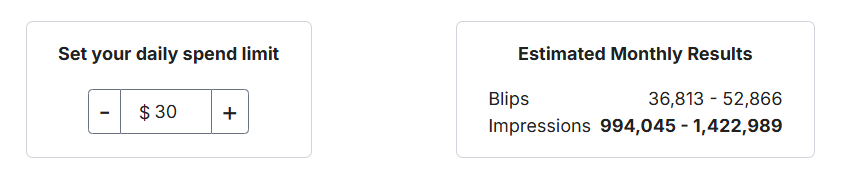
With Blip, you can launch eye-catching Glendale Heights billboards on any budget, because you set a daily amount that Blip automatically follows. Each “blip” is a 7.5–10 second ad on rotating digital billboards serving the Glendale Heights area, and you only pay for the individual blips you receive. Pricing for billboards near Glendale Heights, Illinois is based on when and where your ad runs, plus real-time advertiser demand, so you stay in control at all times.
Where can I advertise near Glendale Heights, Illinois with Blip?
The Glendale Heights area sits at the heart of Chicago’s western suburbs, surrounded by dense residential neighborhoods, strong retail corridors, and major commuter routes. With eight digital billboards near the Glendale Heights area in nearby Hoffman Estates, advertisers can tap into this highly mobile, family-oriented, and diverse market with precision. These billboards also intersect major travel patterns along routes like I-90, I-355, I-290, and I-390.
What kind of audience can I reach in Glendale Heights, Illinois with Blip billboards?
Glendale Heights is a village in DuPage County with a 2020 population of approximately 33,600 residents and a relatively young median age around 33 years. The community is almost entirely built-out, and the broader area is demographically diverse and middle-income, with a significant Hispanic/Latino community and a notable Asian population. This makes the market attractive for family-focused, bilingual, and value-conscious campaigns.
When is the best time to run billboards near Glendale Heights, Illinois?
Weekday morning (6–9 a.m.) and weekday evening (4–7 p.m.) are especially strong windows because they capture commuters on the move. Winters also make evening digital billboards stand out strongly, since commuters are driving home in darkness for roughly 10–11 weeks of the year. Summer weekends and event periods like Glendale Heights Fest are also valuable for reaching families and local visitors.
How do billboards near Glendale Heights, Illinois help reach commuters?
Many Glendale Heights area residents work in Schaumburg, Hoffman Estates, and Elk Grove Village, commuting via I-355, I-290, I-390, and I-90. Billboards in Hoffman Estates allow advertisers to catch Glendale Heights area residents on their way to and from work in the northwest suburbs. By dayparting and emphasizing morning and evening rush hours, campaigns can align impressions with commuting surges.
Do I need a contract to advertise with Blip near Glendale Heights?
No, Blip has no long-term contracts or minimum commitments. You can start, pause, or stop your campaign at any time.
How fast can I launch a billboard campaign with Blip near Glendale Heights?
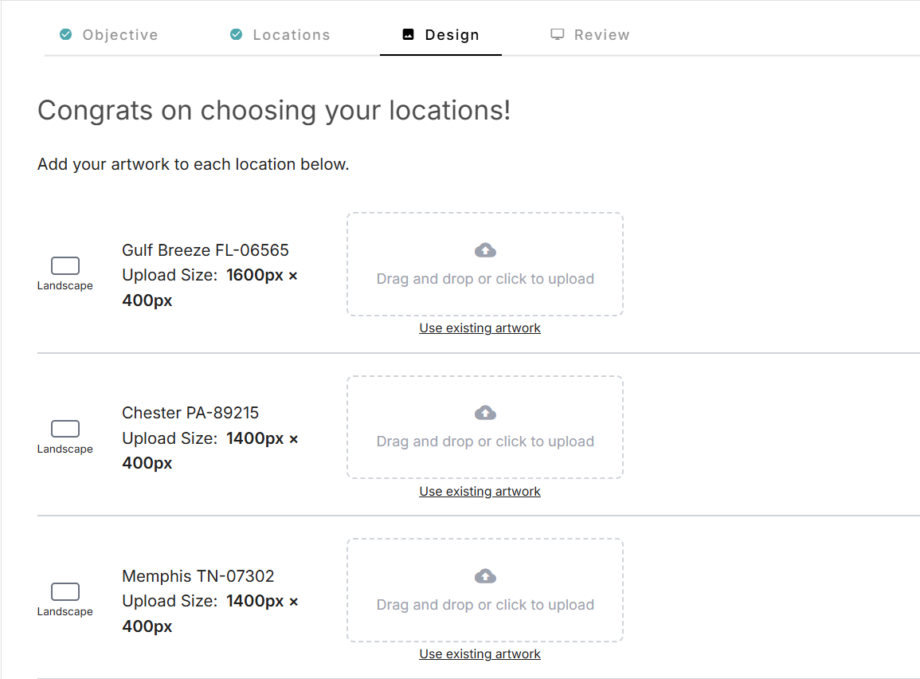
You can have your campaign live in minutes. Create a free account, select your locations, set your budget, upload your design, and start running once approved.
Where can I advertise with Blip near Glendale Heights?
Blip has digital billboards near Glendale Heights. You can browse available locations on a map, choose the ones that fit your audience, and start advertising right away.
Still have questions? Launch a campaign in minutes — no contracts, no commitments.
Start Your CampaignGlendale Heights Billboard Advertising Guide
The Glendale Heights area sits at the heart of Chicago’s western suburbs, surrounded by dense residential neighborhoods, strong retail corridors, and major commuter routes. With eight digital billboards near the Glendale Heights area in nearby Village of Hoffman Estates, we can help advertisers tap into this highly mobile, family-oriented, and diverse market with precision. For brands specifically looking for billboards near Glendale Heights to extend their reach beyond digital and print, this network offers a highly efficient way to stay visible to local residents and commuters.
Understanding the Glendale Heights Area Market
Glendale Heights is a village in DuPage County with a 2020 population of approximately 33,600 residents and a relatively young median age around 33 years. The community is almost entirely built-out, meaning most growth now comes from business expansion and redevelopment rather than new residential subdivisions. According to regional planning and county data, population in the broader DuPage area has remained relatively stable over the past decade, while employment and retail sales have continued to grow.
Key local context:
- Location: Roughly 25 miles west of downtown Chicago, immediately north of I‑355 and along major east–west corridors like North Avenue (IL‑64) and Army Trail Road. The village covers about 6.5 square miles, translating to a residential density of more than 5,000 residents per square mile, which is high for a suburban community. This density makes Glendale Heights billboards and nearby placements especially valuable for frequency and reach.
-
Government & resources:
- Village information and local services: Village of Glendale Heights
- County and economic context: DuPage County and Choose DuPage
- Tourism and visitor data, including hotel performance and visitor spending: Discover DuPage
- Regional planning and transportation research: Chicago Metropolitan Agency for Planning (CMAP)
- Economy: DuPage County is one of the strongest suburban economies in Illinois, with more than 630,000–650,000 jobs in recent tallies and an unemployment rate that has typically tracked 1–2 percentage points below the statewide average. County economic reports routinely show DuPage generating more than $50 billion in annual gross regional product and supporting over 90,000 businesses, many in professional services, logistics, healthcare, and technology.
For advertisers, this means the Glendale Heights area offers:
- High household density and repeat exposure opportunities, with many arterial streets carrying 25,000–40,000 vehicles per day through or near the village. Well‑placed Glendale Heights billboards or units immediately along these corridors can deliver consistent impressions among local shoppers and commuters.
- Strong daytime population from nearby job centers in Village of Carol Stream Village of Addison, Village of Bloomingdale, and the I‑355 corridor, where major business parks and distribution centers provide tens of thousands of jobs.
- Easy access to regional destinations in Village of Schaumburg
Digital billboards near the Glendale Heights area in Hoffman Estates let us intercept both DuPage-based residents commuting toward the northwest suburbs and northwest suburban drivers heading toward DuPage retail and residential districts. For many brands, this is the most efficient form of billboard advertising near Glendale Heights because it lines up naturally with daily travel patterns.
Demographics and Audience Segments to Target
The Glendale Heights area is demographically diverse and middle‑income, ideal for broad consumer brands and community‑focused messaging.
Approximate demographic highlights (2020‑era data):
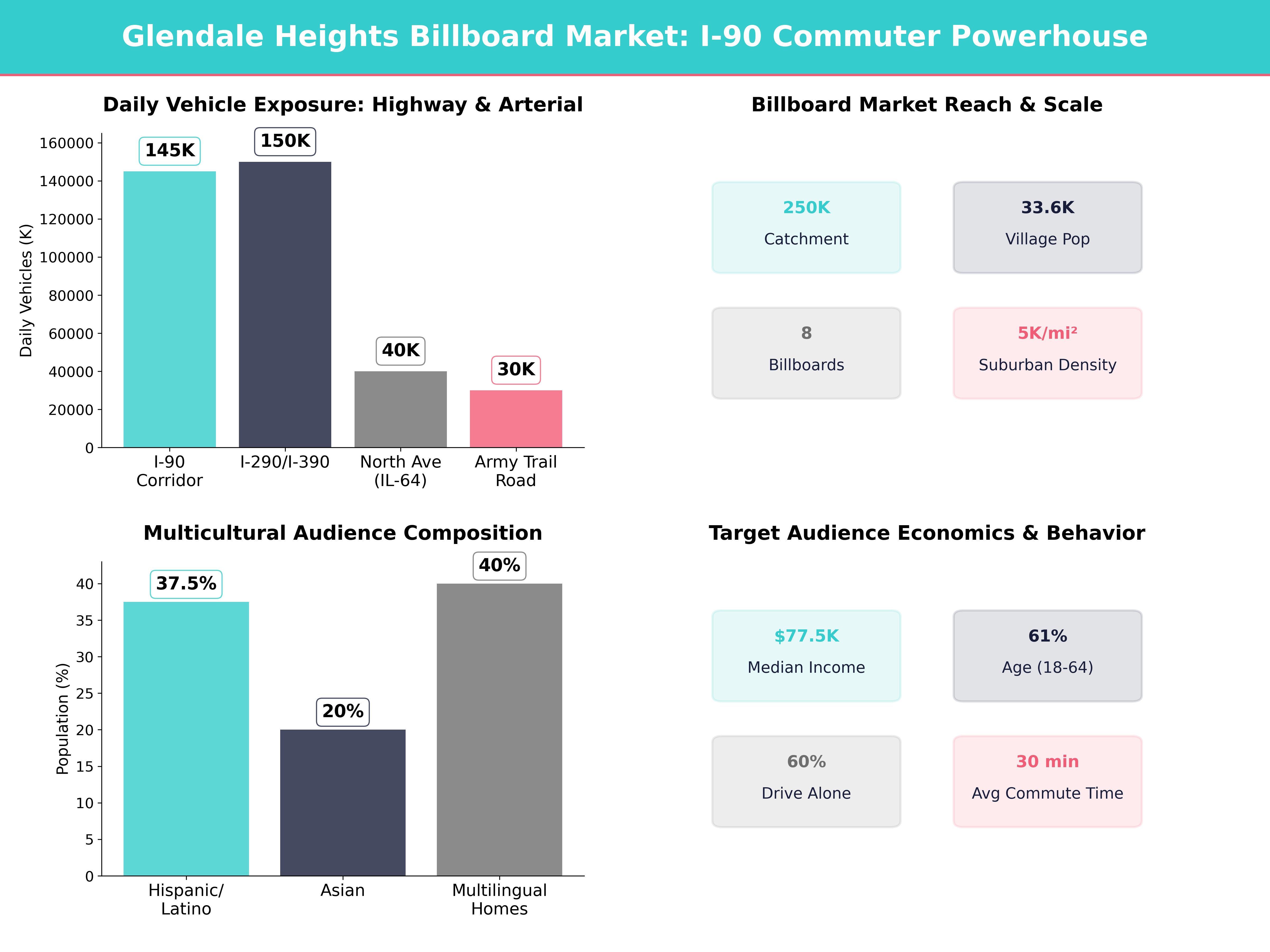
- Population: ~33,600 in the village; more than 250,000 residents within a 7–8 mile radius when including adjacent communities like Bloomingdale, Carol Stream, Village of Lombard, and Addison. DuPage County overall has almost 930,000 residents, giving advertisers access to a deep regional audience.
-
Age: Median age around 33;
- About 25–27% under 18
- Roughly 60–62% between 18–64
- Around 10–12% 65 and older
This skews younger than many nearby suburbs, providing a strong base of families with school‑age children.
-
Diversity:
- Significant Hispanic/Latino community (roughly 35–40% of residents)
- Notable Asian population (around 20%), including Filipino, Indian, and Pakistani communities
- Remaining population split among White non‑Hispanic, Black, and multiracial residents
Regional school and community data suggest that more than 40% of local students speak a language other than English at home, underscoring the importance of culturally aware messaging.
- Household income: Median household income near $75,000–$80,000, slightly below the DuPage County median (which frequently falls in the $90,000–100,000 range) but still well above many inner‑metro areas. This combination of moderate‑to‑strong incomes and high cost awareness makes the market attractive for value‑oriented brands.
- Household type: A large share of family households, many with children; neighboring communities commonly report 65–70% of households as family households, with average household sizes in the 3.1–3.3 person range. There is also a sizable renter population in multifamily developments, meaning a mix of stable homeowners and more mobile renters.
Implications for creative and targeting:
- Bilingual or multicultural messaging can be powerful, especially English/Spanish combinations, for brands that serve a broad customer base.
- Family‑focused offers (grocery, healthcare, education, quick‑service restaurants, entertainment) resonate strongly with a market where more than one‑quarter of residents are under 18.
- Value plus quality positioning works well: this audience has spending power but is price‑conscious, with many households balancing childcare, housing, and transportation costs.
When planning campaigns near the Glendale Heights area, we can create multiple creatives tailored to different segments (families, commuters, small business owners) and rotate them using Blip’s flexible scheduling. This flexibility helps you treat billboard advertising near Glendale Heights more like a digital channel—testable, optimizable, and responsive to local demand.
Commuting Patterns and Traffic Flows
To reach the Glendale Heights area effectively, it helps to understand where people travel each day and how Hoffman Estates billboards intersect those patterns.
Key regional roadways:
- I‑355 (Veterans Memorial Tollway): Major north–south spine just east of Glendale Heights, carrying around 120,000–130,000 vehicles per day in some segments, according to Illinois Department of Transportation (IDOT) counts and Illinois Tollway data.
- I‑290 / I‑390 corridor: Just south and east, funneling traffic between DuPage County and the O’Hare/Chicago area. These routes collectively handle well over 150,000 vehicles per day in many stretches, supporting heavy commuter and freight traffic.
- North Avenue (IL‑64): A major commercial corridor running east–west north of the village, with 35,000–45,000 vehicles per day on busy segments, per IDOT traffic maps.
- Army Trail Road: Another key east–west arterial, frequently above 30,000 vehicles per day at busier intersections, especially near commercial clusters and access to I‑355.
- Routes 59, 72, and I‑90 near Hoffman Estates: Where our eight digital billboards are located, I‑90 alone carries more than 140,000–150,000 vehicles per day in this corridor, with some segments exceeding 160,000 vehicles on peak weekdays.
Commuter directions:
- Many Glendale Heights area residents work in Schaumburg, Hoffman Estates, Elk Grove Village, commuting northwest or northeast via I‑355, I‑290, I‑390, and I‑90. Regional travel surveys show that more than 60% of DuPage County workers commute by driving alone, with average travel times in the 28–32 minute range.
- Others commute toward Oak Brook, Naperville, traveling via I‑355, I‑88, or Metra lines in adjacent communities such as Metra’s
- Hoffman Estates serves as a major employment and retail hub, with tens of thousands of jobs and destinations like office parks, the NOW Arena, and regional shopping centers drawing visitors from a wide catchment area. This results in two‑way traffic between DuPage County and Hoffman Estates throughout the day.
Public transit:
- Nearby communities are served by Pace Suburban Bus, which carries more than 20 million passenger trips annually across the region and operates key commuter routes linking DuPage and northwest Cook County.
- Park‑and‑ride commuters using Metra and Pace often drive to local lots, adding to arterial traffic around morning and evening peaks.
How this informs your billboard strategy:
- Billboards in Hoffman Estates allow us to catch Glendale Heights area residents on their way to and from work in the northwest suburbs, capitalizing on daily exposure along I‑90 and key arterials.
- By dayparting (e.g., emphasizing morning and evening rush hours), we can align impressions with commuting surges, making each impression more valuable. In many suburban corridors, 60–70% of weekday traffic occurs between 6–9 a.m. and 3–7 p.m.
- For regional brands, campaigns can be set to activate heavier along I‑90 during peak times to maximize exposure among DuPage‑based travelers, as well as shoppers and event‑goers heading toward Schaumburg and Hoffman Estates.
For more context on traffic and infrastructure plans that may influence flows, we recommend checking road and transportation updates from DuPage County, the Village of Hoffman Estates, and regional planning documents from CMAP. These sources can help you time Glendale Heights billboards or nearby placements around construction projects, detours, or new development.
Seasonal Patterns and Local Events
The Glendale Heights area lives by a clear Midwestern seasonal rhythm, and tailoring campaigns to that rhythm improves performance.
Weather and seasonality:
- Winters (Dec–Feb) are cold and dark; average high temperatures are in the 30–35°F range, with sunset often before 4:30 p.m. in December. This makes evening digital billboards stand out strongly, since commuters are driving home in darkness for roughly 10–11 weeks of the year.
- Summers (Jun–Aug) are bright and event‑heavy; average highs around 80–85°F, and daylight extends past 8:30 p.m. around the June solstice. Outdoor events, festivals, and late shopping trips push more trips into the evening hours.
- The Chicago area typically records around 120–130 days of measurable precipitation per year, which enhances the relative visibility of bright digital displays versus static signs during rain or snow.
- Spring and fall shoulder seasons see spikes in specific categories like home improvement, auto, education, and healthcare. Local home‑service businesses often report 20–30% higher inquiry volumes in the 4–6 weeks leading into summer and winter.
Key local events and timing:
- Glendale Heights Fest: A major community festival held each summer at Camera Park, typically over several days in July. The event draws thousands of attendees from across the Glendale Heights area and neighboring towns; village reports and press coverage often cite tens of thousands of total visits over the full run. Details and dates are usually posted on the Village of Glendale Heights
- Parks and recreation programming: The Glendale Heights Parks, Recreation, and Facilities Department
- Back‑to‑school season: Local schools feed into districts such as Glenbard Township High School District 87, Marquardt School District 15, and others. Districts of this size commonly serve several thousand students each, making late July through September prime time for education, tutoring, and family retail campaigns. District calendars are published on their official sites, including Glenbard District 87 and Marquardt District 15.
- Holiday shopping: The broader area’s retail hubs (Bloomingdale, Carol Stream, Lombard, Schaumburg, Hoffman Estates) see significant foot traffic from November through early January. Regional tourism and retail reports often show holiday sales accounting for 20–25% of annual retail revenue for many stores.
How to leverage this with digital billboards:
- Run short, intensive bursts ahead of Glendale Heights Fest and other community events to build awareness and attendance—e.g., a 10–14 day flight driving interest before opening night.
- Use season‑specific creatives—snow tire or furnace service offers in winter, landscaping and roofing in spring, outdoor dining in summer. For many service categories, weather‑aligned campaigns can increase inbound inquiries by 15–30% compared with off‑season messaging.
- Concentrate impressions on Fridays and weekends in summer, when families are more likely to be out at festivals, parks, and shopping destinations. Weekend traffic volumes on some arterials can reach 80–90% of weekday peaks, but with more discretionary trips, making them ideal for dining, entertainment, and retail.
Local event calendars from the Village of Glendale Heights Discover DuPage, and regional news sources like the Daily Herald and ABC7 Chicago – Local Events are helpful when planning time‑sensitive campaigns. Aligning flights on billboards near Glendale Heights with these calendars ensures your brand is visible when local interest is highest.
Crafting Effective Creative for the Glendale Heights Area
Because drivers only have a few seconds to see and absorb your message, smart creative decisions are critical. The Glendale Heights area’s audience mix calls for clear, inclusive, and practical designs.
Visual and copy best practices:
- Big, bold headlines (6–8 words max): Focus on one primary message, such as “Same‑Day Urgent Care Near Glendale Heights” or “$0 Enrollment – Local Fitness Club.” Studies of out‑of‑home (OOH) advertising often show recall rates improving by 20–30% when copy is reduced to a single dominant idea.
- High contrast colors: Dark backgrounds with bright lettering or vice versa to cut through changing Chicagoland weather—rain, snow, and strong sun. Contrast ratios of 4.5:1 or higher are recommended for distance readability.
- Readable fonts: Sans‑serif typefaces at large sizes; avoid thin scripts or cluttered layouts. Industry guidelines suggest keeping total text under 10–12 words and ensuring letters are at least 12–18 inches high on full‑size digital faces.
- Simple call to action (CTA): “Exit at Barrington Rd,” “Scan to Save,” or “Book Today at [Short URL].” Single‑step CTAs generally outperform multi‑step instructions in OOH environments.
Localized messaging ideas:
- Use proximity language: “Minutes from the Glendale Heights area,” “Serving Glendale Heights families,” or “Near Army Trail & [Landmark].” Proximity cues can lift response by 10–20% because they reduce perceived effort and reinforce that your Glendale Heights billboards or nearby units are truly local.
- Highlight local credibility: “Trusted by DuPage County families since 1998” or “Proud to serve Glendale Heights area small businesses.” Local references build trust, especially in community‑oriented suburbs where more than 60% of residents have lived in the county for over 5 years.
- Incorporate multilingual touches if your staff and services support it, such as a concise Spanish line for family‑focused services. In schools where a high share of students come from multilingual households, bilingual signage and advertising can significantly improve engagement.
Dynamic and rotating creative:
With digital billboards, we can:
- Rotate different offers at different times of day (e.g., breakfast specials in the morning, family meals in the evening). Advertisers that tailor creative by daypart often see 15–25% higher engagement than those running a single all‑day message.
- Test multiple variations of the same concept (two different headlines, or price vs. benefit‑led copy) and compare downstream results.
- Run event countdowns (“3 Days Until Our Grand Opening”) and update them automatically, building urgency and awareness during the final 3–7 days before a key event.
Timing and Dayparting Strategies
The Glendale Heights area’s travel behavior creates clear windows of opportunity when impressions are more valuable.
Suggested daypart focus:
- Weekday morning (6–9 a.m.): Great for coffee shops, quick‑service restaurants, radio stations, gyms, and commuter‑focused services. In many commuter corridors, up to 35–40% of daily traffic passes during this window.
- Weekday evening (4–7 p.m.): Ideal for grocery stores, retailers, restaurants, and family entertainment, capturing another 35–40% of weekday volumes as drivers return home.
- Midday (11 a.m.–2 p.m.): Reaches local workers and stay‑at‑home parents—healthcare, lunch offers, banking, and professional services perform well here. Office‑heavy corridors often see 20–25% of daily traffic at midday.
- Weekends (10 a.m.–8 p.m.): Best for retail, auto dealers, events, and leisure activities, aligning with store hours and family outings.
Use case examples:
- A Glendale Heights area pediatric clinic can run heavier on weekdays from 7–9 a.m. and 4–7 p.m. when parents are commuting and thinking about appointments. Clinics that focus messaging on these windows often see appointment calls spike by 10–20% during active campaigns.
- A restaurant or entertainment venue in Carol Stream or Bloomingdale can emphasize Friday and Saturday evenings, when families travel toward shopping and dining hubs. Local strip centers and malls often report weekend traffic levels at 110–130% of typical weekday averages.
- A local college or training program can run sustained messaging in late summer and early winter around registration periods, focusing on commute times for working adults who make up a large share of evening students.
Because we can adjust budgets and timings in small increments, advertisers can gradually discover the most responsive dayparts for their specific audience and fine‑tune their billboard advertising near Glendale Heights over time.
Key Vertical Opportunities Near the Glendale Heights Area
The Glendale Heights area’s economic mix creates strong opportunities across several business categories.
-
Healthcare and Dental
- Numerous primary care, dental, and urgent care offices draw from a radius of 5–10 miles, reaching a catchment population easily exceeding 150,000–200,000 residents.
- Healthcare spending is a major share of household budgets; regional data show per‑capita health expenditures commonly in the $7,000–8,000 per year range.
- Billboards can highlight same‑day appointments, new patient specials, or bilingual care, especially around open enrollment and back‑to‑school seasons.
- Timing: weekdays, especially early mornings and evenings, when commuters are thinking about scheduling.
-
Auto Sales and Service
- Chicagoland suburbs are heavily car‑dependent; DuPage County typically sees vehicle ownership above 1.8 vehicles per household, with some communities near 2.0–2.1 vehicles per household.
- IDOT and local counts show many arterials with high daily volumes, making auto‑focused ads visible to tens of thousands of drivers daily.
- Use creative that features clear price points, financing offers, and service specials. Promotional events around three‑day weekends (Memorial Day, Labor Day) and year‑end sales often generate 20–30% lifts in showroom traffic.
- Activate near paydays (1st & 15th) or seasonal needs (winter tires, spring checkups).
-
Restaurants and Grocery
- With a high share of families and a diverse population, competitively priced family meals, grocery promotions, and ethnic cuisines do well.
- Food‑at‑home and food‑away‑from‑home typically combine to around 10–15% of household spending, giving restaurants and grocers meaningful upside from even modest shifts in market share.
- Emphasize distance and convenience from the Glendale Heights area: “5 minutes north of Army Trail Rd.” Billboard advertising near Glendale Heights that calls out quick drive times often sees stronger response.
-
Home Services & Improvement
- Homeownership rates in the broader area are strong—often 60–70% in neighboring suburbs—driving demand for roofing, HVAC, landscaping, and remodeling.
- In a typical year, 3–5% of homeowners undertake a major renovation, and many more invest in smaller projects (lawn care, painting, HVAC).
- Align campaigns with weather‑related demand: roofing and siding after storms, HVAC tune‑ups in spring and fall. Severe weather events can generate short‑term spikes of 50%+ in inbound calls for certain trades.
-
Education & Training
- The young median age and large family presence boost interest in tutoring, private schools, community colleges, and workforce training.
- Regional higher‑ed institutions often report that 30–40% of enrollees are working adults, making commute‑time messaging especially effective.
- Use deadline‑driven creatives around enrollment close dates and scholarship windows.
-
Community Institutions & Government
- Municipalities, libraries, park districts, and nonprofits can use digital billboards to promote public safety campaigns, events, and community programs.
- Local agencies can coordinate messaging with other outreach like the Village of Glendale Heights Glendale Heights Police Department DuPage County announcements.
- Public‑sector campaigns that combine OOH with social media and email lists often see significantly higher participation rates, especially for time‑bound events such as vaccine clinics or recycling days.
Geographic Strategy: How Hoffman Estates Boards Serve the Glendale Heights Area
While our eight digital billboards are physically in Hoffman Estates (about 8.9 miles from Glendale Heights), they sit along high‑traffic corridors used daily by Glendale Heights area residents.
Why this still works powerfully for Glendale Heights area campaigns:
- Regional travel patterns: Many residents regularly travel toward Schaumburg and Hoffman Estates for work, shopping, events, and healthcare. The Schaumburg–Hoffman Estates area, anchored by major employers and large retail centers, attracts tens of millions of visits annually from across the metro.
- Commuter volume on I‑90 and adjacent arterials means repeated weekday exposure to your message—often 10–20 views per week per regular commuter, depending on scheduling.
- Destination‑based advertising: If your storefront, clinic, or venue is anywhere between Glendale Heights and the northwest corridor, seeing your message on the route reinforces brand familiarity and provides directional cues.
Strategies to connect the dots:
- Use messaging that references both ends of the trip, such as “On your way home to the Glendale Heights area? Stop at [Business Name] off [Exit].”
- For brands with multiple locations, highlight the one closest to the Glendale Heights area but still accessible to I‑90 travelers, and use concise directions (“Just 2 miles south of I‑90 on Barrington Rd”).
- Run campaigns during typical reverse‑commute times if your primary visitors travel from DuPage toward Hoffman Estates in the morning and back in the evening. Reverse‑commute volumes can represent 15–25% of total traffic on some segments, offering a less cluttered but still substantial audience.
For advertisers comparing options, this approach can be an efficient alternative to traditional Glendale Heights billboards, especially when seeking flexible, short‑term billboard rental near Glendale Heights without long contracts.
Integrating Digital Billboards with Your Broader Marketing
Digital billboards near the Glendale Heights area are most effective when integrated with your other channels.
Practical integration ideas:
- Match creative with social and search: Use the same core headline and offer on billboards, Google Ads, and social campaigns targeting the Glendale Heights area to improve recall. Campaigns that maintain consistent creative across channels often see 20–30% higher brand recognition.
- Use memorable URLs or QR codes: Drive viewers to a short, location‑specific URL (e.g., “Brand.com/GH”) or a simple QR code that is still scannable at a distance. QR usage spiked in recent years, and surveys show that a significant share of consumers are comfortable scanning codes in public settings.
- Promote limited‑time promos: “Mention this billboard near Hoffman Estates for 10% off” helps you attribute some in‑store conversions to the campaign and can reveal lift when compared to baseline weeks.
Local media and data sources like the Daily Herald, Chicago Tribune – Suburbs, and Shaw Local can also provide insights into consumer behavior trends you may want to echo in your billboard messaging. Combining these insights with flexible billboard rental near Glendale Heights makes it easier to launch timely, relevant campaigns.
Measuring and Optimizing Your Campaign
Even though we cannot directly track individuals from the Glendale Heights area to a billboard, we can build a strong measurement framework.
Key metrics and tactics:
- Website analytics: Watch for changes in direct traffic and branded search volumes from ZIP codes that include or border the Glendale Heights area (e.g., 60139 and neighboring codes) during your campaign. Look for lifts of 10%+ in direct or branded search traffic as an early success signal.
- Store traffic and POS data: Track footfall and sales during on/off billboard periods. Retailers that layer in OOH often see 3–10% incremental sales increases in targeted corridors when campaigns are sustained for 8–12 weeks.
- Promo codes or phrases: Use unique promo codes mentioned only on billboards near the Glendale Heights area to estimate response. Even if only 2–5% of customers use the code, their behavior can be extrapolated to gauge wider campaign impact.
- A/B testing: Rotate two creatives and examine downstream metrics (calls, form fills, online orders) to see which resonates more. Clear winners often emerge after 2–4 weeks if impression levels are sufficient.
Over time, you can refine:
- Best‑performing dayparts
- Most responsive creative themes (price vs. quality, convenience vs. community)
- Optimal budget levels for meaningful lift in the Glendale Heights area based on your own return‑on‑ad‑spend targets.
Local Regulations and Best Practices
Outdoor advertising is subject to local and state regulations. While our digital billboards are located in Hoffman Estates, it is wise to understand the broader regulatory environment affecting the Glendale Heights area.
We recommend staying familiar with:
-
Sign and advertising ordinances published by:
- Village of Glendale Heights
- Village of Hoffman Estates
- DuPage County zoning and development rules via the DuPage County Zoning & Planning pages
- Content considerations: Avoid misleading claims, ensure all price and legal disclaimers are accurate, and respect community standards, especially given the high presence of families and schools. Local codes may also address brightness levels, message dwell times, and animation for digital billboards.
By aligning with local expectations and rules, advertisers not only stay compliant but also build long‑term trust in the Glendale Heights area. Partnering with local chambers of commerce, such as the Glendale Heights Chamber of Commerce, can also help ensure messaging supports broader community values and initiatives.
By understanding the Glendale Heights area’s demographics, travel patterns, cultural diversity, and seasonal rhythms, we can design digital billboard campaigns that show up at the right moments, along the right routes, with messages that feel timely and relevant. With flexible scheduling and data‑informed creative, advertisers can use our eight digital billboards near the Glendale Heights area to build a powerful presence across Chicago’s western and northwestern suburbs and capture the full value of billboard advertising near Glendale Heights.