Billboards near Oak Park, IL
No Minimum Spend. No Long-Term Contracts. Just Results.
Trusted by Leading Brands


Billboard advertising
near Oak Park has never been easier
How much is a billboard near Oak Park?
Why Choose Blip for Billboard Advertising near Oak Park
Blip lets you launch Oak Park billboards fast and target I-290 commuters, Harlem Ave shoppers, and downtown flows without traditional buying hassles.
In Oak Park, set ads for AM/PM peaks and school-run windows—Blip dayparting matches 6:30–9:30 and 3:30–7 traffic.
No contracts in Oak Park means you can test messages for North Riverside Mall, Cermak Plaza, or Oak Park tourism and shift anytime.
Track Oak Park campaign results in real time, then lean into what works on I-290, North Ave, and Roosevelt Road.
Use Blip creative tools to tailor Oak Park ads for educated, diverse audiences with clean, thoughtful visuals that fit the village's vibe.
Frequently Asked Questions About Billboard Advertising near Oak Park
How much does a billboard cost near Oak Park, Illinois with Blip?
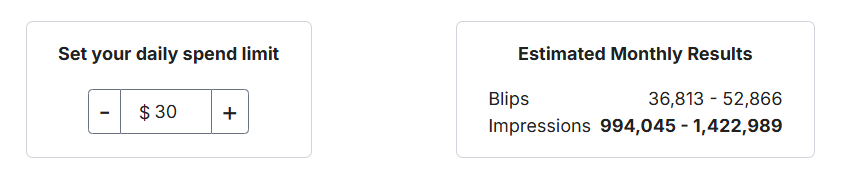
With Blip, you can advertise on digital Oak Park billboards in the Oak Park area on any budget, because you choose a daily amount that Blip automatically honors while your 7.5–10-second “blips” play throughout the day. You only pay-per-blip, so every dollar goes directly toward real advertising on billboards near Oak Park, Illinois, and you can adjust your budget whenever you like. Instead of committing to long-term contracts or giant spends, you simply pay for the blips you receive, based on when and where you run your ads and current advertiser demand.
Where can I place Blip billboards near Oak Park, Illinois?
Our 88 digital billboards serving the Oak Park area are located in nearby cities within roughly 10 miles, including North Riverside, Melrose Park, Harwood Heights, Stone Park, Chicago, Schiller Park, Summit, Rosemont, Bedford Park, Des Plaines, and Hodgkins. These boards sit within a short drive of major population centers and are clustered along major travel corridors that Oak Park residents and visitors routinely use. By placing creative on these boards, we can dominate the routes that Oak Park area residents and visitors actually use every day.
What kind of audience can Blip reach in Oak Park, Illinois?
Oak Park sits at the crossroads of urban Chicago energy and historic, walkable suburbia, making the Village of Oak Park area one of the most distinctive and highly educated suburban markets in the country. Oak Park is a dense, transit-rich village just west of Chicago, with a population of roughly 54,000 residents packed into about 4.7 square miles. Within a 3-mile radius of downtown Oak Park, there are more than 125,000 residents and over 50,000 jobs, creating strong two-way commuting patterns that billboard advertising near Oak Park can tap into every day.
When is the best time to run Blip ads in Oak Park, Illinois?
Travel windows skew towards 6:30–9:30 a.m. and 3:30–7:00 p.m., and we can use those patterns to inform smart dayparting on Blip. Weekday AM peak is ideal for professional services, schools, and B2B services, while the evening peak is ideal for restaurants, bars, entertainment, fitness studios, and retail promotions. Nights and weekends are ideal for nightlife and entertainment, streaming and digital products, and big-purchase categories when couples and families plan together.
Why are billboards near Oak Park, Illinois a good fit for local advertising with Blip?
Oak Park has long been known for its intentional diversity and progressive values, and advertisers that show inclusivity, sustainability, and community benefit tend to resonate strongly here. The area is home to the Frank Lloyd Wright Home and Studio, the Ernest Hemingway Birthplace Museum, and the Pleasant and Hemingway business districts, and the broader Oak Park area can draw more than 100,000 visitor trips a year for cultural, dining, and shopping. When we combine this demographic profile with heavy daily movement through nearby corridors and expressways, the Oak Park area becomes ideal for value-driven, culturally tuned, and community-connected billboard campaigns.
Do I need a contract to advertise with Blip near Oak Park?
No, Blip has no long-term contracts or minimum commitments. You can start, pause, or stop your campaign at any time.
How fast can I launch a billboard campaign with Blip near Oak Park?
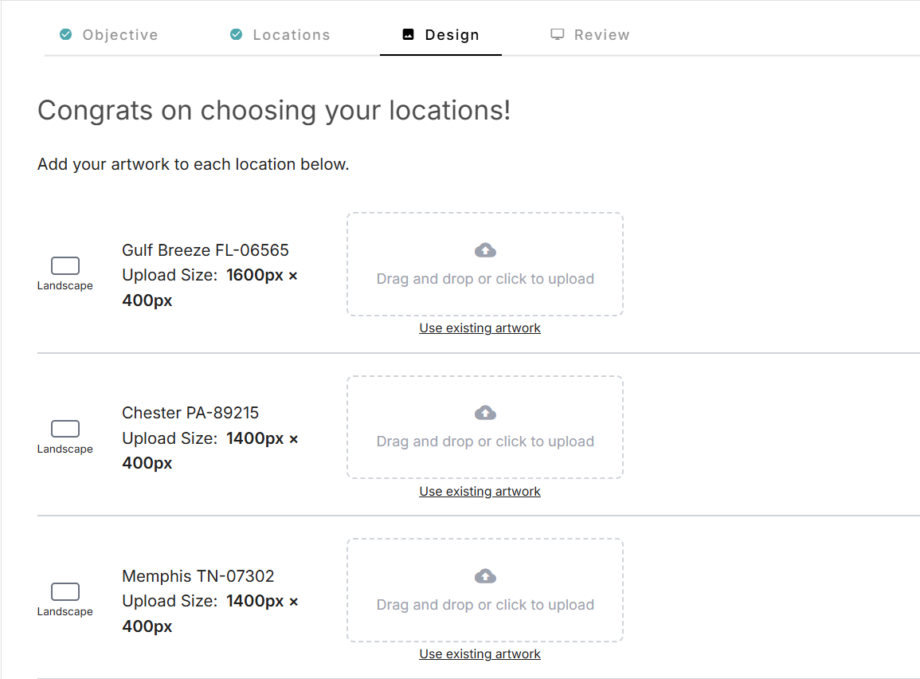
You can have your campaign live in minutes. Create a free account, select your locations, set your budget, upload your design, and start running once approved.
Where can I advertise with Blip near Oak Park?
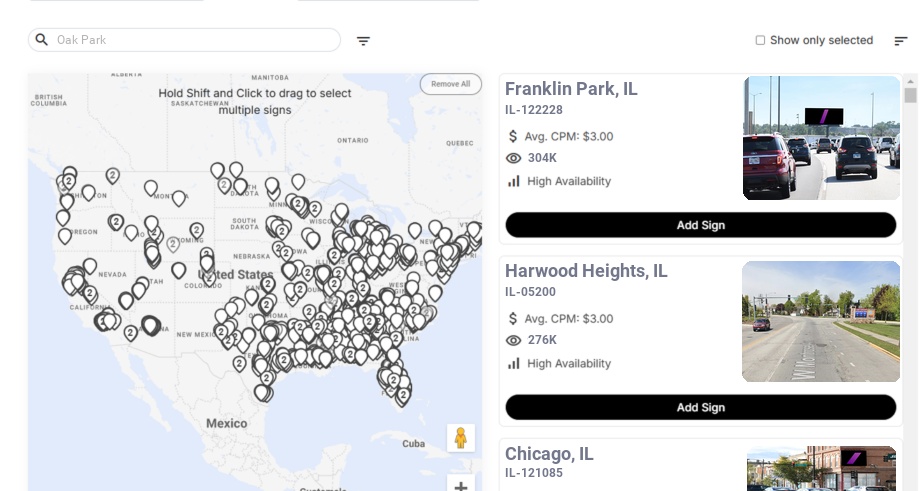
Blip has digital billboards near Oak Park. You can browse available locations on a map, choose the ones that fit your audience, and start advertising right away.
Still have questions? Launch a campaign in minutes — no contracts, no commitments.
Start Your CampaignOak Park Billboard Advertising Guide
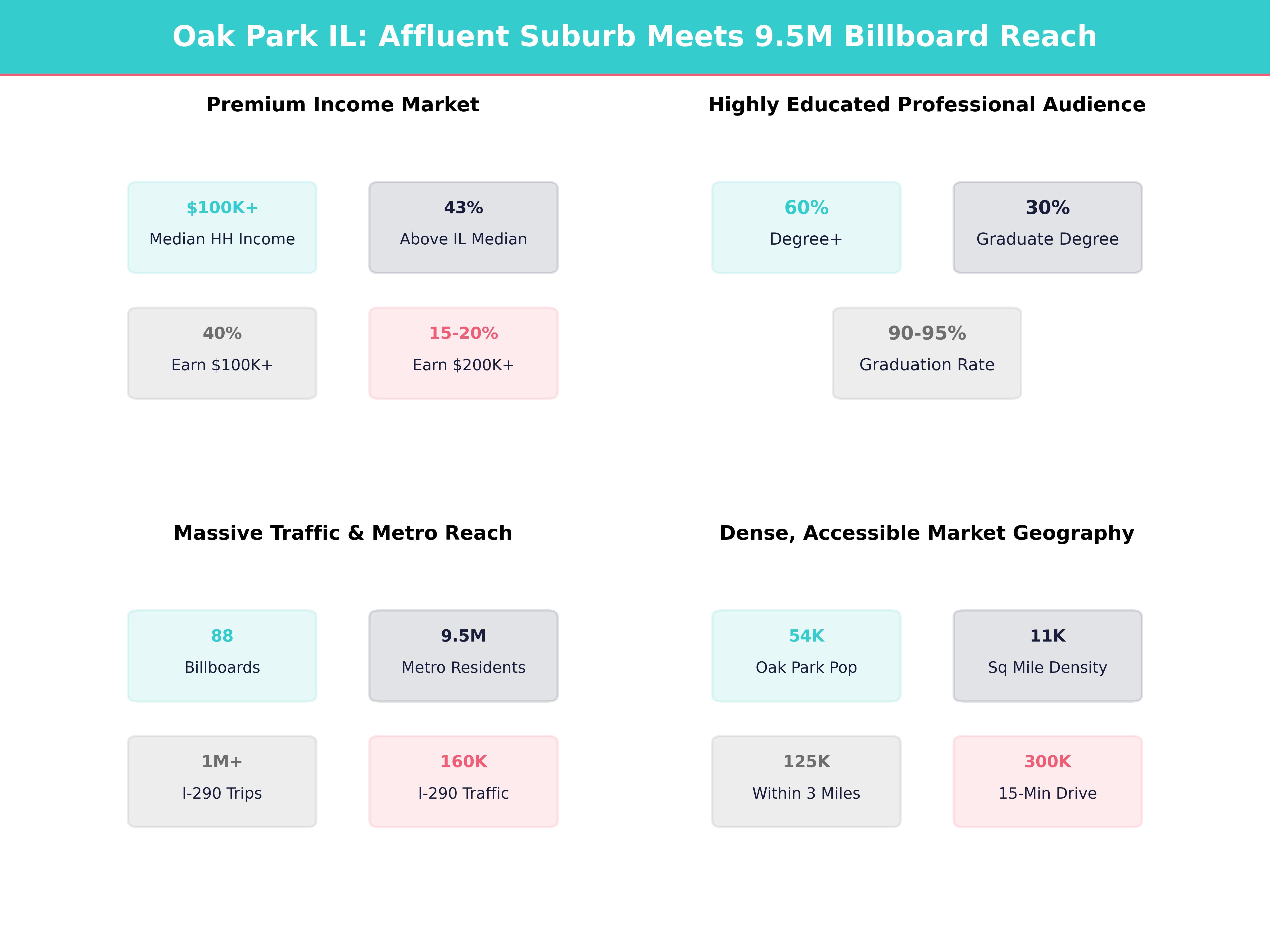
Oak Park sits at the crossroads of urban Chicago energy and historic, walkable suburbia, making the Village of Oak Park area one of the most distinctive and highly educated suburban markets in the country. With 88 digital billboards serving the Oak Park area from nearby cities like North Riverside, Melrose Park, Harwood Heights Stone Park Chicago, and Rosemont, we can zero in on affluent commuters, culture-seekers, families, and students as they move between home, work, and entertainment. These locations provide highly visible billboards near Oak Park within a metro of nearly 9.5 million residents and a core west‑suburban cluster of more than 300,000 people within a 15‑minute drive of downtown Oak Park.
Understanding the Oak Park Area Market
Oak Park is a dense, transit-rich village just west of Chicago, with a population of roughly 54,000 residents packed into about 4.7 square miles—more than 11,000 people per square mile, which is high for a suburb and closer to many city neighborhoods. The broader Oak Park area draws daily traffic from neighboring communities like Berwyn Forest Park, River Forest, and Cicero, plus constant inflow from Chicago’s West Side and Loop. Within a 3‑mile radius of downtown Oak Park, there are more than 125,000 residents and over 50,000 jobs, creating strong two‑way commuting patterns that billboard advertising near Oak Park can tap into every day.
A few defining characteristics of the Oak Park area:
- High incomes and spending power
Median household income in Oak Park is around $100,000–$105,000, significantly above the Illinois median (roughly mid‑$70Ks). More than 40% of households earn $100,000 or more annually, and roughly 15–20% exceed $200,000. That translates to billions of dollars in annual consumer spending in categories like dining, retail, home services, education, healthcare, and the arts. Nearby River Forest and parts of Elmwood Park and Forest Park add even more upper‑income households to the daily traffic mix, increasing the value of Oak Park billboards for brands seeking high‑spend audiences. - Exceptionally educated audience
Over 60% of Oak Park residents hold a bachelor’s degree or higher, and more than 30% hold a graduate or professional degree—roughly double national averages. Oak Park–area school districts, such as Oak Park Elementary School District 97 and Oak Park and River Forest High School District 200, routinely report graduation rates in the 90–95% range and strong college‑going rates. This impacts messaging: residents respond well to thoughtful, benefit-driven, and community-aware campaigns that respect their intelligence and values, making billboard advertising near Oak Park ideal for sophisticated, message-rich creative. - Strong renter and homeowner mix
Around 45–50% of households are renters, while the rest are homeowners. More than half of Oak Park’s housing stock was built before 1940, giving it a high concentration of older single‑family homes and vintage multifamily buildings that frequently require maintenance, upgrades, and remodeling. That blend supports both long‑term purchase decisions (home renovation, financial services, medical, educational) and shorter-horizon offers (move‑in deals, events, dining, entertainment), all of which can be promoted efficiently via billboards near Oak Park. - Diverse, inclusive community
Oak Park has long been known for its intentional diversity and progressive values. Racially and ethnically, no single group exceeds approximately 60% of the population; Black, Hispanic/Latino, Asian, and multiracial residents collectively make up a substantial share of the community. The Village of Oak Park itself highlights this on its official site at www.oak-park.us. Advertisers that show inclusivity, sustainability, and community benefit tend to resonate strongly here, particularly when they align with local initiatives promoted by entities such as the Park District of Oak Park and the Oak Park Public Library - Cultural and tourism draw
The area is home to the Frank Lloyd Wright Home and Studio Ernest Hemingway Birthplace Museum, and the Pleasant and Hemingway business districts. The Frank Lloyd Wright Historic District alone sees tens of thousands of architecture tourists annually, and the broader Oak Park area can draw more than 100,000 visitor trips a year for cultural, dining, and shopping. Local visitor organizations like Visit Oak Park market the area as an arts, history, and dining destination, bringing in tourists from across Chicagoland and beyond, who can be influenced by Oak Park billboards as they move through the region.
When we combine this demographic profile with heavy daily movement through nearby corridors and expressways, the Oak Park area becomes ideal for value-driven, culturally tuned, and community‑connected billboard campaigns.
Where Our 88 Billboards Reach Oak Park–Area Traffic
Our 88 digital billboards serving the Oak Park area are located in nearby cities within roughly 10 miles, including:
- North Riverside (about 3.4 miles from Oak Park)
- Melrose Park (4.9 miles)
- Harwood Heights
- Stone Park
- Chicago (about 5.8 miles)
- Schiller Park (6.4 miles)
- Summit (7.1 miles)
- Rosemont (7.8 miles)
- Bedford Park (8.4 miles)
- Des Plaines
- Hodgkins (9.6 miles)
These boards sit within a short drive of major population centers: for example, the Village of North Riverside alone has nearly 7,000 residents but sits adjacent to Berwyn and Cicero, which together exceed 100,000 residents. Melrose Park and Stone Park add another 25,000+ residents in just a few square miles, feeding consistent traffic past nearby boards and creating dense exposure for billboard advertising near Oak Park.
These boards tend to be clustered along major travel corridors that Oak Park residents and visitors routinely use:
- I‑290 (Eisenhower Expressway): A primary artery for Oak Park–area commuters heading to the Chicago Loop, the West Side, and the western suburbs. Average Annual Daily Traffic (AADT) between Austin and Mannheim often runs in the 150,000–170,000 vehicle range, meaning more than 1 million vehicle trips per week on this segment alone.
- I‑294 (Tri‑State Tollway) near Rosemont, Des Plaines, and Hodgkins: Connecting north and south suburbs and linking to O’Hare and Midway airports. Key links near Rosemont and Des Plaines can see 180,000+ vehicles per day, much of it longer‑distance business and leisure travel.
- I‑55 (Stevenson Expressway) near Summit and Bedford Park: Gateway to southwest suburbs and into downtown, with many segments carrying 120,000–140,000 vehicles per day.
- Major arterials near Oak Park such as North Avenue, Roosevelt Road, Harlem Avenue, and Cermak Road, which see heavy retail and commuter traffic, especially near North Riverside and Melrose Park shopping districts. In many segments, these surface routes carry 25,000–40,000 vehicles per day, ideal volumes for digital billboard visibility at lower speeds and for convenient billboard rental near Oak Park.
Because other communities feed into Oak Park for work, school, and recreation, these boards don’t just reach Oak Park residents—they also reach:
- Workers commuting to Oak Park institutions (schools, medical offices, professional services, retail), including thousands employed in downtown Oak Park and along major corridors like Madison, Lake, and Roosevelt.
- Shoppers heading to North Riverside Park Mall, Cermak Plaza
- Travelers on their way to or from O’Hare International Airport Midway International Airport
By placing creative on these boards, we can dominate the routes that Oak Park area residents and visitors actually use every day, reaching both high‑frequency local commuters and one‑time or occasional regional visitors with billboards near Oak Park that feel locally relevant.
Commuter Patterns and What They Mean for Scheduling
The Oak Park area is unusually transit-rich for a suburb, but road traffic remains heavy:
- Oak Park has both the CTA Green and Blue Lines, plus Metra’s Union Pacific West line. The CTA’s Green and Blue Lines together carry well over 150,000 weekday riders across the system, and UP‑West sees tens of thousands of daily trips region‑wide. Still, thousands of Oak Park residents drive daily on I‑290, Harlem Avenue, and North Avenue.
- The Regional Transportation Authority
- Village data and regional commuting trends suggest a substantial share of Oak Park commuters work in Chicago’s downtown or the nearby Illinois Medical District, with travel windows skewed towards 6:30–9:30 a.m. and 3:30–7:00 p.m. Reverse‑commute patterns from the city into Oak Park’s schools, healthcare facilities, and retail corridors also cluster in these periods.
We can use those patterns to inform smart dayparting on Blip:
-
Weekday AM peak (6:30–9:30 a.m.)
Ideal for:- Professional services (financial planners, law firms, healthcare providers)
- Schools, colleges, tutoring, and childcare
- B2B services targeting downtown or corridor businesses
Messaging: “on-the-way-to-work” mindset—productivity, career, savings, convenience. With three hours of high‑intensity volume, even short bursts of AM‑only scheduling can accumulate tens of thousands of impressions per day on major expressway boards.
-
Midday (10:00 a.m.–3:00 p.m.)
Ideal for:- Seniors and retirees (who can account for 15–20% of residents in some nearby communities)
- Stay‑at‑home or hybrid‑work parents
- Tourists visiting Oak Park attractions promoted via boards near Chicago or Rosemont
Messaging: leisure, errands, lunch specials, medical appointments, and daytime events. Lower congestion in this window can mean longer viewing times on surface‑street boards near North Riverside and Melrose Park.
-
Evening peak (3:30–7:00 p.m.)
Ideal for:- Restaurants, bars, and entertainment in the Oak Park area
- Fitness studios and sports leagues
- Retail promotions and same‑day or next‑day events
Messaging: relaxation, family time, social plans, “tonight only” offers. This window lines up with school pickups, after‑school activities, and dinner outings, when families are deciding where to spend that day’s discretionary dollars.
-
Nights and weekends
Ideal for:- Nightlife and entertainment
- Streaming and digital products
- Big‑purchase categories (real estate, automotive) when couples and families plan together
Messaging: aspirational, emotional, story-driven. Weekends often push traffic volumes higher on retail corridors like Cermak Road and North Avenue, as shoppers from Oak Park, Berwyn, Cicero, and Forest Park converge on large centers.
Using Blip’s tools, we can allocate budget to specific hours and days to match these patterns instead of paying for 24/7 impressions that aren’t aligned with your target audience.
Key Corridors and Local Behavior Drivers
To reach people in the Oak Park area effectively, we need to think geographically about how they live, shop, and travel.
1. Retail corridors and malls serving the Oak Park area
- North Riverside (about 3.4 miles from Oak Park): Home to North Riverside Park Mall with more than 150 retailers and millions of annual visitors. The center’s trade area reaches deep into Oak Park, Berwyn, Cicero, and Chicago’s West Side. Boards near here catch Oak Park–area residents headed for big-box and mall shopping trips and can intercept weekend visitors as they decide where to dine, repair, or entertain nearby.
- Cermak Road & Harlem Avenue corridor: Features Cermak Plaza
- Melrose Park & Stone Park (about 5 miles from Oak Park): Strong automotive, industrial, and value retail presence along North Avenue and Lake Street. Traffic counts on these corridors commonly sit in the 30,000–40,000 vehicles‑per‑day range. Great for auto, construction, home services, and bilingual campaigns that speak to working‑class and middle‑income households across Melrose Park, Stone Park, Franklin Park, and neighboring communities.
2. Airport and convention traffic
-
Rosemont and Des Plaines, about 8–9 miles away, sit at the doorstep of O’Hare International Airport. O’Hare handles upwards of 80 million passengers per year, ranking among the busiest airports in the world. Rosemont’s Donald E. Stephens Convention Center Allstate Arena and Parkway Bank Park. Campaigns here can:
- Promote Oak Park area hotels, dining, and attractions to inbound travelers who may be looking for quieter, historic neighborhoods within 15–20 minutes of the airport.
- Brand local institutions (colleges, hospitals, cultural venues) to a larger regional and visiting audience that extends well beyond Oak Park’s resident base.
3. Industrial and logistics corridors
-
Bedford Park, Summit, and Hodgkins are logistics and industrial hubs along I‑55 and I‑294. Together, these communities host millions of square feet of warehouse, manufacturing, and distribution space. Heavy truck and employee traffic—often in shifts that start early (5–7 a.m.) and run late (3–11 p.m.)—makes these excellent for:
- Industrial suppliers and B2B services
- Workforce recruitment for warehouses, plants, and distribution centers hiring from Oak Park and surrounding areas
- Trade schools, CDL training, and skilled‑trades programs that appeal to the blue‑collar and technical workforce
By mapping our chosen boards to the specific behaviors we want (shopping, commuting, visiting, working), we can create extremely efficient, real‑world coverage of Oak Park area life and make the most of billboard rental near Oak Park.
Audience Segments to Prioritize
Given the Oak Park area’s profile, several audience segments stand out:
1. Affluent professionals and families
- Household incomes around $100K+; in some nearby tracts, median household income exceeds $125,000.
- Large share of dual‑income families with kids in strong local schools and private or parochial options, including several independent schools within a few miles.
- High rates of professional and managerial employment, with many adults commuting to jobs in downtown Chicago, the Illinois Medical District, and nearby corporate corridors.
-
Likely to invest in:
- Financial planning, insurance, and legal services
- Home upgrades and green energy (solar, EVs, efficient HVAC)
- High‑quality healthcare, dental, and wellness services
Billboard messaging should emphasize expertise, trust, and long‑term value—e.g., “Protect your family’s future,” “Make your 1920s home feel brand new,” or “Top‑rated care, minutes from home,” all of which can be showcased powerfully on billboards near Oak Park that these households pass daily.
2. Education‑focused households
The Oak Park area is served by highly regarded public school districts and private schools, and is surrounded by colleges and universities across Chicago’s West Side and near‑west suburbs. More than 90% of local students complete high school, and college‑going rates significantly exceed many regional averages. These families respond to:
- Tutoring and test prep
- Summer camps and after‑school programs
- Arts, music, and language education
- College admissions counseling
- Enrichment programs at institutions promoted by groups like the Oak Park Area Chamber of Commerce
Billboards can run with seasonal messaging aligned to enrollment, parent–teacher nights, SAT/ACT cycles, and specific registration deadlines that create urgency.
3. Culture, dining, and tourism enthusiasts
Oak Park is a magnet for visitors interested in architecture, literature, and independent shops, with local coverage from outlets like the Wednesday Journal / OakPark.com. Local events calendars routinely list dozens of cultural and dining events each month, especially in spring and summer. Advertisers in restaurants, craft beverage, boutique retail, and events should:
- Use boards near Chicago and Rosemont to invite visitors to the Oak Park area (“Historic Oak Park is 15 minutes west—dining, shopping, and tours today”).
- Use boards nearest North Riverside and Melrose Park to capture residents as they pick weekend plans, especially on Fridays and Saturdays when retail corridors see peak visitation.
4. Bilingual and multicultural households
Neighboring communities like Berwyn and Cicero have large Hispanic populations (in some cases well over 60% of residents), and Oak Park itself is diverse. Multilingual or culturally nuanced campaigns (especially English/Spanish) in corridors like Cermak Road and North Avenue often see above‑average engagement for:
- Healthcare and clinics
- Immigration and legal services
- Education programs
- Value‑oriented retail and food
We can rotate English‑dominant and Spanish‑dominant creative by time of day or location for even better impact, for example emphasizing Spanish during evening and weekend family shopping trips in Berwyn/Cicero corridors while maintaining bilingual or English‑dominant messaging closer to core Oak Park.
Crafting Creative That Fits the Oak Park Area
A uniquely Oak Park–area approach to design and messaging can dramatically improve your results. Consider:
1. Visual style
- Clean, modern aesthetics fit the area’s architecture-forward identity (Frank Lloyd Wright influence) and educated audience.
- Use bold, high‑contrast color palettes and large typography. At typical expressway speeds (45–60 mph), you have about 6–8 seconds of full visibility, which translates to roughly 100–200 feet of travel per second depending on speed.
- Limit text to 7 words or fewer when possible; aim for one main message and one strong call to action. Research on out‑of‑home effectiveness consistently shows that simpler designs deliver better recall at highway speeds.
2. Tone and values
Oak Park is known for progressive, community‑oriented values. Effective ads often:
- Highlight sustainability (e.g., local, organic, renewable, eco‑friendly).
- Emphasize inclusion and representation in imagery.
- Connect to community support (“Proud supporter of Oak Park schools,” “Partnering with local nonprofits”), especially when coordinated with local drives and events promoted on sites like www.oak-park.us and Visit Oak Park.
3. Calls to action for a mobile audience
According to regional smartphone adoption rates, well over 85–90% of adults in the area carry a smartphone. That shapes CTAs:
- Use simple vanity URLs or short URLs that are easy to remember after a quick 2–3‑second glance.
- Include brand names or phrases residents can search for later, since a large share of response will come via branded search.
- Incorporate QR codes only on lower‑speed or surface‑street boards (e.g., near North Riverside or Melrose Park), not high‑speed expressways, where scan time is limited and safety is paramount.
4. Local references that resonate
- Mention proximity: “Just off Harlem & Lake,” “5 minutes from Oak Park Avenue Green Line,” or “Near North Riverside Park Mall.”
- Reference well-known neighborhoods and anchors: Downtown Oak Park
- Align with seasonal community events promoted by entities like the Oak Park Area Chamber of Commerce and Visit Oak Park, as well as local news coverage from OakPark.com.
Seasonal Strategies for the Oak Park Area
Seasonality heavily influences when and how people move through the Oak Park area:
Winter (Dec–Feb)
- Shorter daylight, cold weather, and holiday travel patterns. Sunset before 5 p.m. in much of the season increases the value of boards with strong night‑time illumination.
- Heavy shopping trips to malls and big-box centers (North Riverside, Melrose Park). Some centers can see 20–30% of their annual traffic in the November–December period alone.
-
Ideal for:
- Holiday retail, winter services (plumbing, HVAC, snow removal)
- Health campaigns (flu shots, urgent care)
- New‑year offers for gyms, wellness, education programs
Strategy: Focus on boards near shopping corridors and high‑visibility expressways with simple, bright, high‑contrast creative to cut through gray winter light and early darkness.
Spring (Mar–May)
- Home buying, renovations, and spring cleaning pick up. National and regional data show that March–May often account for 30–40% of annual home‑listing activity.
- Outdoor sport leagues and festivals ramp up, with Oak Park’s parks and fields filling on evenings and weekends.
-
Ideal for:
- Real estate agents, mortgage lenders, contractors, landscapers
- Youth sports leagues and camps
- Tax and financial planning (around April)
Strategy: Use optimistic, transformation‑themed messages (“Refresh your Oak Park home,” “Get your spring smile ready”). Increase frequency on boards near residential commuter routes, such as I‑290 crossings and North Avenue, where homeowners and parents will see your message daily.
Summer (Jun–Aug)
- School is out; tourism and local events peak. Downtown Oak Park, the Hemingway District, and local commercial corridors can see noticeable spikes in foot traffic during summer festivals and concert series.
- Downtown Oak Park and local districts buzz with festivals and dining; patios and outdoor venues extend peak dining hours later into the evening.
-
Ideal for:
- Restaurants, ice cream shops, entertainment venues
- Summer camps and youth programs (which often enroll hundreds to thousands of children in the area each year)
- Tourist attractions and staycations in the Oak Park area
Strategy: Deploy heavy weekend and evening schedules. Use boards near Chicago and Rosemont to pull visitors west into Oak Park, while boards near North Riverside and Summit remind locals to spend weekends close to home.
Fall (Sep–Nov)
- Back‑to‑school routines and cultural calendar intensify. Oak Park’s public schools and local colleges return to full session, concentrating family travel into predictable commute windows.
- College, career, and cultural events multiply, especially at local theaters, galleries, and community centers.
-
Ideal for:
- Schools, tutoring, extracurricular programs
- Healthcare and insurance enrollment (open enrollment typically peaks in October–December)
- Arts, theater, and cultural events
Strategy: Daypart around school commute windows (7–9 a.m., 2:30–6 p.m.). Link messaging to education, stability, and preparation (“Get ready for a strong school year,” “Open enrollment ends soon”).
Using Blip’s Flexibility to Optimize for the Oak Park Area
Because Blip lets you buy “blips” (individual ad plays) rather than traditional fixed-time slots, we can tailor campaigns to the Oak Park area’s unique rhythms:
-
Geo‑focused board selection
- Choose North Riverside, Melrose Park, and Stone Park boards to blanket shopping and commuter routes closest to Oak Park, where daily traffic volumes in many locations exceed 25,000–30,000 vehicles and where Oak Park billboards will be seen repeatedly by local residents.
- Add Rosemont, Schiller Park, and Des Plaines boards when you want to include airport and convention travelers, tapping into tens of millions of annual airport passengers and hundreds of thousands of convention attendees.
- Use Summit, Bedford Park, and Hodgkins boards to reach logistics workers and southwest‑suburban commuters who interact with Oak Park for shopping, dining, and services.
-
Budget concentration
Instead of thinly spreading a budget, we can:- Concentrate spend on 10–20 boards that most directly serve the Oak Park area, potentially capturing a majority of local trip paths with a minority of available inventory.
- Focus on time slots (e.g., weekday peaks) where we know traffic volumes are highest, increasing effective impressions per dollar.
-
Responsive campaigns
Because we can start, stop, or adjust campaigns quickly:- Promote weekend events only from Thursday–Sunday to align with when 50–60% of ticket sales or RSVPs may occur.
- Run weather‑dependent creative (e.g., “Too hot to cook? Dine with us tonight”) on forecasted high‑temperature days, or “Frozen pipes? Call us now” during cold snaps.
- Shift spend during construction on key routes (such as when IDOT projects affect I‑290 or Harlem Avenue) to boards that pick up diverted traffic.
-
Testing multiple creatives
For an Oak Park–area campaign, we might:- Run three creative variations simultaneously across the same boards.
- Compare performance indicators such as store traffic, web sessions, or promo code usage by time and location. Even a 10–20% difference in response rate between creatives can meaningfully change ROI.
- Quickly pause weaker creatives and scale up the ones that correlate with better results, refining messaging within days instead of waiting for the end of a traditional 4‑ or 8‑week flight.
Measuring Success and Connecting Offline to Online
To gauge effectiveness in the Oak Park area, we encourage advertisers to use a combination of data sources and local context:
-
Traffic and volume indicators
Monitor:- Store visits by day and time during your campaign, especially compared to your usual baseline.
- Web analytics (direct traffic and branded search volume) from zip codes in and around Oak Park, Forest Park, River Forest, Berwyn, and Cicero. Even a 5–10% lift in branded search from these zips during your flight can signal strong out‑of‑home impact.
- Call volumes or form submissions tied to unique phone numbers or landing pages used on your billboards.
-
Promo codes and offers
Use short, memorable codes like “OPARK10” or “HEMINGWAY15” to associate redemptions with specific creatives and timeframes. Tracking a few dozen or a few hundred redemptions during a campaign gives a clear sense of cost per acquisition and allows you to scale what works. -
Local media and PR alignment
Coordinate campaigns with editorial coverage or community features in outlets such as OakPark.com or announcements from the Village of Oak Park. Billboard visibility combined with local press often multiplies awareness, especially when timed with major community events, council actions, or school announcements. -
Customer surveys
Simple “How did you hear about us?” questions in person or online can validate that Oak Park area billboards are contributing meaningfully to your funnel. Even if only 5–10% of respondents cite billboards, that can represent a large absolute number of customers when overall traffic is strong.
Putting It All Together for the Oak Park Area
To reach people in the Oak Park area effectively with digital billboards, we should:
- Target the right corridors from our 88 boards—prioritizing North Riverside, Melrose Park, Stone Park, and Harwood Heights for everyday Oak Park–area life, and extending to Rosemont, Des Plaines, and Summit for regional reach and travel audiences.
- Align timing with real local behavior—commutes on I‑290 and North Avenue, shopping trips to North Riverside Park Mall, and tourist flows between Chicago, O’Hare, and Oak Park’s cultural sites.
- Tailor creative to the community’s identity—educated, diverse, value‑driven, and proud of its cultural heritage, as reflected in local institutions, schools, and civic organizations.
- Leverage Blip’s flexibility to test, refine, and scale what works—without the long‑term, inflexible commitments of traditional billboard buys.
By understanding how residents and visitors move through and think about the Oak Park area, we can design digital billboard campaigns that feel local, timely, and compelling—and turn those impressions along nearby roads into meaningful results for your business or organization through smart, targeted billboard advertising near Oak Park.