Billboards near Elmwood Park, IL
No Minimum Spend. No Long-Term Contracts. Just Results.
Trusted by Leading Brands


Billboard advertising
near Elmwood Park has never been easier
How much is a billboard near Elmwood Park?
Why Choose Blip for Billboard Advertising near Elmwood Park
Blip self-serve lets you launch on Elmwood Park's North Ave and Harlem corridors in minutes—perfect for commuters and shoppers on the move.
Set a flexible budget for Elmwood Park and scale up for Rosemont events or O'Hare traffic, then dial back when you’re ready.
Daypart in Elmwood Park to catch 6–9 a.m. commuters and 4–7 p.m. homebound drivers on I-290, I-294, and I-90.
No contracts mean you can test Elmwood Park billboards around local festivals, retail peaks, or back-to-school season without locking in long term.
Track real-time results in Elmwood Park and shift spend fast when ads perform on Grand Ave or near North Riverside shopping trips.
Use Blip creative tools to build bold, bilingual ads for Elmwood Park’s Hispanic, Polish, and Italian communities in a few clicks.
Frequently Asked Questions About Billboard Advertising near Elmwood Park
How much does a billboard cost near Elmwood Park, Illinois with Blip?
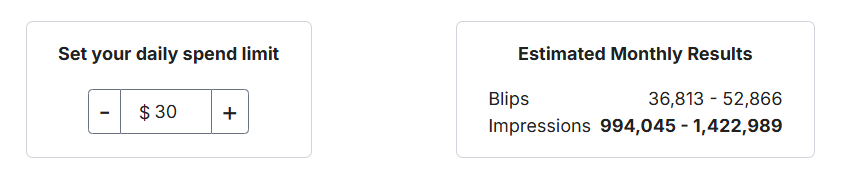
With Blip, it’s entirely up to you. You choose a daily budget that fits your goals, and Blip automatically keeps your Elmwood Park billboards campaign within that amount, so you can start small and scale whenever you’re ready. Each ad display, or “blip,” is a 7.5 to 10-second spot on rotating digital billboards near Elmwood Park, Illinois, and you only pay for the blips you receive.
Where can I advertise with Blip near Elmwood Park, Illinois?
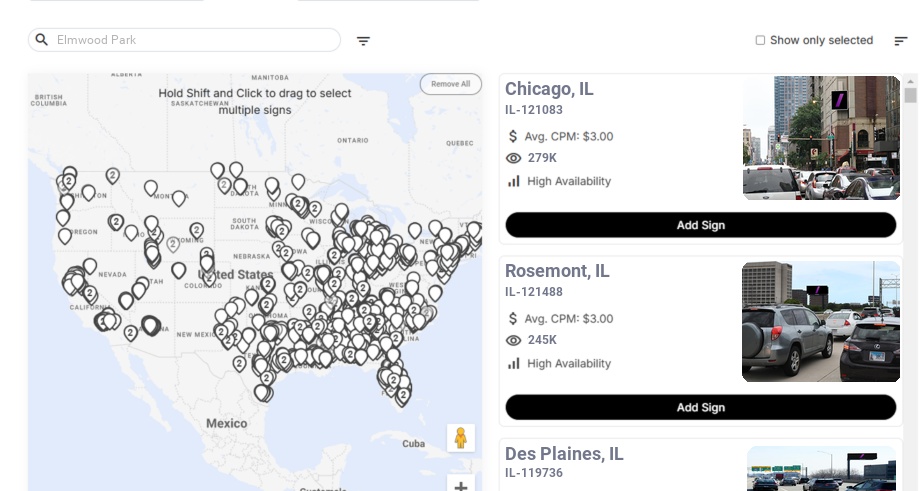
Tap into 70 vibrant digital billboards near Elmwood Park, Illinois, set your own budget, control your schedule, and watch your message light up the Elmwood Park area in real time. Our 70 digital billboards serving the Elmwood Park area are strategically placed in nearby municipalities like Harwood Heights, Melrose Park, Stone Park, Schiller Park, Rosemont, North Riverside, Des Plaines, Chicago, and Summit. This halo of locations lets us intercept Elmwood Park area residents and visitors.
Who can Blip reach in the Elmwood Park, Illinois area?
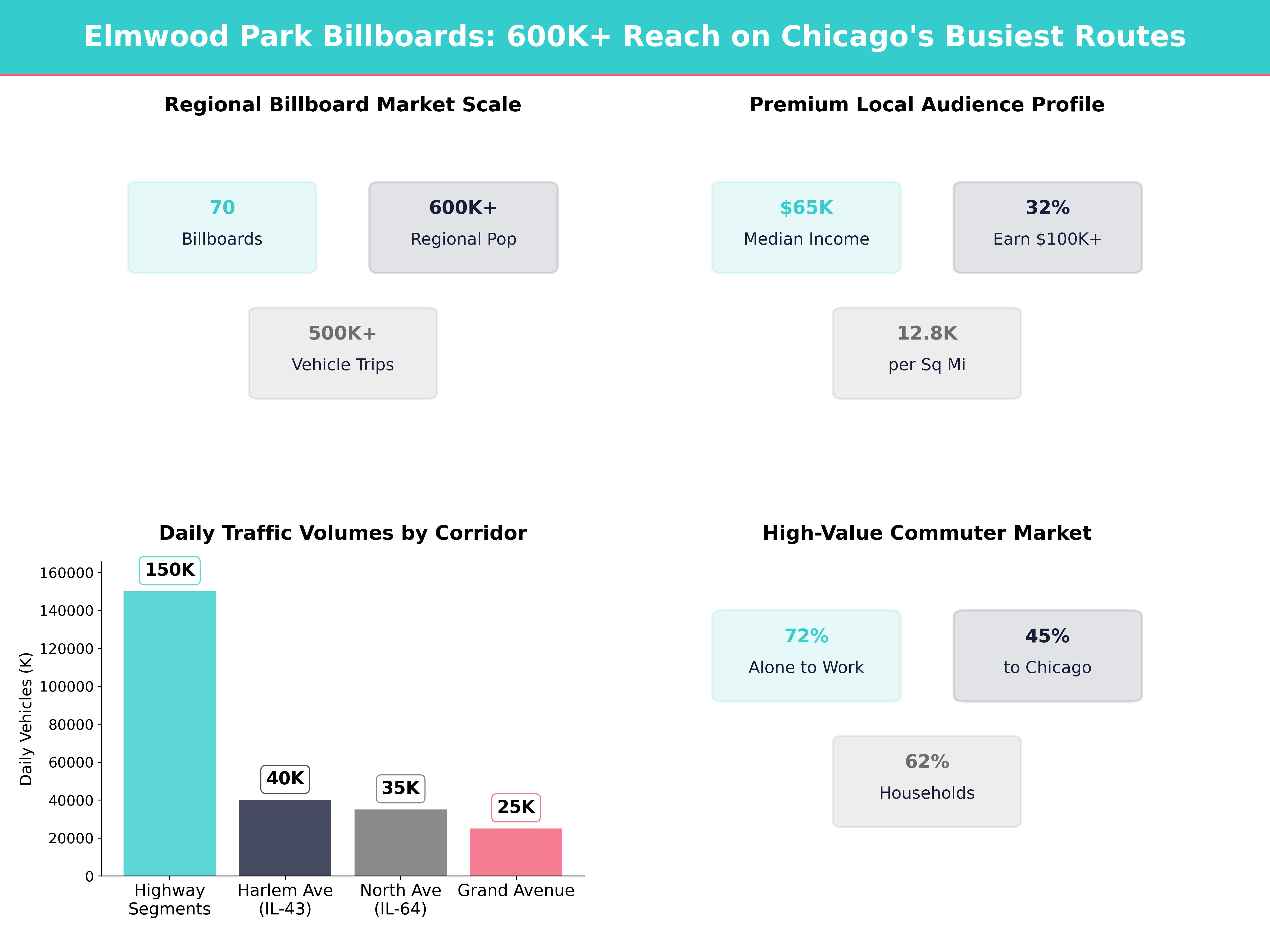
Within roughly a 10-mile radius, you tap into a combined population of well over 600,000 residents, thousands of businesses, and daily traffic counts that exceed 500,000 vehicle trips across key arterials and expressways. The Elmwood Park area offers a dense, diverse, and economically active audience, ideal for advertisers considering billboard advertising near Elmwood Park. The area is heavily residential, with a mix of single-family homes and multi-flats.
What kind of traffic patterns make Elmwood Park, Illinois billboards effective?
Most households in the Elmwood Park area are car-dependent, which is ideal for roadside digital billboard campaigns and makes billboard advertising near Elmwood Park especially effective. Roughly 70–75% of workers in this part of Cook County typically drive alone to work, and another 8–10% carpool. Within a 10-mile radius are I-290, I-294 (Tri-State Tollway), and I-90, and select segments exceed 140,000–160,000 vehicles per day.
When is the best time to run Blip ads near Elmwood Park, Illinois?
Blip’s scheduling flexibility allows us to tailor campaigns to the rhythms of the Elmwood Park area and make the most of billboard advertising near Elmwood Park. Weekday morning hours are strong for commuting professionals, tradespeople, and parents, while weekday evenings bring heavy homebound traffic. The Elmwood Park area also sees robust weekend movement to malls, big-box retailers, parks, church services, and events.
Do I need a contract to advertise with Blip near Elmwood Park?
No, Blip has no long-term contracts or minimum commitments. You can start, pause, or stop your campaign at any time.
How fast can I launch a billboard campaign with Blip near Elmwood Park?
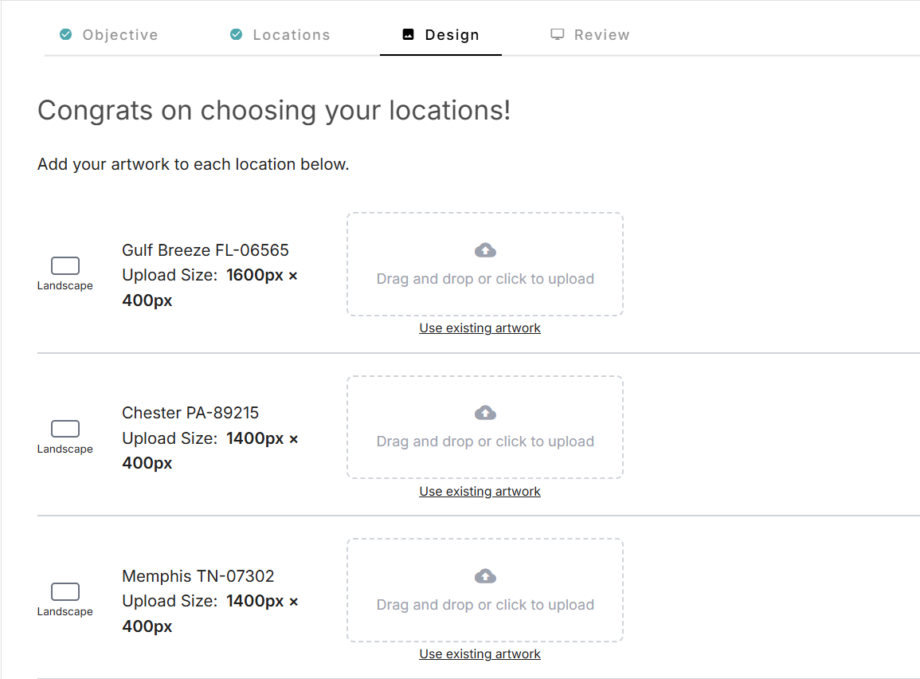
You can have your campaign live in minutes. Create a free account, select your locations, set your budget, upload your design, and start running once approved.
Where can I advertise with Blip near Elmwood Park?
Blip has digital billboards near Elmwood Park. You can browse available locations on a map, choose the ones that fit your audience, and start advertising right away.
Still have questions? Launch a campaign in minutes — no contracts, no commitments.
Start Your CampaignElmwood Park Billboard Advertising Guide
Elmwood Park sits at a powerful crossroads of Chicago’s West Side and near-northwest suburbs. With 70 digital billboards serving the Elmwood Park area from nearby communities like Harwood Heights Melrose Park, Stone Park, Schiller Park, Rosemont, North Riverside, Des Plaines Summit, we can precisely target the diverse, highly mobile audiences that live, work, shop, and commute through this part of Cook County. Within roughly a 10‑mile radius, you tap into a combined population of well over 600,000 residents, thousands of businesses, and daily traffic counts that exceed 500,000 vehicle trips across key arterials and expressways, according to recent regional transportation data. This makes billboards near Elmwood Park an efficient way to extend your local presence into neighboring communities while still anchoring campaigns around Elmwood Park billboards.
Understanding the Elmwood Park Area Market
The Elmwood Park area offers a dense, diverse, and economically active audience, ideal for advertisers considering billboard advertising near Elmwood Park:
- Population density: The Village of Elmwood Park itself has roughly 24,000–25,000 residents in just about 1.9 square miles, for an estimated density of around 12,500–13,000 residents per square mile—several times higher than many Chicago suburbs and comparable to some of Chicago’s denser neighborhoods.
- Households & housing mix: There are about 9,000–9,500 households in Elmwood Park, with a split of roughly 55–60% renter-occupied and 40–45% owner-occupied, driven by a mix of single-family homes, 2–4 flats, and small apartment buildings. Residential occupancy rates typically run above 94–95%, indicating a tight local housing market.
- Age mix: The median age is around 38, with a strong middle-aged base and plenty of families. Roughly 28–32% of residents are under age 25, about 35–40% are 25–49, and around 20–22% are 50–64, which translates to both emerging consumers and established, higher-income households.
- Income & spending power: Median household income in the Elmwood Park area is in the high $60,000s to low $70,000s, with roughly 30–35% of households earning $100,000+ annually. Local consumer expenditure profiles suggest that households in this range allocate roughly 12–15% of spending to food away from home, 20–25% to housing-related costs (home services, utilities, furnishing), and 15–18% to transportation and auto-related expenses—prime categories for billboard advertisers.
- Workforce & employment sectors: The broader near‑west area skews toward healthcare, retail, manufacturing, logistics, education, and hospitality. In many nearby communities, 20–25% of employed residents work in office and professional services, 15–20% in retail and hospitality, and 10–15% in manufacturing and warehousing—sectors that benefit from strong brand visibility on daily commutes.
- Household composition: The area is heavily residential, with a mix of single-family homes and multi-flats. Family households make up roughly 60–65% of all households, and average household size is close to 3 people, higher than the U.S. average of about 2.5. This skews the local market toward family-oriented spending—groceries, youth activities, healthcare, financial services, and home improvement.
- Cultural diversity & languages: Elmwood Park has deep Italian-American roots plus significant Hispanic, Polish, and other communities, reflected in local dining, festivals, and businesses. In many nearby ZIP codes, 30–40% of residents identify as Hispanic/Latino and 20–25% report speaking a language other than English at home. Spanish is widely used in adjacent communities like Melrose Park and Stone Park, and Polish and Italian heritage remain highly visible in local churches, clubs, and specialty grocers. Thoughtful cultural references and multilingual messaging can resonate strongly here, especially for restaurants, financial services, healthcare, and community organizations.
For local context, advertisers exploring billboard rental near Elmwood Park can explore the Village of Elmwood Park government site, Cook County resources via Cook County, Illinois, and regional news from outlets like the Chicago Sun-Times and the Chicago Tribune. Additional neighborhood coverage is available from TV and digital outlets such as ABC7 Chicago and WGN-TV
Nearby municipal sites are also useful for event calendars, zoning, and business licensing data that can inform campaigns:
- Village of Harwood Heights
- Village of Melrose Park
- Village of Stone Park
- Village of Schiller Park
- Village of North Riverside
- City of Des Plaines
- City of Chicago
- Village of Summit
Key Driving and Commuter Patterns Near Elmwood Park
Most households in the Elmwood Park area are car-dependent, which is ideal for roadside digital billboard campaigns and makes billboard advertising near Elmwood Park especially effective:
- Vehicle access: In many near‑west suburbs, over 90% of households have at least one vehicle, and roughly 35–40% have two or more vehicles. This translates into frequent multi‑purpose trips—school, work, shopping, and social visits.
- Commute mode: Roughly 70–75% of workers in this part of Cook County typically drive alone to work, and another 8–10% carpool. Transit usage is meaningful but secondary, with about 10–15% using systems like CTA Pace Suburban Bus, or Metra
- Commute time: Typical one-way commute times cluster around 30–35 minutes, with about 35–40% of workers traveling 30 minutes or more each way. This reflects strong outbound traffic in the mornings toward Chicago and Rosemont/O’Hare, and inbound in the evenings.
-
Major arterials: According to recent Illinois Department of Transportation (IDOT) traffic counts:
- North Avenue (IL‑64) directly borders or passes near the Elmwood Park area, connecting to Melrose Park and Chicago, and often carries 30,000–40,000 vehicles per day along key segments.
- Harlem Avenue (IL‑43) is a major north–south route, moving traffic between Harwood Heights, North Riverside, and beyond, with daily volumes frequently in the 35,000–45,000 vehicles range.
- Grand Avenue is another heavily used corridor, especially for local errands and retail, typically handling 20,000–30,000 vehicles per day in many near‑west segments.
- Highways & access: Within a 10-mile radius are I‑290, I‑294 (Tri-State Tollway), and I‑90. These expressways carry some of the highest volumes in the region, with select segments exceeding 140,000–160,000 vehicles per day. They support massive daily flows of commuters, logistics trucks, and airport traffic between the city, the suburbs, and O’Hare International Airport
Our 70 digital billboards serving the Elmwood Park area are strategically placed in nearby municipalities like Harwood Heights (2.8 miles away), Melrose Park (3.5), Stone Park (3.7), Schiller Park (3.9), Rosemont (5.0), North Riverside (5.1), Des Plaines (6.1), Chicago (7.8), and Summit (9.3). This halo of locations lets us intercept Elmwood Park area residents and visitors:
- On retail runs into North Riverside, Melrose Park, Rosemont, and Chicago. North Riverside alone, anchored by regional draws such as North Riverside Park Mall, attracts an estimated millions of shopper visits annually.
- During airport and hotel trips near Rosemont and Des Plaines by O’Hare. Local hospitality clusters include dozens of hotels and multiple large venues, driving year‑round visitor traffic.
- Along commuter and trucking corridors that pass just outside the village. Industrial and logistics uses in Melrose Park, Stone Park, and Summit generate substantial daytime truck volumes, with some corridors seeing 10–15% of vehicles classified as heavy trucks in IDOT counts.
When planning campaigns, we recommend mapping your customer journeys (home → work → shop → play) and orienting your Blip placements along those routes. Reviewing traffic data from IDOT and local planning agencies can help prioritize boards with the highest average daily traffic (ADT) for your target audience, ensuring your Elmwood Park billboards are seen consistently by core customers.
Who You Can Reach in the Elmwood Park Area
The Elmwood Park area overlays several valuable audience segments, all of which can be efficiently reached through billboards near Elmwood Park and surrounding suburbs:
-
Suburban families and homeowners
- Demographic profile: In many nearby ZIP codes, families with children under 18 account for 30–35% of households, and homeownership rates for single-family properties often exceed 60% on residential side streets.
- Looking for: home services, grocery, healthcare, education, family entertainment, financial services.
- Media habit: frequent short local drives—school drop-offs, shopping, restaurants. Parents routinely make multiple car trips per day, generating repeated billboard exposures.
- Strategy: Highly legible, family-friendly visuals on boards close to neighborhood retail corridors and school routes near Melrose Park, North Riverside, and Stone Park.
-
Working professionals and city commuters
- Large share working in Chicago, Rosemont, Des Plaines, and surrounding employment centers; in some near‑west communities, 40–50% of employed residents commute into the City of Chicago or major job hubs like Rosemont/O’Hare.
- Many pass near Chicago and Rosemont boards on their way to downtown or O’Hare-area offices; O’Hare’s employment base includes tens of thousands of aviation, hospitality, and logistics workers.
- Strategy: Target morning and evening drive times near Chicago and Rosemont to capture both inbound and outbound commuters. High-frequency exposures during peak periods can significantly lift brand recall, with out-of-home research often showing 40–60% ad recall when messages are seen multiple times per week.
-
Airport and hospitality traffic (O’Hare corridor)
- O’Hare handled around 54 million passengers in 2022, according to the Chicago Department of Aviation 140,000 passengers per day.
- The O’Hare/Rosemont/Des Plaines hotel market offers more than 15,000 rooms across dozens of properties, supporting conventions, trade shows, and sports events throughout the year.
- Many travelers stay or dine just a few miles from the Elmwood Park area, especially along River Road and in the Rosemont entertainment district.
- Strategy: Use Rosemont and Des Plaines boards to attract visitors to restaurants, attractions, and services near Elmwood Park, or to brand your company to high-value business travelers. Even capturing a fraction of this high‑spend audience—whose per‑trip spending can easily exceed $300–500—can deliver strong ROI.
-
Local small business and ethnic community audiences
- The Elmwood Park area supports a high density of independent restaurants, bakeries, specialty food shops, salons, auto shops, and professional offices. Within a few miles, there are hundreds of small businesses clustered along streets like North Avenue, Grand Avenue, Belmont, and Harlem.
- Many of these businesses rely on trade area populations of 1–3 miles, where billboard visibility is especially effective because drivers see messages repeatedly on routine routes.
- Strategy: Geo-focused rotations near nearby commercial clusters (e.g., North Avenue in Melrose Park, shopping near North Riverside) with clear calls to action and proximity messaging like “5 minutes east on North Ave.”
-
Event and entertainment seekers
- Nearby Rosemont is a major entertainment and convention hub; see Village of Rosemont for venues like Allstate Arena and Impact Field. Allstate Arena alone can host 20,000‑plus attendees for concerts and sporting events, and minor league baseball at Impact Field draws hundreds of thousands of fans over a season.
- Chicago’s West Side and Loop attractions also draw Elmwood Park area residents, with the broader city welcoming tens of millions of visitors annually.
- Strategy: Time-sensitive campaigns for concerts, sports, festivals, and seasonal events using flexible scheduling on Blip. Concentrate impressions in the 7–14 days leading up to major events, when ticket search and purchase activity typically spikes.
Strategic Use of Nearby Cities to Reach the Elmwood Park Area
Because our billboards serving the Elmwood Park area are in neighboring communities, placement strategy matters for advertisers comparing different options for billboard rental near Elmwood Park:
-
Harwood Heights & Chicago (Northwest Side):
- Excellent for reaching Elmwood Park area residents commuting into the city or shopping along Harlem, Narragansett, or Irving Park. Traffic on these corridors routinely ranges from 20,000–40,000 vehicles per day.
- Great for restaurants, retail, healthcare, and neighborhood brands that draw from both sides of the city–suburb boundary, especially where cross-border shoppers make up 20–30% of customer bases.
-
Melrose Park & Stone Park:
- Dense industrial, commercial, and big-box retail zones just west of Elmwood Park, with multiple industrial parks and distribution centers employing thousands of workers.
- Effective for B2B advertisers (logistics, manufacturing, supplies) and for large-format retail (furniture, auto dealers, grocery, hardware). Industrial corridors in this area can see 10,000–25,000 vehicles per day, including a high share of commercial traffic.
-
North Riverside:
- Anchors major retail destinations like North Riverside Park Mall and neighboring power centers, which collectively host hundreds of stores and restaurants. Regional malls of this scale often attract 5–10 million shopper visits per year.
- Ideal for retail promotion, QSR/fast casual dining, and services targeting families and bargain hunters. Weekend and holiday peaks can see parking lots near capacity, making roadside visibility especially valuable.
-
Rosemont & Des Plaines:
- High visibility to convention-goers, hotel guests, and O’Hare traffic. Large events at venues like Allstate Arena and the Rosemont convention facilities can bring 10,000–20,000 visitors into the area in a single day.
- Perfect for tourism, entertainment, casinos, dining, and corporate branding that still wants proximity to the Elmwood Park area. Brand messages placed here often reach both out-of-town visitors and local residents working in the airport and hospitality sectors.
-
Summit & Chicago (Southwest access points):
- Intercepts drivers using I‑55 and related roadways; useful for citywide campaigns that still need relevance to west-suburban residents. I‑55 segments in this area can carry 120,000–150,000 vehicles per day, amplifying reach for broader metro campaigns.
By using Blip’s location tools, we can selectively concentrate impressions on the specific boards most aligned with your target Elmwood Park area audience—whether that’s neighborhood shoppers or regional travelers. Over time, performance data (store visits, web traffic, call volume) by ZIP code can guide which clusters merit higher bids and more frequent impressions.
Crafting High-Impact Creative for the Elmwood Park Area
For campaigns serving the Elmwood Park area, our experience suggests a few creative best practices that apply across Elmwood Park billboards and boards in surrounding communities:
-
Design for fast-moving traffic
- Use large fonts (ideally 18 inches+ in real-world scale; very large type in artwork) and 5–8 words max for the main message. Studies of roadside readability show that drivers typically have only 6–8 seconds to absorb a billboard at arterial speeds and 3–5 seconds on expressways.
- High-contrast color combinations (dark background with white/yellow text, or vice versa) improve readability along bright corridors like North Avenue and Harlem Avenue.
- Feature one strong visual element: product image, logo, or a human face with clear expression. Simpler designs have been shown to significantly improve ad recall compared to cluttered layouts.
-
Local, directional messaging
- Residents navigate by streets such as Harlem, Grand, North, Belmont, and Fullerton more than by highway numbers.
-
Use simple directional cues:
- “2 miles east on North Ave”
- “South on Harlem, just past Grand”
- This is especially powerful for independent restaurants, medical practices, and service shops drawing from the Elmwood Park area. Clear proximity messages can increase response rates by 20–30% versus generic branding alone for location-based businesses.
-
Multilingual and culturally aware content
- Spanish is commonly spoken in nearby communities such as Melrose Park, Stone Park, and parts of Chicago’s Northwest Side, where 25–40% of residents may speak Spanish at home.
- Italian and Polish heritage is also strong in the Elmwood Park area, with multiple cultural organizations, parishes, and specialty stores serving these communities.
-
Consider:
- Bilingual headlines (e.g., English + Spanish) for broad consumer campaigns—especially for retail, banking, healthcare, and education.
- Cultural cues in imagery (food, holidays, colors) for targeted promotions.
- Ensure translations are professionally done and text remains concise; long bilingual copy can overwhelm viewers in short viewing windows.
-
Prominence of contact and digital touchpoints
- For local service businesses: display a short URL, simple phone number, or even better, a memorable brand name that’s easy to search. Short domains (under 15 characters) are much easier for drivers to remember.
- For e‑commerce or app-based offers: use short phrases like “Search: [Brand] Elmwood Park” or a simple QR code if the board environment allows relatively slower-moving traffic (e.g., near shopping districts vs. highways).
- Including a specific offer (“$20 Off This Week Only”) can improve direct response; tracking such offers by board cluster or time of day can yield actionable performance insights.
-
Seasonal relevance
- Winter: promote heating services, indoor entertainment, auto repair, and holiday shopping. In the Chicago region, December retail sales often spike 20–30% above typical monthly levels, making visibility especially valuable.
- Spring: home improvement, landscaping, tax prep, youth sports, school registrations. Many home service categories see inquiry volumes jump 30–50% as temperatures warm.
- Summer: outdoor dining, festivals, attractions in Chicago and Rosemont, summer programs. Tourism and event visitation typically peak between June and August.
- Fall: back-to-school, healthcare (flu/COVID shots), financial services, fall sports. Back‑to‑school purchases can represent 15–20% of annual spending for families with school‑age children.
Align visuals with weather and daylight: bright, warm colors in winter; cooler, fresh imagery in summer. In months with shorter daylight (roughly November–February), illuminated digital boards can stand out even more during commuting hours.
Timing Your Blip Campaigns Around Local Routines
Blip’s scheduling flexibility allows us to tailor campaigns to the rhythms of the Elmwood Park area and make the most of billboard advertising near Elmwood Park:
-
Dayparting by weekday vs. weekend
-
Weekday morning (6–9 a.m.):
- Strong for commuting professionals, tradespeople, and parents. These hours can account for 25–30% of daily traffic volumes on major corridors.
- Use near Chicago and Rosemont-facing boards for inbound traffic and near Melrose Park/Stone Park for workers heading to industrial areas.
-
Weekday midday (10 a.m.–3 p.m.):
- Ideal for seniors, stay-at-home parents, and shift workers running errands. Many retail centers see a steady but less congested flow in this window, ideal for messages requiring more detailed reading (e.g., URL plus offer).
- Promote healthcare appointments, retail sales, lunch specials, and professional services.
-
Weekday evening (4–7 p.m.):
- Heavy homebound traffic; in some corridors, PM peaks equal or exceed AM volumes.
- Prime time for takeout/dining, grocery, fitness, and entertainment messaging, especially when paired with “tonight” or “on your way home” calls to action.
-
Weekends:
- The Elmwood Park area sees robust weekend movement to malls, big-box retailers, parks, church services, and events. Weekend traffic can represent 30–35% of weekly vehicle volumes on shopping corridors.
- Concentrate impressions around retail-rich locations like North Riverside and Melrose Park, and entertainment districts in Rosemont and Chicago.
-
-
Seasonal and event-based timing
Check local calendars from sources like the Village of Elmwood Park, Village of Rosemont, and Chicago’s tourism site Choose Chicago to align with:
- Local festivals, block parties, parades, and food events. Many neighborhoods in and around Elmwood Park host annual summer and fall festivals that can draw thousands of attendees over a weekend.
- Sports seasons (Bulls, Bears, Cubs, White Sox, Chicago Fire, and minor league events in Rosemont). Big game days often cause noticeable spikes in bar, restaurant, and sports retail traffic.
- Major conventions near O’Hare, which can bring 5,000–20,000 attendees at a time into the Rosemont/Des Plaines area.
- Holiday shopping windows (Black Friday, December weekends, back-to-school), when mall and big-box parking usage routinely hits peak capacity.
With Blip, we can temporarily ramp up budgets or increase the frequency of your messages around these peaks, then dial back when traffic or demand softens. Advertisers often see the best ROI when they front-load impressions in the 7–10 days before key sales periods or events.
Budgeting and Scaling with 70 Billboards Serving the Area
One advantage of the Elmwood Park area is access to a large inventory of 70 digital billboards within roughly 10 miles, enabling both hyperlocal and broader regional strategies for billboard rental near Elmwood Park:
-
Start small, test, and scale
- Begin with a limited set of boards closest to your storefront or core customer base—perhaps 5–10 boards in Harwood Heights, Melrose Park, and Stone Park. For many small businesses, this can provide thousands of daily impressions at an accessible starting budget.
- Run A/B creative tests (e.g., two variations of a headline) over 2–4 weeks, then shift spend to the top-performing design. Tracking codes, unique URLs, or offer phrases can help identify winners.
-
Layer reach over time
- After establishing local awareness, add Rosemont and Chicago boards to reach commuters and visitors who may pass through but live or stay near the Elmwood Park area.
- Combine these with retargeting via digital or social media to reinforce the message. Research on cross-channel campaigns often shows 20–40% higher response rates when out-of-home is paired with online advertising.
-
Adjust bids by location and time
- Use slightly higher bids for premium corridors (e.g., near O’Hare and major shopping zones) during peak travel times, and lower bids for off-peak or secondary routes.
- This keeps effective CPMs competitive while maximizing meaningful impressions. For example, shifting 20–30% of your budget into peak windows can dramatically increase the share of impressions delivered when your audience is most likely to act.
-
Track response and ROI
- Use unique URLs, discount codes, or call tracking numbers on boards.
- Compare store traffic, call volume, or website visits when Blip campaigns are active vs. inactive. Even simple before-and-after comparisons by week or month can reveal 10–30% lifts tied to strong creative and well-placed boards.
- Over a few months, refine board selection and schedule based on performance data, focusing investment on the top 20–30% of placements that drive the majority of measurable results.
Example Campaign Approaches for the Elmwood Park Area
Here are a few practical campaign concepts tailored to the Elmwood Park area and advertisers looking for effective use of Elmwood Park billboards:
-
Local Restaurant or Café Near Elmwood Park
- Who: Independent restaurant on or near North Avenue or Grand Avenue.
-
Boards:
- Melrose Park and Stone Park for drivers coming from west and east.
- Harwood Heights and Chicago for city residents visiting friends/family near Elmwood Park.
-
Messaging:
- “Homemade Pasta • 5 Minutes from Here on North Ave”
- Use appetizing food photography and a strong local identity (e.g., “Elmwood Park Favorite Since 1985”).
- Consider bilingual elements if a large portion of your customer base is Spanish-speaking.
-
Timing:
- Lunch: 10 a.m.–2 p.m.
- Dinner: 4–8 p.m.
- Heavier weekend rotation, especially Thursday–Sunday, when many local restaurants see 40–50% of weekly revenue.
-
Home Services Company (HVAC, Roofing, or Landscaping)
- Who: Contractor serving west and northwest Chicago suburbs including the Elmwood Park area.
- Boards: A broad ring: Melrose Park, Stone Park, North Riverside, Summit, and Des Plaines for regional coverage.
-
Messaging:
- “Need a New A/C in the Elmwood Park Area? Call 555‑1234”
- Emphasize same-day service and local expertise (“Serving Your Neighborhood Since 2005”).
- Include seasonal urgency: “Beat the Heat” or “Before the First Snow.”
-
Timing:
- Seasonal schedules—spring/summer for cooling, fall/winter for heating. Demand for HVAC services can jump 50–100% during the first heat wave or cold snap of the season.
- Heavier rotation during severe weather forecasts.
-
Medical or Dental Practice Serving the Elmwood Park Area
- Who: Clinic or dental office near Harlem, North, or Grand.
-
Boards:
- Harwood Heights and Chicago boards to target city commuters.
- Melrose Park and North Riverside to target local families.
-
Messaging:
- “New Patients Welcome • Evening & Weekend Appointments”
- Include a short URL and clear phone number.
- Highlight insurance acceptance or key differentiators (“Same‑Day Emergency Visits,” “Pediatric Specialists”).
-
Timing:
- Weekday mornings and early evenings; weekend days.
- Increase impressions during back‑to‑school and flu season, when preventive and urgent care visits tend to rise 15–25%.
-
Event or Entertainment Venue Near O’Hare
- Who: Theater, arena event, or festival in Rosemont or Chicago drawing from the Elmwood Park area.
- Boards: Heavier focus on Rosemont and Des Plaines, with supplemental exposure in Melrose Park and Chicago.
-
Messaging:
- “This Weekend Only • Live Music 10 Minutes from the Elmwood Park Area”
- Strong date/time callout and ticketing URL.
- Use countdown language (“3 Days Only”) to tap into urgency.
-
Timing:
- Ramp up 7–10 days ahead; intensify on event day(s), especially afternoon/evening.
- For multi‑day events, maintain a steady baseline plus heavier bursts on opening and closing days, when attendance often peaks.
Using Blip’s Flexibility to Win the Elmwood Park Area
With Blip’s pay-per-blip model and our 70 digital billboards serving the Elmwood Park area, advertisers of all sizes can compete for attention along some of Cook County’s most important suburban and city-adjacent corridors. By:
- Understanding local demographics and cultural context, backed by data on population, income, and family composition,
- Targeting the actual driving routes Elmwood Park area residents use daily, informed by traffic counts and commute patterns,
- Crafting short, bold, and locally relevant creative tailored to multi‑second viewing windows, and
- Leveraging Blip’s flexible scheduling and budgeting tools to match local routines and seasonal peaks,
we can help you build campaigns that turn everyday drives into repeated, memorable brand impressions—reaching the right people at the right time near Elmwood Park, Illinois, and maximizing the impact of your billboards near Elmwood Park.